



NYC Comptroller Brad Lander Detained After ICE Confrontation: Civil Rights or Lawbreaking?
A dramatic confrontation between New York City Comptroller and mayoral candidate Brad Lander and federal immigration agents has ignited a nationwide debate over immigration enforcement, civil disobedience, and the limits of public officials’ involvement in law enforcement operations. The incident, which took place outside an immigration court in Manhattan, resulted in Lander being briefly detained by Immigration and Customs Enforcement (ICE) officers after he attempted to intervene in the arrest of an immigrant leaving a court hearing.
The encounter, captured on video and widely shared across social media platforms, quickly became a flashpoint in the ongoing political battle over immigration policy in the United States. Supporters view Lander as a public servant standing up for due process and human rights, while critics argue that he crossed a legal line by physically interfering with federal officers carrying out their duties.
The Confrontation
According to eyewitness accounts and video footage, the incident unfolded on a busy afternoon as Lander was leaving New York City’s immigration court building. Outside the courthouse, ICE agents were attempting to detain a man identified as Edgardo, who had just completed an immigration hearing.
Lander, a longtime advocate for immigrant rights and sanctuary city policies, approached the agents and began questioning the legality of the arrest. Witnesses reported that he repeatedly demanded to see a judicial warrant authorizing the detention.
Video clips circulating online show Lander standing close to the officers and asking, “Where is the warrant?” as agents attempted to escort the man away. The situation quickly became tense as Lander positioned himself between the agents and the detainee, insisting that the arrest could not proceed without proper legal documentation.
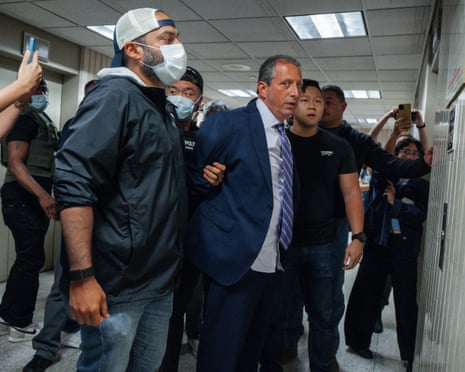
As voices were raised and tensions escalated, officers attempted to move Lander aside. At one point, physical contact occurred between Lander and federal agents. Moments later, officers restrained him, placed him in handcuffs, and escorted him away from the scene.
Federal authorities later stated that Lander was detained for allegedly interfering with a lawful arrest and making physical contact with federal personnel during the operation. He was released after a brief detention, and no formal criminal charges were immediately filed. However, officials confirmed that the matter remains under review by federal prosecutors.
The Legal Questions
At the center of the controversy is a complicated legal dispute regarding the authority ICE agents possess when conducting immigration arrests.
Many Americans assume that all arrests require a warrant signed by a judge. However, immigration enforcement operates under a different legal framework. ICE officers frequently rely on administrative warrants issued by immigration authorities rather than judicial warrants signed by a federal judge.
Administrative warrants generally authorize immigration enforcement actions under federal immigration law. Critics of ICE argue that such warrants provide fewer protections than traditional judicial warrants and may not meet the standards typically associated with criminal law enforcement.
Lander has argued that his actions were motivated by concerns about due process and constitutional protections. According to statements released after the incident, he believed agents were acting improperly by failing to produce a judicial warrant before taking the individual into custody.
Supporters of Lander point out that New York City has long embraced sanctuary policies that seek to limit cooperation between local government agencies and federal immigration enforcement. These policies were designed to encourage undocumented immigrants to seek public services, report crimes, and cooperate with authorities without fear of deportation.
Critics, however, contend that regardless of political views, physically interfering with federal officers performing their duties is unlawful. Legal analysts have noted that even if someone disagrees with the legality of an arrest, obstructing law enforcement actions can carry serious consequences.
The incident therefore raises a broader constitutional question: where is the line between peaceful protest and unlawful interference?
Political Fallout
The reaction to Lander’s detention was swift and deeply divided.
His office issued a statement shortly after his release, describing his actions as an “act of conscience.” The statement emphasized that Lander was acting as an individual witnessing what he believed to be an injustice, rather than exercising his authority as comptroller.
Progressive activists and immigrant-rights organizations quickly rallied behind him. Demonstrations were organized in support of Lander, with advocates praising his willingness to personally intervene on behalf of someone facing detention.
Many supporters argued that public officials have a moral obligation to challenge government actions they believe violate civil liberties. On social media, users described Lander as courageous and principled, while hashtags supporting him gained significant traction.
For immigrant-rights groups, the confrontation symbolized growing frustration with federal immigration policies and enforcement tactics. They argue that aggressive courthouse arrests discourage immigrants from attending legal proceedings and undermine confidence in the judicial system.
Critics Push Back
Conservative lawmakers, immigration enforcement supporters, and some legal commentators viewed the situation very differently.
Several critics argued that regardless of his intentions, Lander interfered with a federal law enforcement operation. They contend that elected officials should respect legal processes rather than physically inserting themselves into active arrests.
Some Republicans called for a formal investigation and questioned whether Lander’s conduct was appropriate for a public official seeking higher office. Others argued that allowing elected leaders to obstruct law enforcement could set a dangerous precedent and encourage similar confrontations elsewhere.
Federal officials also expressed concern about what they describe as increasing hostility toward immigration officers. According to government data, assaults and threats against federal immigration personnel have risen significantly in recent years.
Supporters of ICE argue that political rhetoric portraying the agency as illegitimate has contributed to a climate in which officers face greater risks while carrying out their responsibilities.
A Symbol of a Larger National Debate
The controversy surrounding Lander’s detention extends far beyond a single arrest outside a courthouse.
For many Americans, the incident represents the broader struggle over immigration policy, federal authority, and civil liberties. Immigration remains one of the most divisive issues in American politics, with sharp disagreements over border security, deportation policies, asylum procedures, and the treatment of undocumented immigrants.
Progressives often argue that immigration enforcement agencies exercise excessive power with insufficient oversight. They point to stories involving family separations, long-term detentions, and deportations of individuals with limited criminal histories as evidence that reform is needed.
Conservatives generally counter that immigration laws exist for a reason and that federal agencies must be allowed to enforce them without interference. They argue that weakening immigration enforcement undermines the rule of law and national sovereignty.
Lander’s confrontation with ICE has therefore become more than a local news story. It has evolved into a national symbol of the ongoing clash between competing visions of justice, public safety, and government authority.
What Happens Next?
As federal authorities continue reviewing the incident, questions remain about whether any charges will ultimately be filed. Legal experts suggest that prosecutors will closely examine video footage, witness statements, and the exact nature of the physical interaction between Lander and the agents.
Regardless of the outcome, the political impact is already being felt. The incident has elevated Lander’s profile nationally, energizing supporters while drawing intense criticism from opponents.
Whether viewed as an act of civil courage or an example of unlawful obstruction, the confrontation has reignited debate over immigration enforcement and the role elected officials should play when they witness actions they believe are unjust.
For now, the images of a prominent New York politician in handcuffs outside an immigration court continue to fuel a conversation that shows no signs of ending anytime soon.

Sarah Mitchell is a bestselling novelist recognized for her insightful and emotionally resonant stories that explore the complexities of human relationships. Originally from Denver, Colorado, Sarah grew up in a family of teachers who nurtured her curiosity and love for storytelling. She studied psychology at Stanford University, where she became fascinated by the intricacies of human behavior—an interest that would later shape her writing career. Sarah’s novels are praised for their nuanced characters, intricate plots, and ability to capture the subtle tensions that define love, friendship, and family ties. Her breakthrough novel, The Spaces Between Us, became an instant bestseller, lauded for its honest portrayal of strained family relationships and the fragile bonds that hold people together. Since then, she has published several works that continue to captivate audiences around the world. Outside of her writing career, Sarah is passionate about mental health advocacy and often partners with organizations to promote awareness and support for those struggling with emotional well-being. Her personal life is quieter—she enjoys hiking in the Colorado mountains, practicing yoga, and spending time with close friends. With each new book, Sarah Mitchell cements her reputation as a writer who illuminates the beauty and struggles of human connection.