


NOTE: VIDEO AT THE END OF THE ARTICLE.
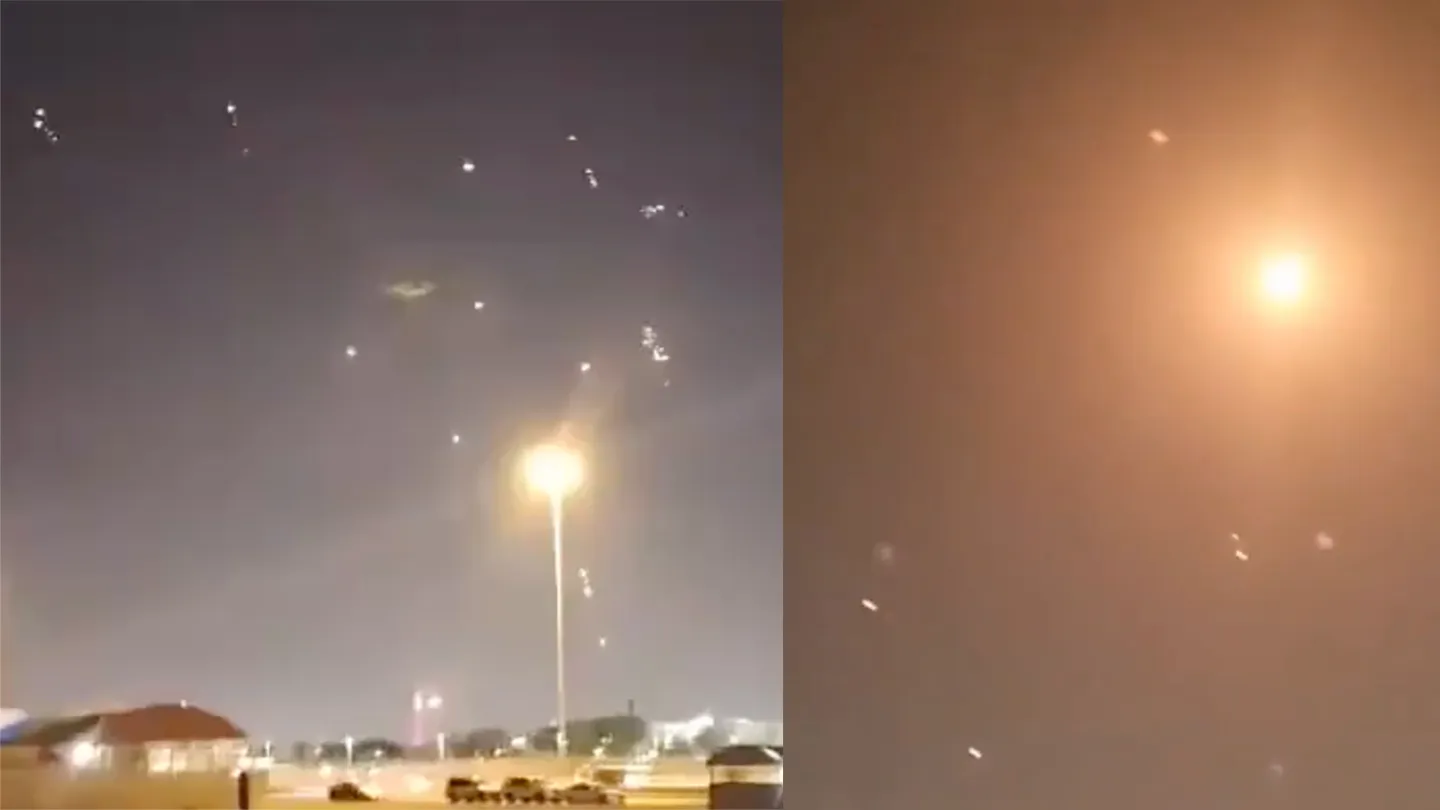
Iran has launched a retaliatory attack on U.S. interests in the Middle East following the American-led military strike—codenamed Operation Midnight Hammer—on three key Iranian nuclear facilities over the weekend. The bold and rapid response marks a dangerous escalation in tensions between Washington and Tehran.
According to reports from Israeli media, Iran fired 10 ballistic missiles targeting U.S. military installations in Qatar, specifically aiming at Al Udeid Air Base, one of the most strategically significant American military hubs in the region. The base is a crucial center for U.S. air operations in the Middle East and houses thousands of American military personnel, as well as advanced aircraft and logistical infrastructure.
Israeli journalist Amit Segal, reporting for the N12 news outlet, shared details of the attack on the social platform X, citing an Israeli official familiar with the situation. While no official confirmation has yet been released by the U.S. Department of Defense, multiple defense analysts and open-source intelligence accounts have corroborated missile activity and heightened alert levels in the region.
The missile barrage appears to be a direct retaliation for Operation Midnight Hammer, a precision military strike carried out on Saturday that targeted Iran’s uranium enrichment facilities. The U.S. operation, reportedly supported by Israeli intelligence, aimed to degrade Iran’s nuclear capabilities and send a message about the consequences of continued uranium development in defiance of international agreements.
Tehran has vowed that the attacks on its nuclear infrastructure would not go unanswered. Iranian state media had earlier warned of “imminent consequences” for what it described as an act of “state terrorism” by the United States. The regime now seems to be following through on that threat.
There are currently no confirmed reports of casualties or damage at Al Udeid Air Base, though officials in the region are reportedly assessing the situation. Qatar has not released a statement at the time of this writing, and it remains unclear how the country will respond to the attack, which could place its role as a neutral mediator in regional conflicts under strain.
This latest development raises serious concerns about the possibility of a wider conflict erupting in the region. U.S. allies in the Gulf and Israel are reportedly on high alert, and American military assets across the Middle East are being closely monitored for additional threats.
As the situation unfolds, all eyes will be on Washington and Tehran to see whether this marks the start of a prolonged military confrontation—or a dangerous prelude to diplomacy under fire.
PLAY:

James Jenkins is a celebrated Pulitzer Prize-winning author whose work has reshaped the way readers think about social justice and human rights in America. Raised in Atlanta, Georgia, James grew up in a community that instilled in him both resilience and a strong sense of responsibility toward others. After studying political science and creative writing at Howard University, he worked as a journalist covering civil rights issues before dedicating himself fully to fiction. His novels are known for their sharp, empathetic portraits of marginalized communities and for weaving personal stories with broader political realities. Jenkins’s breakout novel, Shadows of Freedom, won national acclaim for its unflinching look at systemic inequality, while his more recent works explore themes of identity, resilience, and the fight for dignity in the face of oppression. Beyond his novels, James is an active public speaker, lecturing at universities and participating in nonprofit initiatives that support literacy and community empowerment. He believes that storytelling is a way to preserve history and inspire change. When not writing, James enjoys jazz music, mentoring young writers, and traveling with his family to explore cultures and stories around the world.