

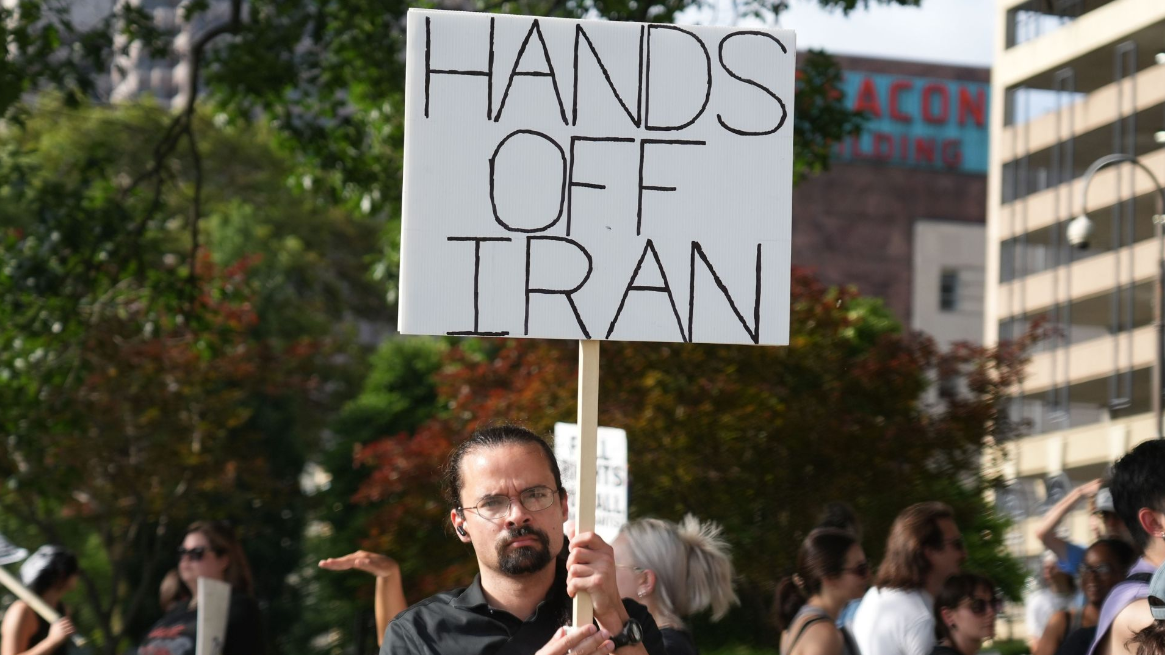
President Donald Trump confirmed Saturday night that the United States carried out devastating airstrikes on three major Iranian nuclear enrichment facilities, declaring the mission a resounding success and warning of even greater force if Tehran continues to escalate.
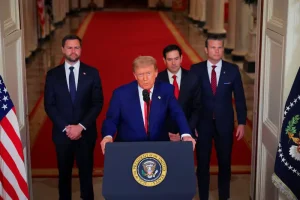
Speaking from the White House surrounded by top administration officials, Trump announced that Iran’s underground nuclear infrastructure had been “completely and totally obliterated,” including hardened targets at Fordow, Natanz, and Isfahan. These strikes represent the most significant direct military action against Iran’s nuclear program in history.
The precision attacks involved B-2 stealth bombers and cruise missiles, coordinated to strike simultaneously in what military planners described as a “shockwave of destruction.” According to Trump, the objective was simple: neutralize Iran’s nuclear capabilities and send a message that further aggression will be met with overwhelming force.
The response from progressive voices and anti-war activists was immediate and furious.
Prominent left-wing lawmakers and commentators accused the president of violating constitutional war powers and international law, branding the operation an illegal act of aggression. Some even called for impeachment, claiming Trump bypassed Congress and risked a broader Middle East conflict.
Online backlash was swift. Critics accused the administration of provoking war and escalating tensions with a sovereign nation, while others alleged the strike was motivated by political gain.
Despite the outrage, supporters of the president argue the operation demonstrated strength and restored U.S. deterrence after years of failed diplomacy. They applauded the administration for acting decisively and for protecting American interests in the region.
Trump, meanwhile, remained unfazed by the backlash.
“Iran has bullied the world for far too long. That era is over,” he said during the briefing. “We do not seek war, but we will never hesitate to eliminate threats to our people.”
Military officials have raised alert levels across the region in anticipation of possible Iranian retaliation. However, the president made it clear that any counterattack would be met with a swift and crushing response.
Whether this operation leads to a larger conflict or successfully reins in Iran’s nuclear ambitions remains to be seen—but one thing is certain: the world is watching, and the political fault lines at home have never been more exposed.

James Jenkins is a celebrated Pulitzer Prize-winning author whose work has reshaped the way readers think about social justice and human rights in America. Raised in Atlanta, Georgia, James grew up in a community that instilled in him both resilience and a strong sense of responsibility toward others. After studying political science and creative writing at Howard University, he worked as a journalist covering civil rights issues before dedicating himself fully to fiction. His novels are known for their sharp, empathetic portraits of marginalized communities and for weaving personal stories with broader political realities. Jenkins’s breakout novel, Shadows of Freedom, won national acclaim for its unflinching look at systemic inequality, while his more recent works explore themes of identity, resilience, and the fight for dignity in the face of oppression. Beyond his novels, James is an active public speaker, lecturing at universities and participating in nonprofit initiatives that support literacy and community empowerment. He believes that storytelling is a way to preserve history and inspire change. When not writing, James enjoys jazz music, mentoring young writers, and traveling with his family to explore cultures and stories around the world.