NOTE: VIDEO AT THE END OF ARTICLE
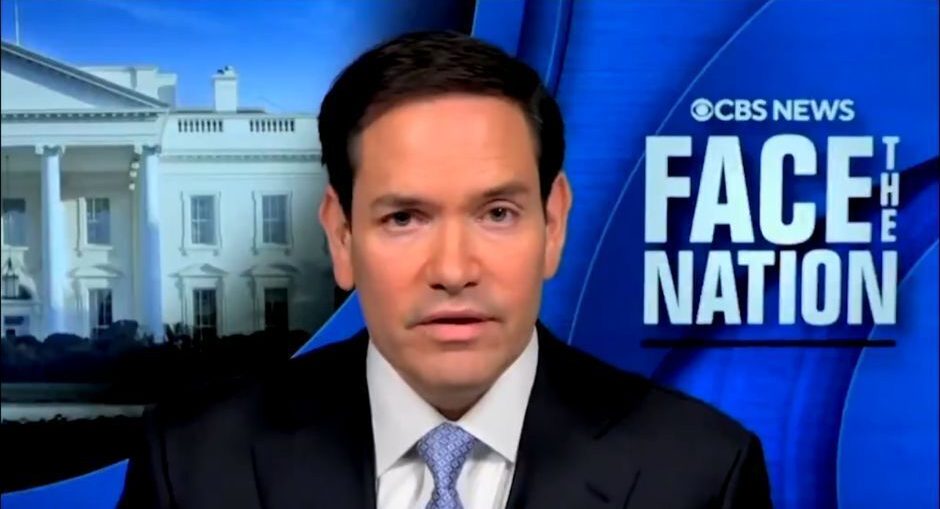
During Sunday’s broadcast of Fox News Channel’s Sunday Morning Futures, U.S. Secretary of State Marco Rubio warned that any attempt by Iran to close the Strait of Hormuz would represent a major escalation—one with serious global consequences.
Host Maria Bartiromo asked: “Do you expect Iran to try closing the Strait of Hormuz to disrupt oil shipments?” Rubio responded by urging China to intervene, saying: “I would encourage the Chinese government in Beijing to call Tehran, because they heavily depend on oil passing through the Strait of Hormuz.” He added that closing the strait would be a stupendous mistake: “It would be economic suicide for them if they do it.”
Rubio cautioned that such a move “would hurt other countries’ economies a lot worse than ours” and would demand a response not just from the U.S. but from other nations as well. He noted that the United States “retains options to deal with that.”
The warning comes on the heels of U.S. strikes targeting Iranian nuclear sites at Fordow, Natanz, and Esfahan. President Trump has already made a similar statement, saying: *“There will be either peace or there will be tragedy” for Iran, asserting that more sites remain targets if peace talks do not begin.
Rubio emphasized that the U.S. achieved its objectives in the strikes through precise and decisive force, and that its next move would depend on Iran’s response. He stressed that America remains open to negotiations—but warned of devastating consequences if Iran escalates.
Global attention has turned toward the Strait of Hormuz, a strategic waterway through which nearly one-fifth of the world’s oil supply passes. Any closure could trigger sharp spikes in global energy prices and rattle markets worldwide.
Rubio urged China—and other major stakeholders—to use their influence to dissuade Iran from taking this reckless step. He stressed that the U.S. is not seeking war but is prepared for swift actions to protect global stability.
As concerns mount, the world watches for Iran’s next move and whether China or other global powers step in to prevent a dangerous escalation.
https://www.youtube.com/watch?v=E-SVkTqMug4

James Jenkins is a celebrated Pulitzer Prize-winning author whose work has reshaped the way readers think about social justice and human rights in America. Raised in Atlanta, Georgia, James grew up in a community that instilled in him both resilience and a strong sense of responsibility toward others. After studying political science and creative writing at Howard University, he worked as a journalist covering civil rights issues before dedicating himself fully to fiction. His novels are known for their sharp, empathetic portraits of marginalized communities and for weaving personal stories with broader political realities. Jenkins’s breakout novel, Shadows of Freedom, won national acclaim for its unflinching look at systemic inequality, while his more recent works explore themes of identity, resilience, and the fight for dignity in the face of oppression. Beyond his novels, James is an active public speaker, lecturing at universities and participating in nonprofit initiatives that support literacy and community empowerment. He believes that storytelling is a way to preserve history and inspire change. When not writing, James enjoys jazz music, mentoring young writers, and traveling with his family to explore cultures and stories around the world.