



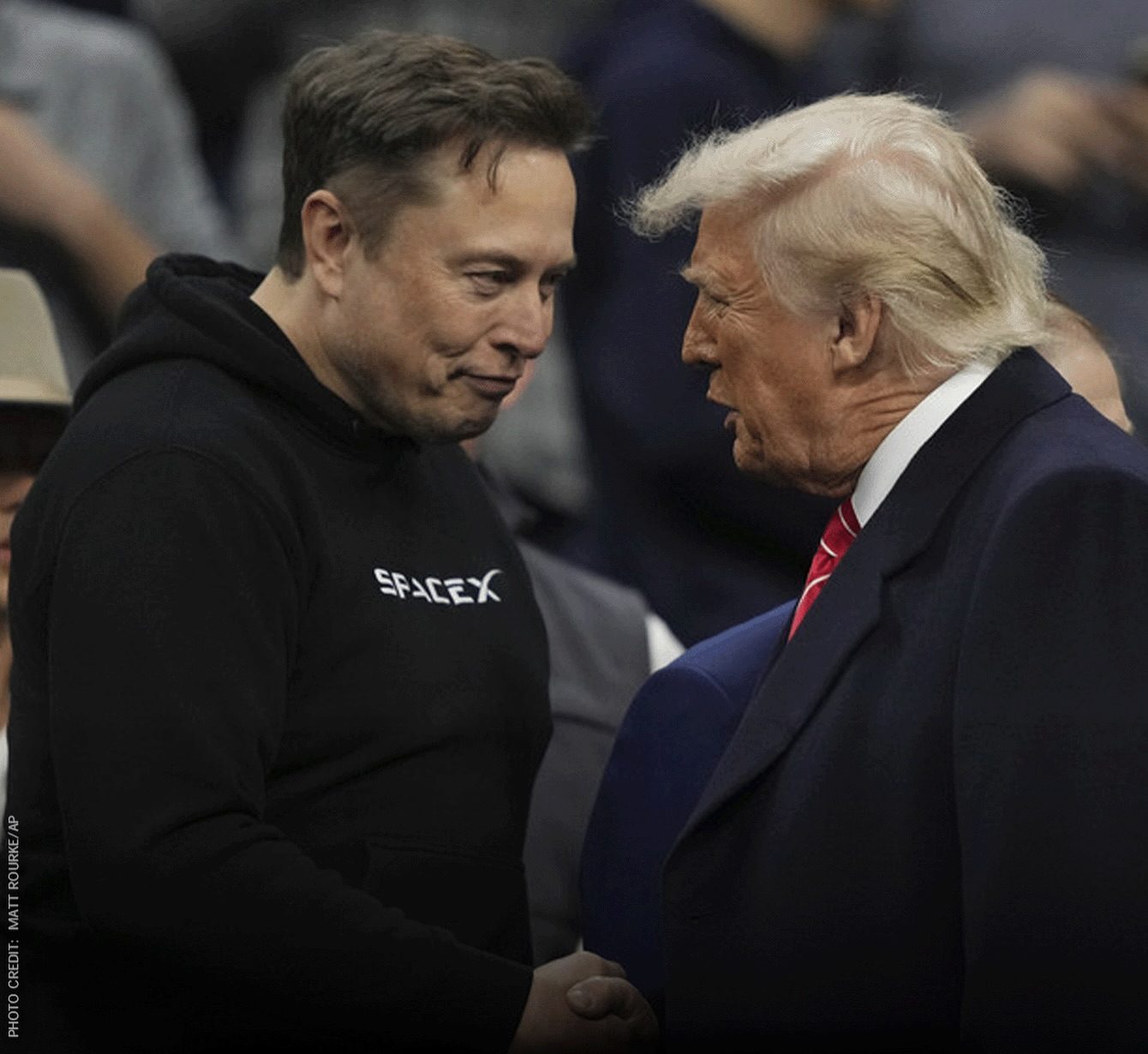
After a whirlwind of public jabs and media buzz, tensions between President Donald Trump and Elon Musk appear to be subsiding. The fiery feud that unfolded over the past 48 hours now seems to be giving way to a more tempered tone, as both figures made conciliatory remarks by Friday evening.
The clash began earlier in the week when Musk, who currently heads the Department of Government Efficiency (DOGE), openly criticized one of the Trump administration’s key economic proposals. Referring to the legislation as a path to “debt slavery,” Musk took a hard stance against what he sees as a fiscally irresponsible move. His comments quickly drew the ire of President Trump, who responded with characteristic bluntness. Sources within the administration suggested that Musk’s remarks caught many off guard, considering his senior advisory role.
The disagreement, however, extended beyond policy. Insiders cite ongoing friction over staffing decisions within the administration and broader philosophical differences about the federal government’s role in economic intervention. Musk, a staunch advocate of lean, tech-driven governance, has clashed with several Trump aides pushing for more traditional, big-government strategies.
Despite these differences, the two men seemed ready to put the feud behind them by the end of the week. In a Friday evening statement, President Trump referred to Musk as a “brilliant mind,” adding that their disagreements stemmed from “a shared passion for fixing the country.” Musk echoed the sentiment on his X (formerly Twitter) account, posting, “Differences are natural. Dialogue matters. America first, always.”
The public exchange has reignited interest in Musk’s controversial role within the administration. Appointed as the head of DOGE in early 2025, Musk was tasked with overhauling bureaucratic inefficiency across federal agencies. His tenure has been marked by both praise and criticism—praised for introducing aggressive tech reforms, but criticized for clashing with establishment officials.
This isn’t the first time Trump and Musk have butted heads. Their relationship has oscillated between alliance and opposition since the early days of the Trump presidency. However, political analysts note that both men recognize the strategic importance of maintaining a working relationship—especially as the administration looks toward critical legislative battles ahead.
While it remains to be seen if the truce will hold, Friday’s public statements signal a willingness to move forward. For now, the firestorm that threatened to deepen internal rifts appears to have cooled, at least on the surface.

James Jenkins is a celebrated Pulitzer Prize-winning author whose work has reshaped the way readers think about social justice and human rights in America. Raised in Atlanta, Georgia, James grew up in a community that instilled in him both resilience and a strong sense of responsibility toward others. After studying political science and creative writing at Howard University, he worked as a journalist covering civil rights issues before dedicating himself fully to fiction. His novels are known for their sharp, empathetic portraits of marginalized communities and for weaving personal stories with broader political realities. Jenkins’s breakout novel, Shadows of Freedom, won national acclaim for its unflinching look at systemic inequality, while his more recent works explore themes of identity, resilience, and the fight for dignity in the face of oppression. Beyond his novels, James is an active public speaker, lecturing at universities and participating in nonprofit initiatives that support literacy and community empowerment. He believes that storytelling is a way to preserve history and inspire change. When not writing, James enjoys jazz music, mentoring young writers, and traveling with his family to explore cultures and stories around the world.