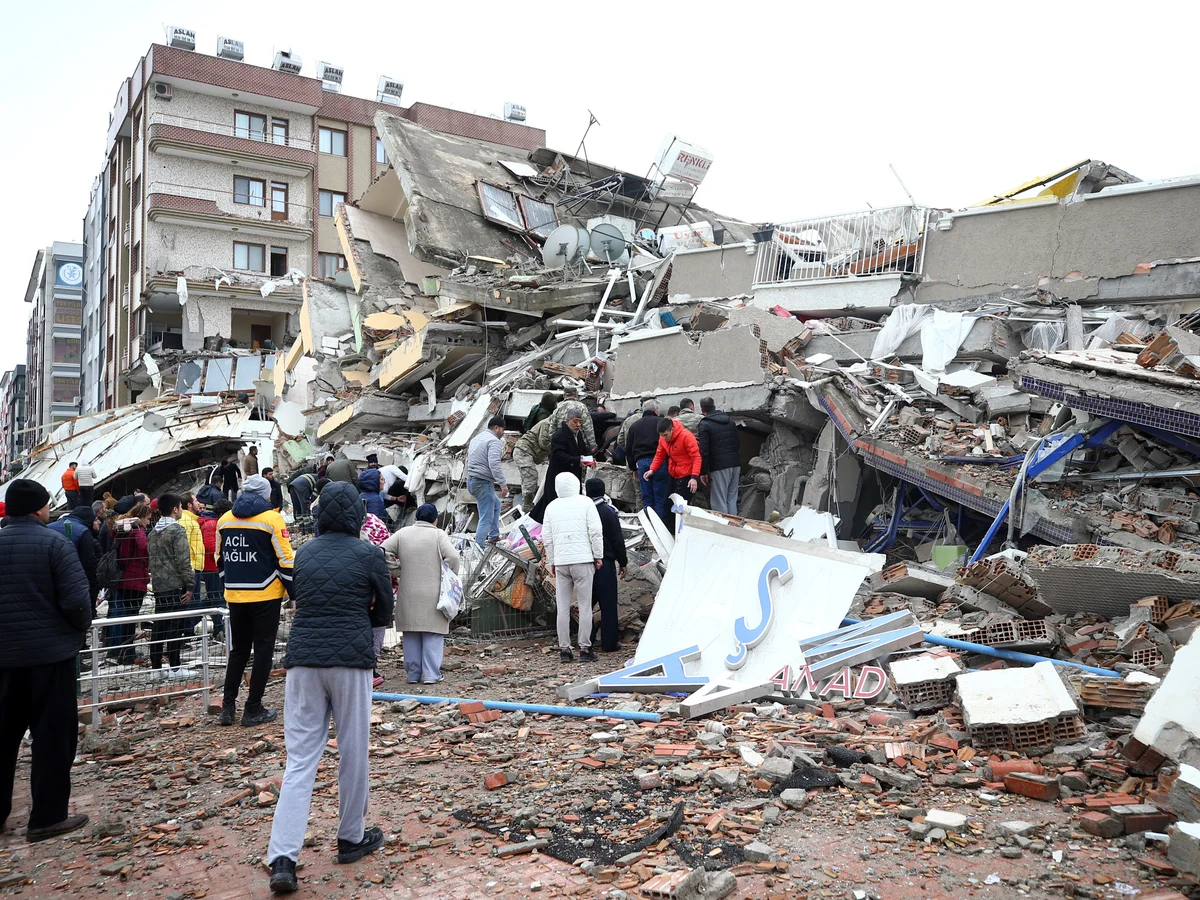
At least 32 people have been killed and more than 200 injured after a powerful earthquake struck without warning, triggering landslides, collapsing buildings and sparking tsunami alerts across several countries.
The massive tremor struck early Monday morning, sending residents fleeing from homes, offices and shops as roads cracked and structures swayed violently. Emergency crews rushed to affected areas as reports of deaths and injuries began to emerge within hours.
Authorities said dozens of buildings suffered damage, with commercial properties among the hardest hit. Rescue workers have been searching through debris while hospitals treated hundreds of injured survivors.
The earthquake, initially measured at magnitude 8.2 before being revised to 7.8, struck at a depth of around 10 kilometers, making it particularly destructive near the surface.
Officials also warned that the disaster was far from over. More than 130 aftershocks have already rattled the region, raising fears of additional structural collapses and further casualties. Residents were urged to remain alert and stay away from damaged buildings.
As emergency operations intensified, authorities revealed that the quake had struck off the southern coast of the Philippines, near the island of Mindanao. The disaster quickly prompted tsunami warnings across parts of the Pacific, with residents in vulnerable coastal areas ordered to move to higher ground immediately.
The Philippine Institute of Volcanology and Seismology warned that tsunami waves exceeding one meter above normal tide levels could affect some coastlines, particularly in enclosed bays and narrow straits where water can become concentrated.
Officials later confirmed that tsunami waves of approximately one meter were observed along nearby coastlines. Smaller waves ranging from just a few centimeters to nearly a meter were also recorded in neighboring areas, including parts of Indonesia and Palau.
The deadliest incident occurred in the province of Sarangani, where a landslide triggered by the quake crashed into homes in the mountainous town of Glan. Disaster officials said at least 13 villagers lost their lives in the collapse.
Additional fatalities were reported across the Soccsksargen region, which includes South Cotabato, Sultan Kudarat, Sarangani and General Santos City. Local authorities said several deaths remain under investigation as emergency responders continue assessing the full extent of the destruction.
The earthquake struck during the morning hours when many people were preparing for work and school. Witnesses described scenes of panic as buildings shook violently and terrified residents rushed into the streets.
Benjie Ancheta, the police chief of Alabel town in Sarangani, said the quake was the strongest he had ever experienced. He reported visible cracks appearing in the local police station immediately after the tremor. A building belonging to the popular fast-food chain Jollibee also collapsed during the disaster.
“This is the strongest earthquake we’ve experienced,” Ancheta told reporters.
Authorities said some residents fainted from shock during the powerful shaking, while others suffered injuries while attempting to evacuate buildings.
Warnings were issued for multiple countries, including the Philippines, Indonesia, Japan and Australia, although some alerts were later downgraded or lifted after further assessments.
Philippine President Ferdinand Marcos Jr urged residents not to ignore evacuation orders and to prioritize their safety.
“Do not wait. Your life is more important than anything left behind,” he said.
Meanwhile, New Zealand’s National Emergency Management Agency assessed the situation and concluded that the earthquake was unlikely to generate a tsunami threat for the country.
Experts note that the Philippines sits along the Pacific Ring of Fire, one of the world’s most seismically active regions. The vast belt stretches around the Pacific Ocean and is responsible for many of the planet’s largest earthquakes and volcanic eruptions.
With aftershocks continuing to shake the area and rescue operations ongoing, officials fear the death toll could rise as emergency crews reach remote communities and continue searching damaged buildings for survivors.

Emily Johnson is a critically acclaimed essayist and novelist known for her thought-provoking works centered on feminism, women’s rights, and modern relationships. Born and raised in Portland, Oregon, Emily grew up with a deep love of books, often spending her afternoons at her local library. She went on to study literature and gender studies at UCLA, where she became deeply involved in activism and began publishing essays in campus journals. Her debut essay collection, Voices Unbound, struck a chord with readers nationwide for its fearless exploration of gender dynamics, identity, and the challenges faced by women in contemporary society. Emily later transitioned into fiction, writing novels that balance compelling storytelling with social commentary. Her protagonists are often strong, multidimensional women navigating love, ambition, and the struggles of everyday life, making her a favorite among readers who crave authentic, relatable narratives. Critics praise her ability to merge personal intimacy with universal themes. Off the page, Emily is an advocate for women in publishing, leading workshops that encourage young female writers to embrace their voices. She lives in Seattle with her partner and two rescue cats, where she continues to write, teach, and inspire a new generation of storytellers.