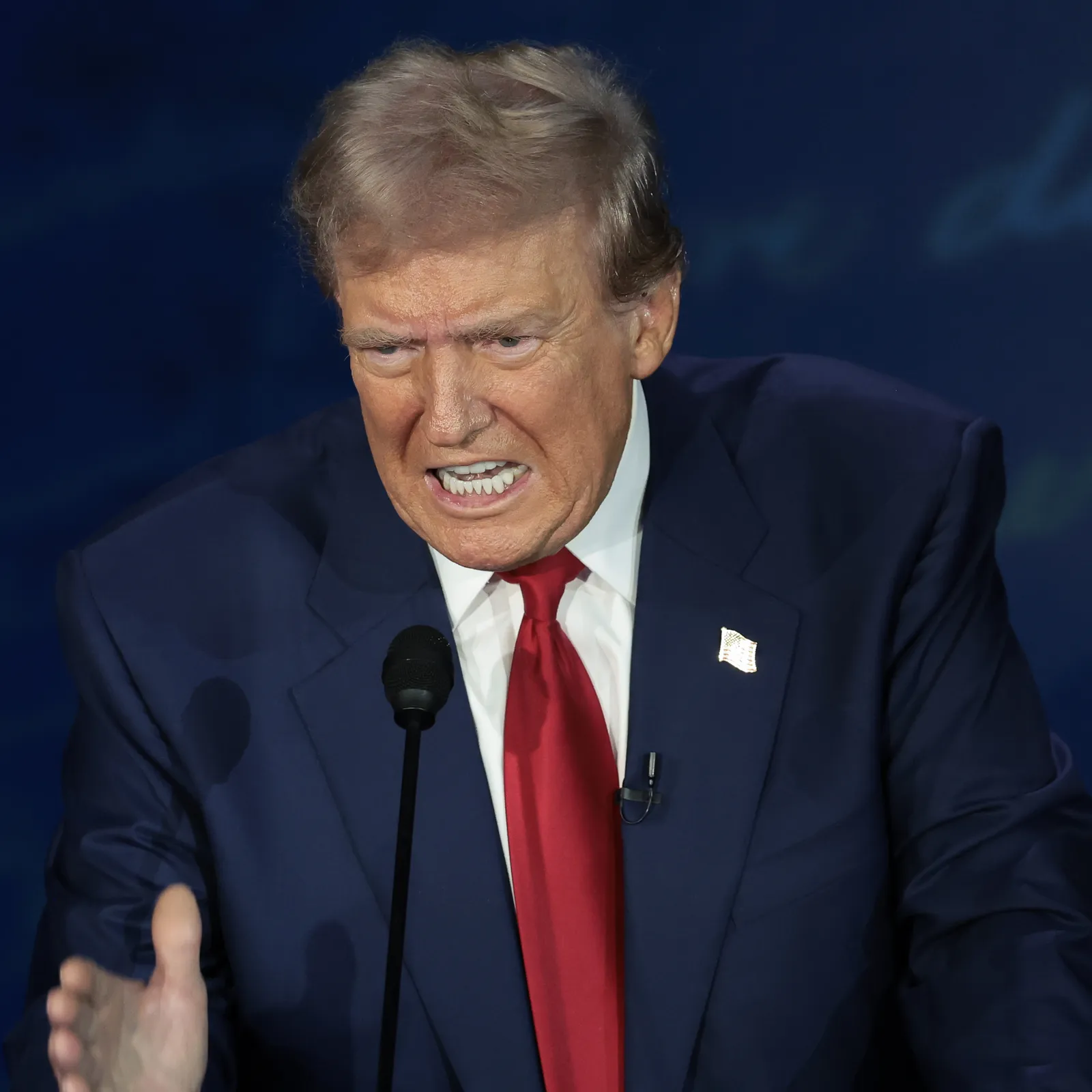
President Donald Trump issued a stark warning to Iran on Monday, saying the United States would not hesitate to launch additional military strikes if Tehran resumes work on its nuclear or advanced missile programs. Speaking during a meeting with Israeli Prime Minister Benjamin Netanyahu, Trump made clear that any renewed progress by Iran in those areas would trigger a swift and forceful response.
“If they’re moving forward on missiles or nuclear weapons, that’s an absolute red line,” Trump told reporters. “If they are, we’re going to have to knock them down — immediately.”
The comments came during Netanyahu’s visit to Trump’s Mar-a-Lago residence in Florida, where the two leaders discussed a range of Middle East issues, including Iran, Gaza, and regional security cooperation. The meeting underscored the close alignment between Washington and Jerusalem as tensions continue to simmer across the region.
Warning Follows Recent Military Action
Trump’s remarks follow joint U.S.-Israeli strikes carried out earlier this year against three Iranian facilities believed to be linked to Tehran’s nuclear infrastructure. Those operations were described by U.S. officials as targeted efforts to degrade Iran’s technical capacity and send a clear deterrent message.
According to Trump, the strikes were avoidable had Iran agreed to dismantle its nuclear ambitions through negotiations.
“They wish they had made that deal,” Trump said, criticizing Iranian leaders for refusing to fully disarm their nuclear program before the military action took place. “That was their opportunity.”
While Trump expressed hope that Iran is not actively rebuilding the facilities or capabilities that were damaged, he said recent intelligence and public statements from Iranian officials have raised concerns.
“Now I hear they’re trying to build up again,” he said. “Hopefully that’s not happening — but if it is, we’ll deal with it.”
Iran Claims It Is Under ‘Full-Fledged War’
Trump’s warning comes amid increasingly aggressive rhetoric from Tehran. Over the weekend, Iranian President Masoud Pezeshkian claimed that Iran is already engaged in what he described as a “full-fledged war” with the United States, Israel, and certain European nations.
In an interview published on a website associated with Iran’s supreme leader, Ayatollah Ali Khamenei, Pezeshkian said the current confrontation is more dangerous and complex than Iran’s eight-year war with Iraq in the 1980s.
“In my opinion, we are in a full-scale war with America, Israel, and Europe,” Pezeshkian said. “They do not want our country to stand on its feet. This war is worse than the one imposed on us by Iraq.”
Iranian officials have repeatedly denied that the country’s nuclear program is intended for weapons development, insisting it is purely for civilian energy and research purposes. However, U.S. and Israeli intelligence agencies have long disputed that claim.
International Scrutiny and Nuclear Concerns
The International Atomic Energy Agency (IAEA), the United Nations’ nuclear watchdog, has raised alarms about Iran’s lack of transparency and its restrictions on international inspections. The agency has cited Tehran for failing to provide full access to nuclear facilities and for limiting the ability of inspectors to verify the peaceful nature of its activities.
U.S. officials argue that these actions, combined with Iran’s enrichment levels and missile development, point to a sustained effort to preserve the option of producing nuclear weapons.
Israel has consistently stated that it will not allow Iran to obtain nuclear arms, viewing such a development as an existential threat. Trump echoed that position on Monday, saying the United States remains fully aligned with Israel on preventing Iran from crossing that threshold.
Netanyahu Praises Trump Relationship
During the meeting, Netanyahu praised Trump as Israel’s strongest ally in the White House, emphasizing the depth of cooperation between the two governments.
“I’ve said it many times, and I’ll say it again — we’ve never had a friend like President Trump in the White House,” Netanyahu said. “Not even close. You can see it in the frequency of our meetings and, more importantly, in the substance of what we discuss.”
The Israeli prime minister also pointed to Trump’s past decisions, including recognition of Jerusalem as Israel’s capital and support for Israeli security operations, as evidence of unwavering backing.
Gaza Ceasefire and Regional Stability
The talks also touched on Gaza, where a ceasefire between Israel and Hamas took effect in October, ending a two-year conflict that began with a Hamas-led terrorist attack against Israel. Trump described the truce as fragile but necessary, while reiterating U.S. support for Israel’s right to defend itself.
Both leaders agreed that Iran’s influence over militant groups in the region remains a major destabilizing factor and warned that renewed violence could erupt if Tehran escalates its involvement.
Trump Calls for Pardon of Netanyahu
In a notable aside, Trump again called on Israeli President Isaac Herzog to grant a pardon to Netanyahu, who is currently facing a corruption trial in Israel. Trump characterized Netanyahu as a wartime leader who deserves recognition rather than prosecution.
“He’s a hero,” Trump said. “He’s a wartime prime minister. How do you not give a pardon?”
Netanyahu has denied all wrongdoing in the case and has described the charges as politically motivated.
A Clear Message to Tehran
Trump’s remarks leave little ambiguity about Washington’s posture toward Iran under his leadership. While he stopped short of announcing new military action, his language suggested that any attempt by Tehran to revive its nuclear or missile programs would be met with immediate force.
For now, U.S. officials say they are closely monitoring developments, relying on intelligence assessments and international inspections. But Trump made clear that patience is limited.
“This is not something we’re going to wait on,” he said. “If Iran moves, we move.”

Emily Johnson is a critically acclaimed essayist and novelist known for her thought-provoking works centered on feminism, women’s rights, and modern relationships. Born and raised in Portland, Oregon, Emily grew up with a deep love of books, often spending her afternoons at her local library. She went on to study literature and gender studies at UCLA, where she became deeply involved in activism and began publishing essays in campus journals. Her debut essay collection, Voices Unbound, struck a chord with readers nationwide for its fearless exploration of gender dynamics, identity, and the challenges faced by women in contemporary society. Emily later transitioned into fiction, writing novels that balance compelling storytelling with social commentary. Her protagonists are often strong, multidimensional women navigating love, ambition, and the struggles of everyday life, making her a favorite among readers who crave authentic, relatable narratives. Critics praise her ability to merge personal intimacy with universal themes. Off the page, Emily is an advocate for women in publishing, leading workshops that encourage young female writers to embrace their voices. She lives in Seattle with her partner and two rescue cats, where she continues to write, teach, and inspire a new generation of storytellers.