


A British psychic widely dubbed the modern-day successor to prophetic seers has issued a stark set of predictions for the year ahead, warning that 2026 could bring political upheaval, military escalation, and major global instability.
Craig Hamilton-Parker — frequently compared in popular media to Nostradamus — has built a following over the years by claiming to foresee major world events before they unfold. Among the predictions he says he correctly anticipated are the death of Queen Elizabeth II, the global outbreak of Covid-19, and a cancer diagnosis for King Charles III.
Now, he warns, the world is entering a period of profound uncertainty that could test political systems and reshape global power structures.
Predictions rooted in spiritual texts
Hamilton-Parker works alongside his wife Jane and a group of spiritual mediums, drawing on what he describes as ancient wisdom traditions — including India’s so-called Nadi oracles — to form his forecasts.
According to him, these texts and intuitive readings indicate that the near future will be marked by escalating tension and dramatic geopolitical developments.
He says that although predictions should not be interpreted as fixed outcomes, they highlight potential trajectories that humanity still has the power to change.
“The future is not set in stone,” he has stressed in recent interviews. “But the signs we are seeing point to a turbulent phase before stability returns.”
A controversial claim involving Donald Trump
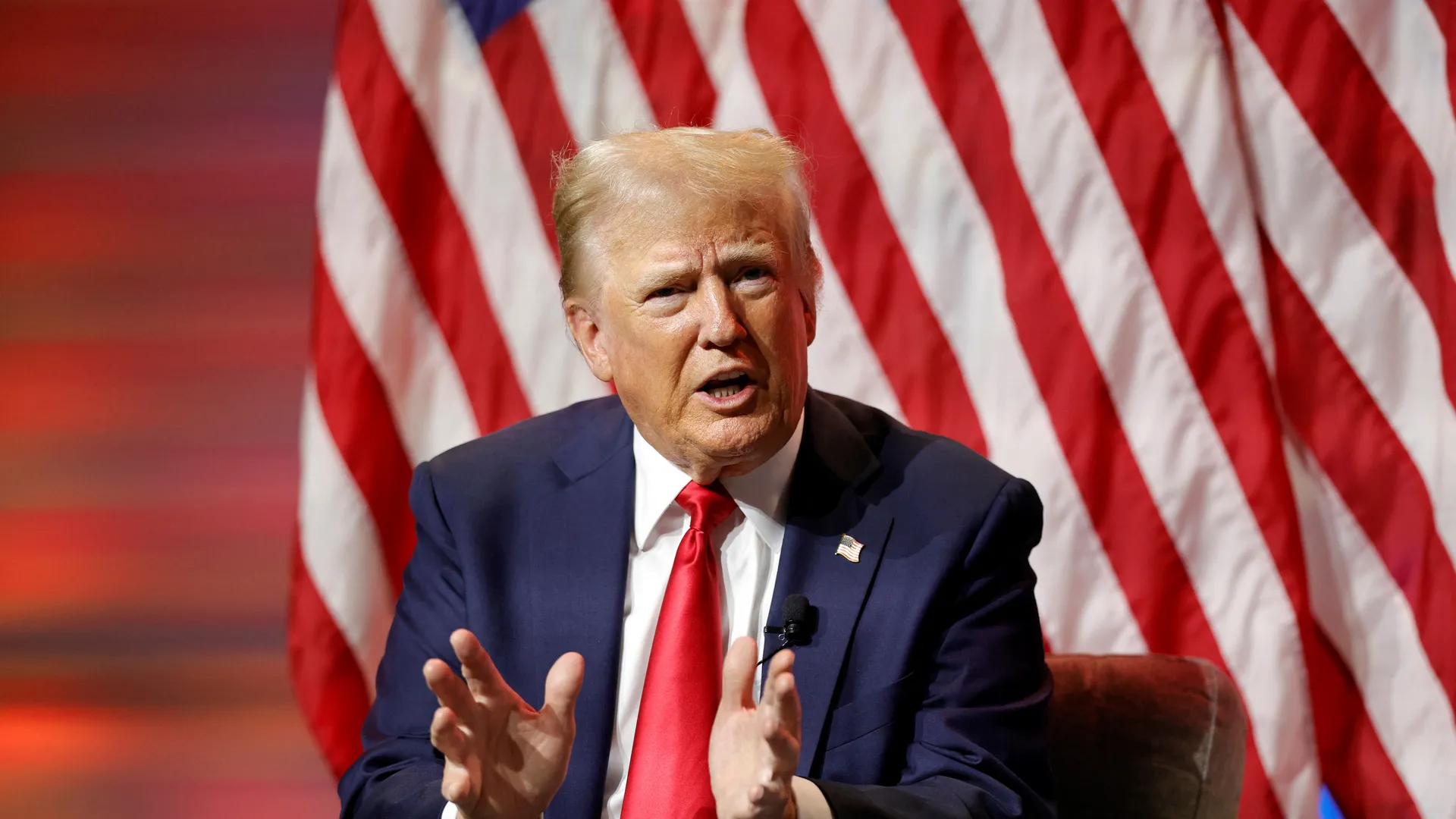
One of the most attention-grabbing claims centers on U.S. politics and the current president, Donald Trump.
Hamilton-Parker has suggested that extraordinary global circumstances could lead to a situation in which Trump serves a third term — a scenario that would ordinarily be barred by the U.S. Constitution’s two-term limit.
He argues that a major international conflict could disrupt the election process in such a way that existing constitutional norms are challenged.
“To reiterate what I said previously, I sensed there would be a large-scale global conflict,” he explained in one interview. “Under those conditions, we could see political systems behaving in ways that people would not normally consider possible.”
He has pointed to rising tensions involving regions such as Taiwan as one possible flashpoint, although he acknowledges that any number of geopolitical triggers could produce similar instability.
While many legal experts and constitutional scholars maintain that a third presidential term remains virtually impossible, Hamilton-Parker argues that modern history has repeatedly shown how rapidly “impossible” scenarios can emerge.
He cited unexpected global developments — from territorial disputes to political crises — as examples of how quickly established assumptions can be overturned.
Warning of escalating conflict in the Middle East
Beyond American politics, the psychic has also issued a warning about rising tensions in the Middle East, particularly involving Iran.
He believes that March 2026 could see targeted strikes on Iran’s nuclear infrastructure, potentially carried out through rapid, high-precision air operations rather than a full-scale ground invasion.
“We may see very focused military actions aimed at strategic facilities,” he said. “These wouldn’t necessarily be long wars, but they could still carry major consequences.”
Hamilton-Parker also raised the possibility that such a conflict could spill into neighboring regions, including Yemen, depending on how regional alliances respond.
Despite the severity of the prediction, he expressed hope that any future upheaval might ultimately lead to positive political change within Iran, including greater civil freedoms and improved rights for women.
Still, he warned that revolutions do not always produce the outcomes people expect — and that power vacuums can sometimes lead to even more restrictive regimes.
Other global warnings
The psychic’s predictions extend beyond immediate political flashpoints.
He has suggested that August 2026 could see an environmental or atmospheric event affecting Japan, describing it as a “gas cloud” phenomenon that could create widespread disruption.
He also claimed that the current Western security framework could weaken significantly, forecasting a gradual decline of NATO in the coming years and the eventual emergence of a new international security body around 2030.
Such predictions align with broader concerns among analysts about shifting alliances and the evolving balance of power between global superpowers.
However, it is important to note that these claims are speculative and not supported by conventional intelligence or geopolitical analysis.
Skepticism and support
As with many figures who claim prophetic abilities, Hamilton-Parker’s forecasts are met with both skepticism and support.
Critics argue that many predictions are broad or ambiguous enough to be interpreted in hindsight as accurate, while supporters believe his past claims demonstrate a genuine ability to anticipate future events.
Experts in psychology and belief systems often point out that humans naturally look for patterns and meaning — which can make prophetic claims seem more convincing than they might objectively be.
Nevertheless, Hamilton-Parker continues to attract attention, particularly in times of global uncertainty when audiences are more receptive to warnings about the future.
A message of cautious optimism
Despite the ominous tone of many of his predictions, Hamilton-Parker insists that his overall message is not one of despair.
He emphasizes that the purpose of sharing these forecasts is to encourage reflection, preparedness, and — in his words — “positive intention.”
“The teachings I follow suggest that outcomes can be influenced,” he explained. “If people focus on constructive change, compassion, and cooperation, the severity of events can be reduced.”
He believes that the current period represents what he calls the “final phase of a difficult era,” after which a more stable and balanced world could emerge.
The broader context
Whether or not one accepts the claims of psychics and prophetic figures, the themes highlighted in Hamilton-Parker’s predictions — geopolitical tension, technological disruption, and environmental risk — are also echoed in mainstream policy discussions.
Global institutions, intelligence agencies, and academic researchers have all warned about rising instability and the potential for major systemic shocks in the coming decade.
In that sense, while the psychic’s methods are unconventional, the anxieties reflected in his predictions resonate with widely recognized global challenges.
Looking ahead
As 2026 unfolds, many will watch closely to see whether any of these predictions appear to align with real-world developments.
For believers, each event will be seen as confirmation of a larger prophetic pattern. For skeptics, it will be another opportunity to test the reliability of such claims against empirical reality.
What remains clear is that in an increasingly uncertain world, narratives about the future — whether grounded in science, policy, or spirituality — continue to capture the public imagination.
And for Craig Hamilton-Parker, the message is simple: the future may be uncertain, but it is not beyond influence.

Emily Johnson is a critically acclaimed essayist and novelist known for her thought-provoking works centered on feminism, women’s rights, and modern relationships. Born and raised in Portland, Oregon, Emily grew up with a deep love of books, often spending her afternoons at her local library. She went on to study literature and gender studies at UCLA, where she became deeply involved in activism and began publishing essays in campus journals. Her debut essay collection, Voices Unbound, struck a chord with readers nationwide for its fearless exploration of gender dynamics, identity, and the challenges faced by women in contemporary society. Emily later transitioned into fiction, writing novels that balance compelling storytelling with social commentary. Her protagonists are often strong, multidimensional women navigating love, ambition, and the struggles of everyday life, making her a favorite among readers who crave authentic, relatable narratives. Critics praise her ability to merge personal intimacy with universal themes. Off the page, Emily is an advocate for women in publishing, leading workshops that encourage young female writers to embrace their voices. She lives in Seattle with her partner and two rescue cats, where she continues to write, teach, and inspire a new generation of storytellers.