A major international summit intended to showcase a new U.S.-led diplomatic initiative instead became the center of controversy this week after Donald Trump made a series of personal remarks during his speech that many observers described as “weird” and out of place.
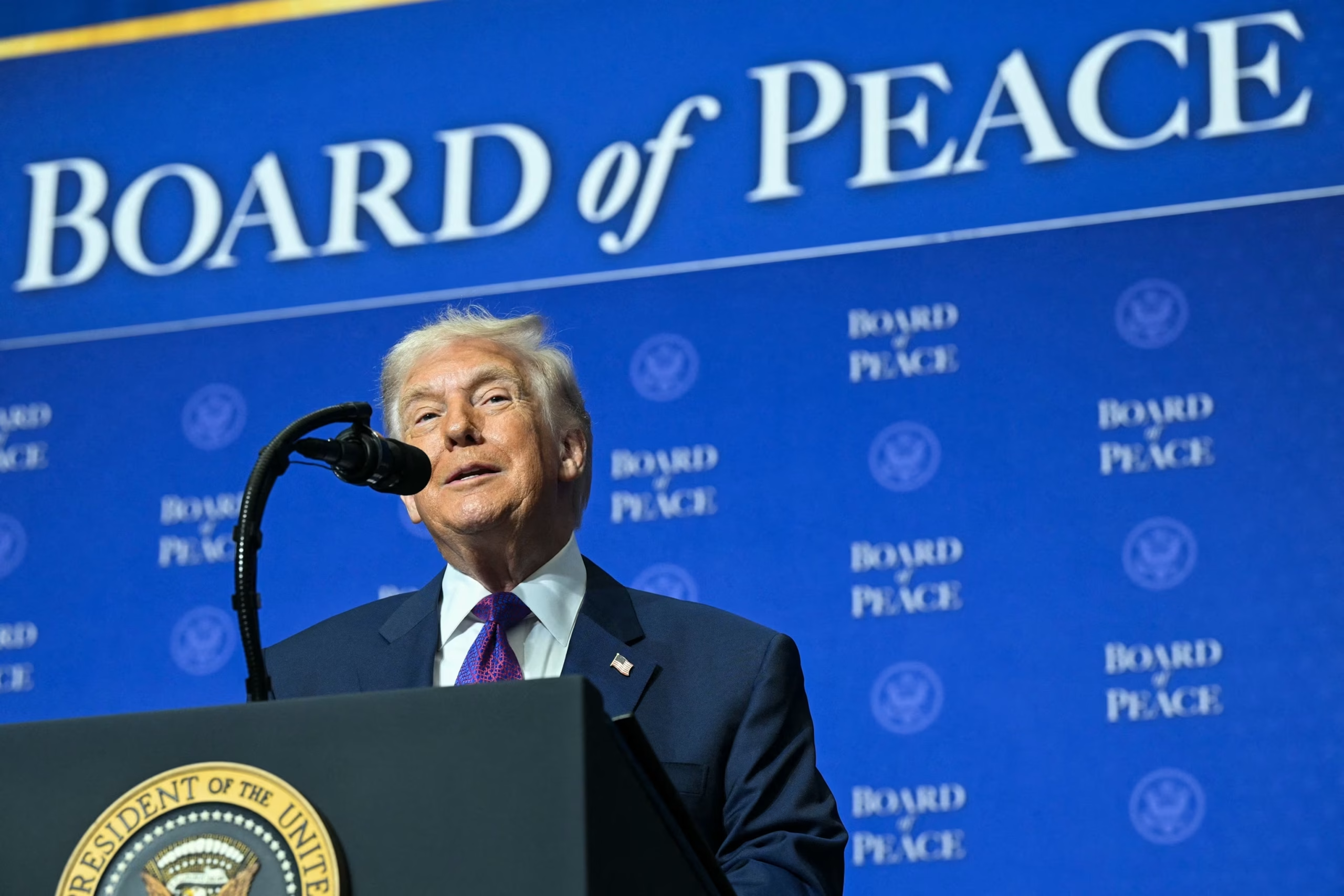
The comments came during the inaugural session of the Board of Peace, a newly formed international forum created at Trump’s direction in late 2025. The initiative aims to coordinate multilateral responses to global conflicts, humanitarian emergencies, and economic instability through a coalition of participating countries willing to commit resources and diplomatic engagement.
Officials from nearly 50 countries attended the first meeting in Washington, with 27 formally joining as founding members. The gathering was billed as a landmark moment in Trump’s foreign policy agenda—an attempt to demonstrate both leadership and a new model for international cooperation outside traditional institutions.
Yet despite the significance of the event and the presence of global leaders, it was Trump’s unscripted comments that dominated headlines and public discussion.
A Diplomatic Agenda Overshadowed
The Board of Peace meeting was expected to focus heavily on the ongoing conflict in Gaza, which has caused widespread destruction and loss of life over more than a year of fighting between Israel and Hamas. Officials described the humanitarian situation as severe, with infrastructure damage and civilian displacement continuing to escalate.
During the summit, several member countries—including Kazakhstan, Azerbaijan, the United Arab Emirates, Morocco, Bahrain, Qatar, Saudi Arabia, Uzbekistan, and Kuwait—announced a joint financial pledge of roughly seven billion dollars for humanitarian and reconstruction aid. The commitment was presented as a concrete example of how the new coalition could mobilize resources quickly in response to crises.
Participants also discussed mechanisms for conflict mediation, economic stabilization programs, and coordinated diplomatic engagement in volatile regions. Early statements from the administration framed the Board of Peace as a flexible, results-oriented alternative to existing multilateral frameworks.
However, the formal policy agenda quickly took a back seat once Trump departed from his prepared remarks.
The Remarks That Sparked Controversy
While acknowledging foreign leaders in attendance, Trump singled out Santiago Peña Palacios, referring to him as a “young, handsome guy.” He then added, “It’s always nice to be young and handsome. Doesn’t mean we have to like you.”
Trump continued with a string of personal comments about his preferences, stating: “I don’t like young, handsome men. Women, I like. Men, I don’t have any interest.”
The remarks drew immediate attention from attendees and were quickly shared online in video clips that spread across multiple social media platforms. Critics argued that the statements were inappropriate for a formal diplomatic setting and distracted from the purpose of the summit.
Within hours, the comments had become the defining narrative of the event, overshadowing both the policy discussions and the financial commitments announced by participating countries.
Public and Political Reaction
Reaction on social media was swift and often sharply critical. Many users described the comments as embarrassing or confusing, particularly given the presence of international leaders and the seriousness of the topics under discussion.
Some commentators argued that such remarks risk undermining the credibility of the United States in diplomatic settings, where tone and protocol are closely observed. Others framed the incident as part of a broader pattern of off-the-cuff statements that have periodically sparked controversy throughout Trump’s political career.
Political analysts noted that unscripted remarks can carry diplomatic consequences, especially when directed at foreign leaders. Even when intended humorously, personal comments about appearance or preferences can be interpreted as disrespectful or inappropriate in formal international contexts.
Supporters of Trump, however, defended his speaking style, arguing that his informal tone and willingness to speak candidly are part of his political appeal. They suggested that critics were overreacting to comments that were not intended to offend and that did not alter the substantive outcomes of the meeting.
The Board of Peace Initiative
Despite the controversy, the administration has emphasized that the Board of Peace represents a major strategic initiative. The organization is designed to function as a streamlined coalition capable of rapid decision-making and coordinated funding commitments.
Key figures involved in the initiative include Marco Rubio, Jared Kushner, and former British prime minister Tony Blair, all of whom have played roles in shaping international policy discussions in recent years.
Proponents argue that a smaller, more agile forum could overcome bureaucratic delays often associated with larger institutions. By allowing willing countries to coordinate directly, they believe the Board of Peace could accelerate responses to crises and improve the efficiency of aid distribution.
Skeptics, however, question whether the initiative risks duplicating existing organizations or fragmenting international coordination efforts. They also point out that long-term effectiveness will depend on sustained political commitment and consistent diplomatic messaging.
Diplomatic Implications
The incident underscores the importance of communication discipline in international diplomacy. High-level meetings are carefully structured to project unity, credibility, and seriousness—particularly when addressing conflicts involving significant human suffering.
When attention shifts away from policy outcomes to personal remarks, it can complicate efforts to maintain focus on substantive goals. Diplomatic observers note that early impressions of a new international initiative can shape its credibility and influence how other countries engage with it in the future.
So far, no participating country has publicly withdrawn from the Board of Peace or issued formal complaints about Trump’s comments. However, some officials have privately indicated surprise at the tone of the remarks, according to diplomatic sources.
Moving Forward
White House officials have sought to steer attention back to the policy achievements of the meeting, emphasizing the scale of international participation and the financial commitments secured for Gaza relief. They argue that these outcomes demonstrate the potential effectiveness of the Board of Peace despite the controversy surrounding Trump’s remarks.
Whether the incident will have lasting consequences remains uncertain. The Board of Peace is still in its early stages, and its long-term impact will likely depend on its ability to deliver tangible results in conflict resolution and humanitarian assistance.
For now, the inaugural summit has achieved global visibility—but in a way that highlights the delicate balance between personal communication style and the expectations of formal diplomacy. As the initiative moves forward, maintaining that balance may prove as important as the policy agenda itself.

Emily Johnson is a critically acclaimed essayist and novelist known for her thought-provoking works centered on feminism, women’s rights, and modern relationships. Born and raised in Portland, Oregon, Emily grew up with a deep love of books, often spending her afternoons at her local library. She went on to study literature and gender studies at UCLA, where she became deeply involved in activism and began publishing essays in campus journals. Her debut essay collection, Voices Unbound, struck a chord with readers nationwide for its fearless exploration of gender dynamics, identity, and the challenges faced by women in contemporary society. Emily later transitioned into fiction, writing novels that balance compelling storytelling with social commentary. Her protagonists are often strong, multidimensional women navigating love, ambition, and the struggles of everyday life, making her a favorite among readers who crave authentic, relatable narratives. Critics praise her ability to merge personal intimacy with universal themes. Off the page, Emily is an advocate for women in publishing, leading workshops that encourage young female writers to embrace their voices. She lives in Seattle with her partner and two rescue cats, where she continues to write, teach, and inspire a new generation of storytellers.