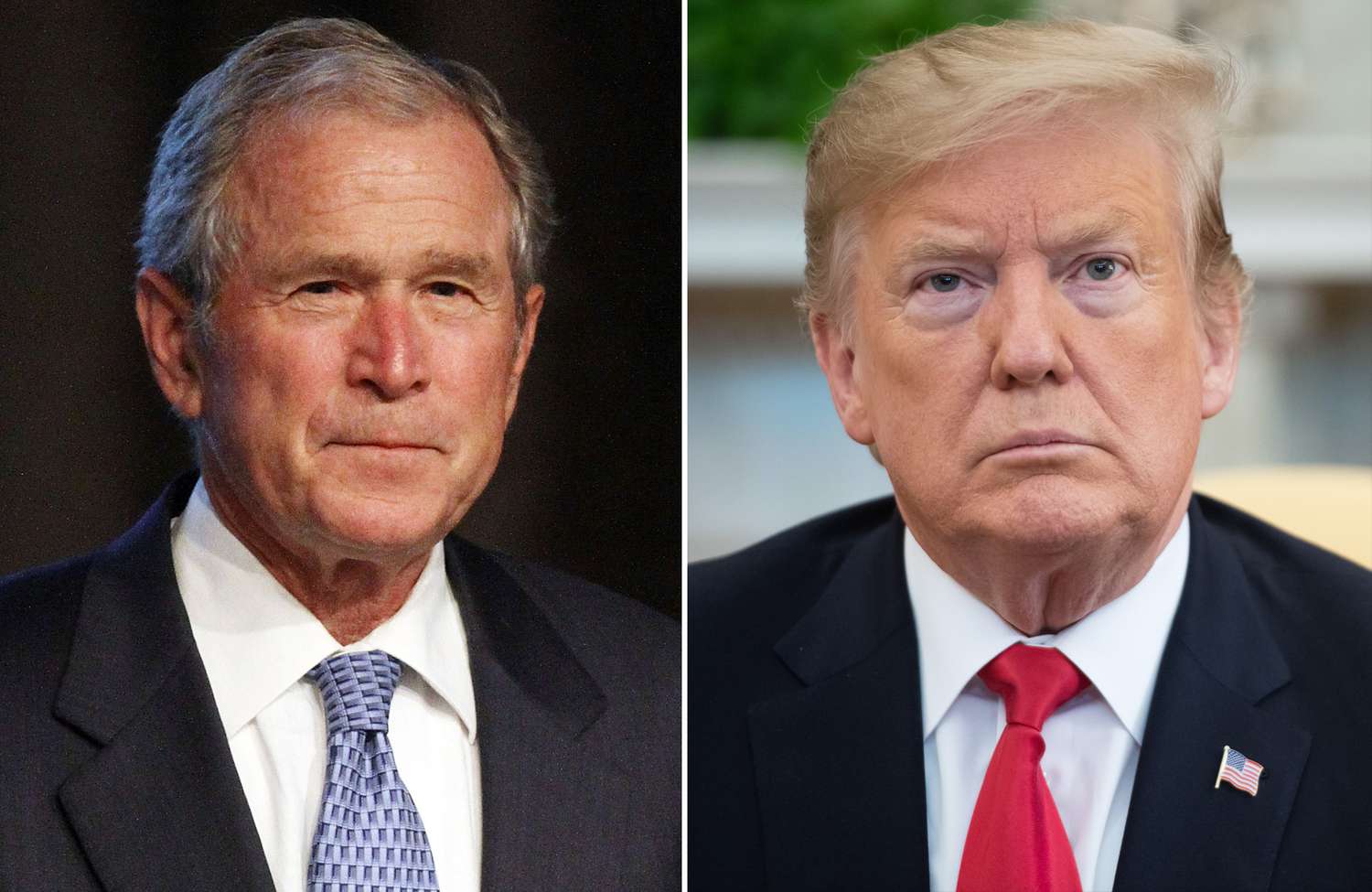
In early February 2026, as the United States marked Presidents’ Day, a significant moment unfolded not on the campaign trail or in a legislative chamber, but in the pages of a long-form historical essay. Former President George W. Bush, long known for avoiding direct criticism of his successors, published a Presidents’ Day message that many observers interpreted as a pointed rebuke of the current president, Donald J. Trump.
Though Bush did not mention Trump by name, the tone and subject matter of the essay — focusing on the legacy of humility, restraint, and voluntary transfer of power exemplified by the nation’s first president, George Washington — resonated deeply within an already polarized political environment. In doing so, Bush’s words opened a rare public window into intra-party and inter-administration tensions within the Republican Party and American political culture more broadly.
Bush’s Message: Humility, Power, and the Presidency
Traditionally, Presidents’ Day messages from former presidents celebrate historical figures and reaffirm national ideals. But Bush’s essay, published through In Pursuit — a project of the bipartisan alliance More Perfect — went further. It extolled Washington’s character traits, praising the first president’s decision to relinquish control of the U.S. Army after the Revolutionary War and step down after two terms. Bush wrote that these decisions “ensured America wouldn’t become a monarchy, or worse,” and lauded Washington’s self-control, courtesy, modesty, and diplomacy.
At face value, these words are fitting for a celebration of Washington. But in the context of recent political events — including Trump’s continued influence on the Republican Party and public debate over term limits and power transitions — Bush’s emphasis on voluntary transfer of power and humility was widely seen as a deliberate contrast to Trump’s political behavior.
Observers noted that Trump has publicly discussed challenges to established election norms and promoted ideas — though not legally permissible — about extending or reinterpreting presidential terms. While Bush did not cite these events, his reference to the voluntary surrender of power under a foundational leader implicitly underscored the importance of democratic norms that critics of Trump argue have been under stress.
Why Bush’s Words Matter
For decades, former presidents — especially from the same political party — have generally refrained from public criticism of each other once they leave office. This norm is rooted in an unwritten code: ex-presidents do not directly challenge sitting presidents in the public sphere. In breaking with this, even subtly, Bush’s essay was remarkable.
Political analysts say that what makes this moment particularly noteworthy is not just the content of Bush’s praise for Washington, but what it signals about the current state of American politics. Bush’s focus on democratic values and the transfer of power harkened back to principles that many political scholars view as foundational to the American system. In a time when debates over election legitimacy and presidential authority are intensifying, such a message carries added weight.
Moreover, the fact that Bush chose to release his essay through In Pursuit, a bipartisan initiative aimed at renewing American democracy ahead of the country’s 250th anniversary, suggests a deliberate decision to frame his message not as partisan criticism, but as a broader appeal for adherence to democratic norms.
This approach allowed Bush to underscore a concern shared by many political moderates and critics across the political spectrum, while maintaining a level of diplomatic distance from direct attack.
Different Reactions Across the Political Landscape
Reactions to Bush’s essay reflected deep political divides in the United States.
Supporters of Bush’s Message
Some commentators and political observers praised Bush for invoking foundational principles at a time when many feel those principles are being tested. They saw his focus on humility and restraint as a meaningful reminder of what the presidency should represent, especially as the nation grapples with questions about executive power and election legitimacy.
For these observers, emphasizing Washington’s decision to voluntarily relinquish power was a powerful example of civic leadership. It served as a reminder that the peaceful transfer of power — once considered a given in American politics — is an achievement that must be protected and celebrated.
Criticism from Trump Supporters and Allies
On the other side, supporters of President Trump and many conservatives rejected interpretations that Bush’s message was critical of Trump. Some argued that Bush was simply paying tribute to the first president and that any comparisons drawn to contemporary politics were media exaggerations. Critics also suggested that Bush’s approach was overly cautious — that if he had serious concerns about Trump, he should have stated them more directly.
Others viewed the essay as part of a broader pattern of elite political figures distancing themselves from Trump, often in ways that underestimate the enduring support the current president retains within large segments of the Republican base.
Public and Online Reactions
In online forums and comment threads, a range of voices weighed in. Some users echoed interpretations that Bush’s piece was a veiled critique, calling for the former president to be more outspoken. Others criticized Bush’s own political legacy, arguing that his tenure as president had its flaws and that he therefore lacked moral authority to judge contemporary leaders. These discussions highlighted the deep emotions and varied perspectives that characterize modern political discourse. (See discussions in public forums like Reddit and elsewhere.)
Context: Bush, Trump, and Republican Identity
Understanding the significance of this moment also requires context about Bush’s and Trump’s respective places in Republican Party history.
Bush, the 43rd president, led the United States through an era shaped by the aftermath of the September 11 attacks and the subsequent wars in Afghanistan and Iraq. His presidency was marked by complex foreign policy decisions and domestic challenges that continue to influence political debates today.
Trump, in contrast, has been a polarizing figure whose rhetoric and policies have reshaped conservative politics in recent years. His focus on nationalist themes, immigration policy, and unconventional political norms has drawn both fierce loyalty and strong opposition within the GOP and across the broader electorate.
In this context, Bush’s essay was read by many as not just a reflection on history, but as a quiet intervention in ongoing debates about the party’s direction, democratic values, and the nature of presidential leadership.
Looking Ahead: What It Could Mean for U.S. Politics
Whether Bush intended his essay to be a direct critique of Trump’s presidency or a broader reflection on leadership, its impact is clear: it sparked conversation and analysis about the principles that underlie American democracy.
At a moment when the nation is increasingly divided along political and ideological lines, public remarks from a former president — especially one speaking about foundational norms — are difficult to ignore. They serve as reminders that the institutions of American democracy are shaped not just by law and policy, but by tradition, rhetoric, and shared civic commitments.
For many, Bush’s message offered an invitation to reflect on how the United States might balance respect for powerful leadership with humility and accountability — traits that, in his view, helped shape the course of the nation. In doing so, his essay became more than just a presidential tribute: it became a statement about the kind of leadership Americans want — and need — as the country approaches its next major milestone.

Emily Johnson is a critically acclaimed essayist and novelist known for her thought-provoking works centered on feminism, women’s rights, and modern relationships. Born and raised in Portland, Oregon, Emily grew up with a deep love of books, often spending her afternoons at her local library. She went on to study literature and gender studies at UCLA, where she became deeply involved in activism and began publishing essays in campus journals. Her debut essay collection, Voices Unbound, struck a chord with readers nationwide for its fearless exploration of gender dynamics, identity, and the challenges faced by women in contemporary society. Emily later transitioned into fiction, writing novels that balance compelling storytelling with social commentary. Her protagonists are often strong, multidimensional women navigating love, ambition, and the struggles of everyday life, making her a favorite among readers who crave authentic, relatable narratives. Critics praise her ability to merge personal intimacy with universal themes. Off the page, Emily is an advocate for women in publishing, leading workshops that encourage young female writers to embrace their voices. She lives in Seattle with her partner and two rescue cats, where she continues to write, teach, and inspire a new generation of storytellers.