


Freshly released federal documents tied to Jeffrey Epstein are once again drawing attention to the late financier’s extensive and controversial social network. Among the materials circulating online is a resurfaced photograph depicting several high-profile figures gathered at what appears to be an intimate private dinner.
The documents, part of a broader tranche of investigative records, include emails, guest lists, and internal correspondence. While none of the individuals referenced in the latest disclosures are accused of wrongdoing in connection with the newly released material, the records have reignited longstanding questions about how Epstein cultivated relationships within the highest tiers of business, technology, academia, and politics.
For years, investigators, journalists, and the public have examined the methods by which Epstein gained access to powerful circles. Even after his 2008 conviction in Florida for soliciting prostitution from a minor — and his subsequent federal arrest in 2019 on sex trafficking charges — prominent names continued to surface in flight logs, visitor records, and private correspondence.
The newly resurfaced material does not contain criminal allegations against the figures depicted. However, it offers further insight into the breadth of Epstein’s networking efforts and his apparent desire to document his proximity to globally recognized leaders.
A Photograph That Sparked Renewed Debate
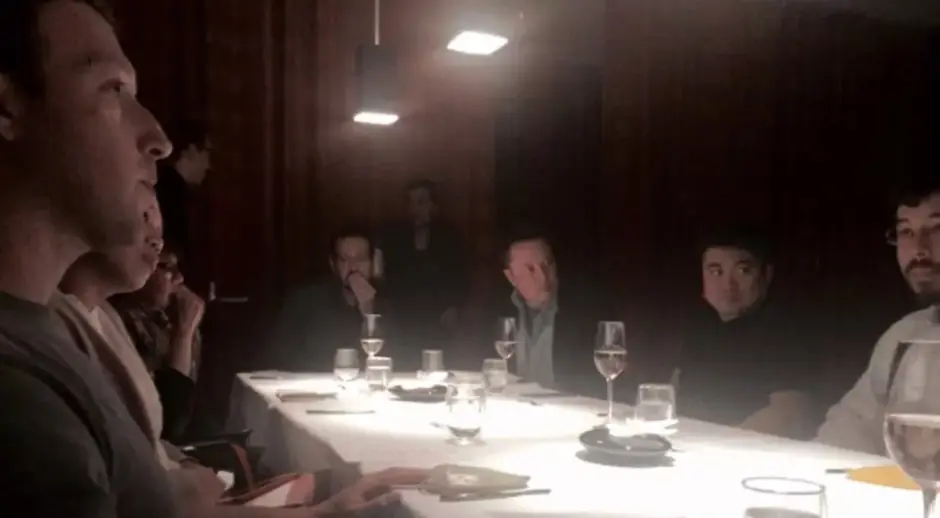
At the center of the latest discussion is a photograph dated August 3, 2015, which Epstein emailed to himself. The image shows a small group seated around a long table in what appears to be a dimly lit private dining room. The attendees are facing toward someone outside the camera’s frame. Epstein himself does not appear in the image, though investigators believe he may have taken the photograph.
Accompanying records include a guest list circulated two days earlier, on August 1, 2015. The list suggests the gathering was carefully curated and attended by individuals whose influence spans multiple industries.
The photograph, released as part of Department of Justice files, has circulated widely across social media platforms in recent days, fueling renewed public scrutiny over Epstein’s ability to position himself among elite company even after his prior conviction.
The Broader Context of Epstein’s Networking
Epstein was known for hosting private dinners, salons, and gatherings designed to bring together influential figures from disparate sectors. These events often blended philanthropy, science, technology, and finance, creating an atmosphere that, according to previous reporting, allowed Epstein to present himself as a connector of ideas and power.
Critics have long argued that Epstein’s strategy relied on association — photographing himself or others in proximity to prominent leaders, collecting contact information, and cultivating an aura of exclusivity.
In this case, the guest list and subsequent email correspondence suggest that the 2015 dinner followed that same pattern.
It is only midway through the document review that the names associated with the dinner become clear.
Tech Titans Named in Guest List
The August 1 guest list includes several of Silicon Valley’s most recognizable leaders: Meta CEO Mark Zuckerberg and his wife, philanthropist Priscilla Chan; Tesla and SpaceX CEO Elon Musk; PayPal co-founder Peter Thiel; LinkedIn co-founder Reid Hoffman; and former MIT Media Lab director Joi Ito.
According to the documentation, Zuckerberg and Musk were seated at the table during the dinner. Not all individuals listed on the guest sheet appear in the released photograph, but the records indicate that invitations were extended broadly among technology and venture capital circles.
In a separate email dated August 20, 2015, addressed to billionaire Thomas Pritzker, Epstein described the evening briefly, referring to it as “wild” and writing that he “had dinner with zuckerburg, mu=k, thiel hoffman.”
The tone of the message has drawn particular attention online, though the word “wild” is not further explained in the correspondence.
Previous Reporting and Public Responses
The resurfaced photograph also recalls earlier reporting. In 2019, Vanity Fair detailed a dinner organized by Reid Hoffman in honor of MIT neuroscientist Ed Boyden, which Epstein reportedly attended. According to that account, Elon Musk introduced Epstein to Mark Zuckerberg during the event.
Musk disputed elements of that report at the time, telling Vanity Fair: “Epstein is obviously a creep, and Zuckerberg is not a friend of mine.”
Emails included in the recently released files show that Musk and Epstein exchanged messages over a period of time. In some correspondence, Musk referenced potential visits to Epstein’s private island, Little St. James. In one email, Musk inquired about visiting on what he described as the “wildest party on your island.”
Musk later addressed the correspondence publicly on X, stating: “I had very little correspondence with Epstein and declined repeated invitations to go to his island or fly on his ‘Lolita Express,’ but was well aware that some email correspondence with him could be misinterpreted and used by detractors to smear my name.”
Representatives for Zuckerberg have previously maintained that his contact with Epstein was limited. A spokesperson stated in past reporting that Zuckerberg met Epstein “in passing one time” and did not communicate with him again following the dinner.
Other individuals named in the guest list have similarly denied any substantive relationship with Epstein beyond isolated encounters.
The Legal and Reputational Landscape
It is important to note that the newly released files do not accuse the individuals present at the 2015 dinner of criminal activity. Their inclusion in the documents stems from their appearance in guest lists, emails, or photographs associated with Epstein.
However, the reputational implications of being linked — even peripherally — to Epstein remain significant. Since his arrest and subsequent death in federal custody in 2019, public scrutiny has extended to anyone who appeared in his social orbit.
Legal experts say the renewed circulation of such documents underscores the complexity of Epstein’s network.
“Epstein actively sought proximity to powerful individuals,” one analyst noted. “The existence of correspondence or attendance at a dinner does not imply wrongdoing, but it does illustrate the breadth of his access.”
Why the Documents Matter
The Department of Justice’s broader document release has been part of ongoing transparency efforts related to federal investigations. While many files have been heavily redacted, the inclusion of images, emails, and guest lists provides a clearer picture of Epstein’s efforts to embed himself among elite circles years after his initial conviction.
The photograph itself is not evidence of misconduct. Yet its existence — and Epstein’s decision to email it to himself — has fueled speculation about why he documented such gatherings so carefully.
Some observers suggest Epstein sought validation or leverage through association. Others argue he may have simply been chronicling social interactions.
Regardless of intent, the optics continue to generate headlines.
Continuing Public Interest
More than four years after Epstein’s death, public fascination with his network has not diminished. Each new release of documents prompts renewed debate about accountability, transparency, and the responsibilities of powerful institutions and individuals.
For the technology leaders named in the 2015 dinner guest list, the resurfaced image represents another chapter in an ongoing effort to distance themselves from Epstein’s legacy.
For the broader public, it serves as a reminder of how extensively Epstein moved within influential spaces — and how documentation of those interactions continues to surface years later.
As additional records are reviewed and released, scrutiny of Epstein’s connections is likely to persist, even when no new allegations accompany the disclosures.
The photograph may capture only a single evening in 2015. But in the larger narrative of Epstein’s rise and fall, it has once again placed a spotlight on the enduring questions surrounding his extraordinary access to power.

Emily Johnson is a critically acclaimed essayist and novelist known for her thought-provoking works centered on feminism, women’s rights, and modern relationships. Born and raised in Portland, Oregon, Emily grew up with a deep love of books, often spending her afternoons at her local library. She went on to study literature and gender studies at UCLA, where she became deeply involved in activism and began publishing essays in campus journals. Her debut essay collection, Voices Unbound, struck a chord with readers nationwide for its fearless exploration of gender dynamics, identity, and the challenges faced by women in contemporary society. Emily later transitioned into fiction, writing novels that balance compelling storytelling with social commentary. Her protagonists are often strong, multidimensional women navigating love, ambition, and the struggles of everyday life, making her a favorite among readers who crave authentic, relatable narratives. Critics praise her ability to merge personal intimacy with universal themes. Off the page, Emily is an advocate for women in publishing, leading workshops that encourage young female writers to embrace their voices. She lives in Seattle with her partner and two rescue cats, where she continues to write, teach, and inspire a new generation of storytellers.