


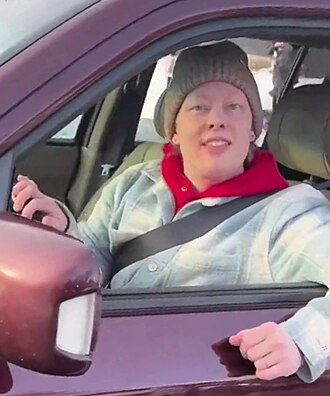
Mother of three had just dropped off her six-year-old son before the fatal encounter
An official incident report detailing the injuries suffered by Renee Nicole Good has revealed disturbing information about the circumstances surrounding her death at the hands of a federal Immigration and Customs Enforcement (ICE) officer. The report, prepared by the Minneapolis Fire Department, sheds light on the severity of Good’s injuries, the emergency measures undertaken by first responders, and the chaos surrounding the incident, which occurred on January 7 in Minneapolis.
Good, a 37-year-old mother of three, was fatally shot by ICE officer Jonathan Ross amid ongoing protests and federal operations in the city. In the immediate aftermath, the Trump administration described her as a “domestic terrorist,” alleging that she had attempted to use her vehicle as a weapon against the officer. This characterization, however, has been widely challenged following the release of video footage capturing the moments leading up to the shooting.
The footage shows Good attempting to maneuver her car away from the agents, while Ross positioned himself in front of the vehicle as another officer tried to open her car door. As Good turned her car, Ross fired multiple shots through the windshield. Moments later, her vehicle collided with a nearby parked car. The video raised serious questions about the justification for deadly force and has been central to a growing national debate over ICE’s operational practices and accountability in the field.
According to the Minneapolis Fire Department report, Good was struck in multiple locations: her chest, forearm, and face. One emergency 911 call reportedly captured by NBC transcripts recounted a frantic eyewitness stating, “They just shot a lady. Point-blank range in her car… She’s fg dead. They fg shot her.” Another caller noted, “ICE fired two shots through her windshield into the driver. She tried to drive away but crashed into the nearest vehicle that was parked.” A sense of panic and confusion dominated the scene, with reports of a heavy presence of federal agents.
Despite the perceptions of those on the scene, the incident report confirms that Good was still alive when paramedics arrived. She was found “unresponsive, not breathing, with inconsistent, irregular, thready pulse activity,” meaning her heart was still weakly beating. The report also details the severity of her trauma, noting that she had bulging eyes, blood streaming from her left ear, and dilated pupils. These injuries reflected the catastrophic impact of multiple gunshots but also indicated that death was not instantaneous.
Paramedics immediately began emergency interventions on the sidewalk near the scene. Due to the chaotic environment, including the presence of multiple ICE officers and bystanders, first responders moved Good to a nearby street corner to continue treatment in a safer location. Emergency medical personnel applied a tourniquet, administered CPR, and prepared her for transport to the hospital. Despite their efforts, resuscitation attempts ceased at 10:30 a.m., less than an hour after she had been shot.
The report also provides context that humanizes the tragedy, noting that Good had just completed a routine morning for her family. According to Sky News, she and her wife, Becca, had dropped off their six-year-old son at school shortly before the incident. Their family dog was in the car as well. Reports indicate that the couple had stopped near the area of the federal operation to observe and provide support to neighbors in the midst of escalating ICE enforcement activity. These details underscore the suddenness and unpredictability of the encounter, transforming what might have been an ordinary morning into a life-or-death situation.
Eyewitness accounts paint a vivid picture of the chaos that erupted during the shooting. Multiple calls to emergency services described a scene overwhelmed by federal agents, civilians, and protesters. Some witnesses believed Good had died instantly, while others reported seeing her struggle to survive. The incident report clarifies that, although her injuries were severe, Good was alive when help arrived, highlighting the intensity of the life-saving efforts undertaken by first responders under extraordinary conditions.
Good’s death has since ignited nationwide outrage, prompting protests, public scrutiny of ICE practices, and intense media coverage. The video evidence, in particular, has become a focal point in debates over federal enforcement tactics, the use of lethal force, and the accuracy of official narratives released by authorities. Many critics argue that the footage contradicts initial claims by federal officials that Good had posed an immediate threat, suggesting instead that her actions were largely defensive and reactive amid an aggressive law enforcement presence.
For her family, the fire department report provides both confirmation and heartbreak. It confirms that Renee Nicole Good did not die instantly and that emergency personnel made extensive efforts to save her life. Yet it also underscores the traumatic circumstances under which she was shot and the speed at which events unfolded, leaving little time for intervention. The report reinforces the devastating reality that Good was a mother of three whose life was cut tragically short while performing routine activities that many take for granted.
The broader implications of the incident have also been a point of concern for local officials, advocacy groups, and legal experts. Questions surrounding the deployment of federal agents in local communities, the use of deadly force during enforcement operations, and the mechanisms for accountability and oversight have all come to the forefront. Minneapolis residents and civil rights advocates continue to demand transparency regarding the circumstances of Good’s death and the conduct of federal officers involved in the operation.
Moreover, Good’s family situation adds further poignancy to the tragedy. The presence of her six-year-old child and family pet in the car at the time of the shooting illustrates the domestic dimension of the incident and highlights the potential collateral impacts of law enforcement actions in residential neighborhoods. Public statements from family members indicate that the couple’s intentions in stopping near the ICE activity were peaceful and community-oriented, aiming to support neighbors rather than obstruct officers.
Paramedics’ actions, as outlined in the report, also illustrate the challenging and heroic nature of emergency response under extreme conditions. The medical teams had to provide immediate, life-saving care in a volatile environment with federal agents, bystanders, and potential threats surrounding them. Their rapid assessment, application of tourniquets, CPR, and transport to a hospital represent standard but critical emergency procedures that are often carried out under immense pressure. Despite their skill and efforts, the severity of Good’s injuries ultimately proved fatal, emphasizing the devastating lethality of close-range gunfire and the limits of medical intervention in such circumstances.
In the wake of the incident, the national dialogue has shifted to include discussions about policy, accountability, and the broader role of federal law enforcement in local communities. Good’s death has become a symbol for critics of ICE’s tactics, raising questions about the proportionality of force used during civil operations and the adequacy of protocols designed to protect civilians. Conversely, defenders of federal law enforcement have cited the challenges and dangers officers face during enforcement actions, highlighting the tension between public safety and civil liberties.
Ultimately, the Minneapolis Fire Department report serves as a critical document that clarifies key elements of the incident. It confirms that Renee Nicole Good was alive after being shot, that first responders provided immediate and extensive care, and that her death occurred in the midst of extraordinary chaos. For her family, the report is both a confirmation of the facts and a reminder of the personal loss they suffered. For the public, it offers a detailed, sobering view of the events that led to a mother’s tragic death, highlighting the human consequences of federal law enforcement actions in community settings.
Renee Nicole Good’s story is a tragic reminder of the complex and often dangerous interplay between civilians and law enforcement. The incident report underscores that even in moments of extreme violence, first responders work tirelessly to save lives. Yet it also illuminates the lasting emotional, social, and political repercussions that follow such events, from grieving families to national debates over policy and enforcement practices. Good’s death, particularly in light of these new details, continues to resonate as a focal point for discussions about justice, accountability, and the responsibilities of those entrusted with the use of lethal force.

Emily Johnson is a critically acclaimed essayist and novelist known for her thought-provoking works centered on feminism, women’s rights, and modern relationships. Born and raised in Portland, Oregon, Emily grew up with a deep love of books, often spending her afternoons at her local library. She went on to study literature and gender studies at UCLA, where she became deeply involved in activism and began publishing essays in campus journals. Her debut essay collection, Voices Unbound, struck a chord with readers nationwide for its fearless exploration of gender dynamics, identity, and the challenges faced by women in contemporary society. Emily later transitioned into fiction, writing novels that balance compelling storytelling with social commentary. Her protagonists are often strong, multidimensional women navigating love, ambition, and the struggles of everyday life, making her a favorite among readers who crave authentic, relatable narratives. Critics praise her ability to merge personal intimacy with universal themes. Off the page, Emily is an advocate for women in publishing, leading workshops that encourage young female writers to embrace their voices. She lives in Seattle with her partner and two rescue cats, where she continues to write, teach, and inspire a new generation of storytellers.