


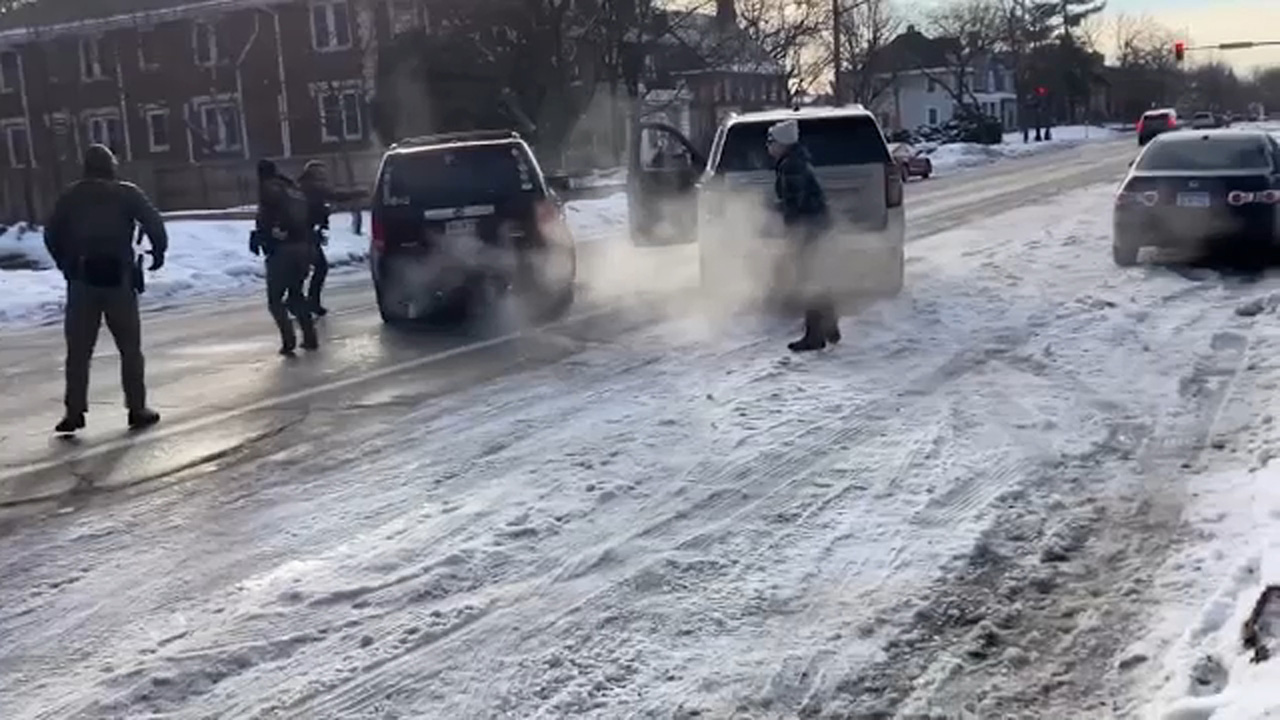
Harrowing footage obtained following a deadly encounter involving Immigration and Customs Enforcement has reignited national debate, as viewers react to what appears to be words spoken by an officer in the moments after a fatal shooting in Minneapolis, Minnesota.
The incident occurred on January 7 and resulted in the death of 37-year-old Renee Nicole Good. The encounter unfolded during an ICE operation in the Minneapolis area, part of heightened enforcement activity that has drawn intense scrutiny in recent weeks.
According to reports, Good was seated behind the wheel of her vehicle when an ICE agent approached. What happened next has become the focus of widespread public outrage, political debate, and calls for accountability.
Footage said to be recorded by the officer involved was later obtained by media outlet Alpha News. The video reportedly captures events both before and immediately after the shooting, offering a raw and unsettling look at the moments surrounding the fatal encounter.
In the video, the officer is seen exiting his vehicle and approaching Good’s car. She is heard speaking calmly, telling him, “That’s fine dude, I’m not mad at you,” as he documents her license plate. Her wife, Becca, can also be heard explaining that the vehicle’s registration plate would not change.
Tension appears to escalate moments later when another agent orders Good to exit the vehicle. Instead, the car begins to move away. Seconds later, gunfire erupts. The vehicle continues forward and collides with two parked cars nearby.
What has drawn particular attention is audio captured after the shooting. A male voice, believed by some viewers to belong to the officer, is heard uttering a profane remark. The authenticity and context of the statement are now central to public debate.
Authorities have identified the officer involved as Jonathan Ross. Federal officials have defended his actions, arguing that the vehicle was used in a threatening manner and that lethal force was justified. The Department of Homeland Security stated that the officer acted in response to what it described as an immediate danger.
However, that explanation has been sharply criticized.
Minneapolis Mayor Jacob Frey publicly condemned the incident, stating that the use of lethal force appeared unjustified based on available information. Civil rights advocates, elected officials, and community leaders across the country have echoed those concerns, calling for transparency and an independent investigation.
The Trump administration moved quickly to defend the officer, framing the incident as a necessary response during a dangerous enforcement operation. DHS officials stated that agents face increasing threats in the field and emphasized the risks involved in vehicular encounters.
Public reaction has been swift and emotional. Protests have erupted in several cities, while online discussions continue to grow as footage circulates across social media platforms.
In the days following Good’s death, a GoFundMe campaign established to support her family surpassed $1.5 million, reflecting the depth of public sympathy and outrage. Her wife, Becca, released a statement thanking supporters and remembering Good as a deeply kind and compassionate person.
“She radiated kindness,” Becca said in a statement shared publicly. “If you ever encountered Renee, you knew that kindness came first. It was who she was.”
She described her wife as joyful, warm, and deeply committed to caring for others, adding that Good lived by a belief that compassion should guide human interactions, regardless of circumstance.
As investigations continue, legal experts note that the release of body-camera or cellphone footage often plays a critical role in shaping public understanding of such cases. At the same time, they caution that video alone may not provide full context, underscoring the importance of thorough and impartial review.
The case has become a flashpoint in broader debates about immigration enforcement, the use of force by federal agents, and accountability mechanisms for law enforcement.
For many Americans, the footage has raised difficult questions: about authority, restraint, and the human cost of aggressive enforcement strategies. For others, it has reinforced fears about the dangers faced by officers in volatile situations.
What remains undisputed is that a life was lost, a family shattered, and a nation once again divided over how such encounters unfold — and how they should be judged.
As more information emerges, the incident involving Renee Nicole Good is likely to remain at the center of national conversation, shaping policy debates and public trust in the months ahead.

Emily Johnson is a critically acclaimed essayist and novelist known for her thought-provoking works centered on feminism, women’s rights, and modern relationships. Born and raised in Portland, Oregon, Emily grew up with a deep love of books, often spending her afternoons at her local library. She went on to study literature and gender studies at UCLA, where she became deeply involved in activism and began publishing essays in campus journals. Her debut essay collection, Voices Unbound, struck a chord with readers nationwide for its fearless exploration of gender dynamics, identity, and the challenges faced by women in contemporary society. Emily later transitioned into fiction, writing novels that balance compelling storytelling with social commentary. Her protagonists are often strong, multidimensional women navigating love, ambition, and the struggles of everyday life, making her a favorite among readers who crave authentic, relatable narratives. Critics praise her ability to merge personal intimacy with universal themes. Off the page, Emily is an advocate for women in publishing, leading workshops that encourage young female writers to embrace their voices. She lives in Seattle with her partner and two rescue cats, where she continues to write, teach, and inspire a new generation of storytellers.