



A dramatic rupture has unfolded in American politics following a high-profile split between two prominent figures, once close allies, now publicly at odds. The feud, which has dominated social media and traditional news outlets, erupted after one politician’s explosive interview aired on a national broadcast, bringing long-simmering tensions into full view.
Observers have noted that the conflict has broader implications for party dynamics, with the potential to reshape alliances and influence upcoming election cycles. The contentious split centers around allegations of shifting loyalties, public criticism, and sharply contrasting political strategies, drawing attention from both supporters and critics alike.
Public Statements and Accusations
The controversy began with pointed remarks made by one of the politicians during an interview on 60 Minutes, where she candidly addressed her former ally and the political establishment. In the discussion, she detailed her perception of a climate where colleagues felt compelled to align with certain leaders for fear of backlash on social media platforms, particularly Truth Social.
She described observing her colleagues’ behavior shift dramatically, noting that once-dismissive or critical peers rapidly altered their stance in response to the outcome of the 2024 primary election. The politician’s comments highlighted an environment of caution and self-preservation, where public criticism of influential figures could have immediate consequences.
Her remarks painted a vivid picture of party dynamics, emphasizing how political calculations often override individual convictions. She noted that fellow lawmakers, who had previously mocked both her and her former ally, quickly embraced a more favorable posture once electoral outcomes shifted.
The Former Alliance
Once, the two political figures shared a close professional relationship, with mutual endorsements and coordinated campaign efforts defining their partnership. Their alignment had been characterized by public displays of support and joint appearances at rallies and events. Analysts have noted that their cooperation had significant influence on grassroots movements and party messaging, shaping public perception in key electoral states.
However, cracks in the alliance began to emerge following a series of disagreements over strategy and messaging. Reports suggest that the former ally had privately advised against certain political maneuvers, which, when unheeded, led to tensions. The situation escalated when polling data indicated potential vulnerabilities for the politician in future elections, prompting critical internal feedback that ultimately contributed to the public rupture.
The Interview That Sparked Controversy
The CBS 60 Minutes interview, aired December 7, became a flashpoint in the dispute. In it, the politician described feeling abandoned and criticized by her former ally, while also providing insight into perceived pressure within the party.
She asserted that colleagues were cautious in their public statements, wary of reprisals in social media posts and other forms of political retaliation. According to her, this created a climate in which loyalty was enforced through fear rather than mutual respect or policy agreement.
The interview offered candid reflections on her shifting perspective, detailing why she ultimately decided to resign from her position in the U.S. House of Representatives. The timing of her resignation, coupled with the interview’s content, added fuel to the already intense public discussion surrounding her political trajectory.
The Former Ally Responds
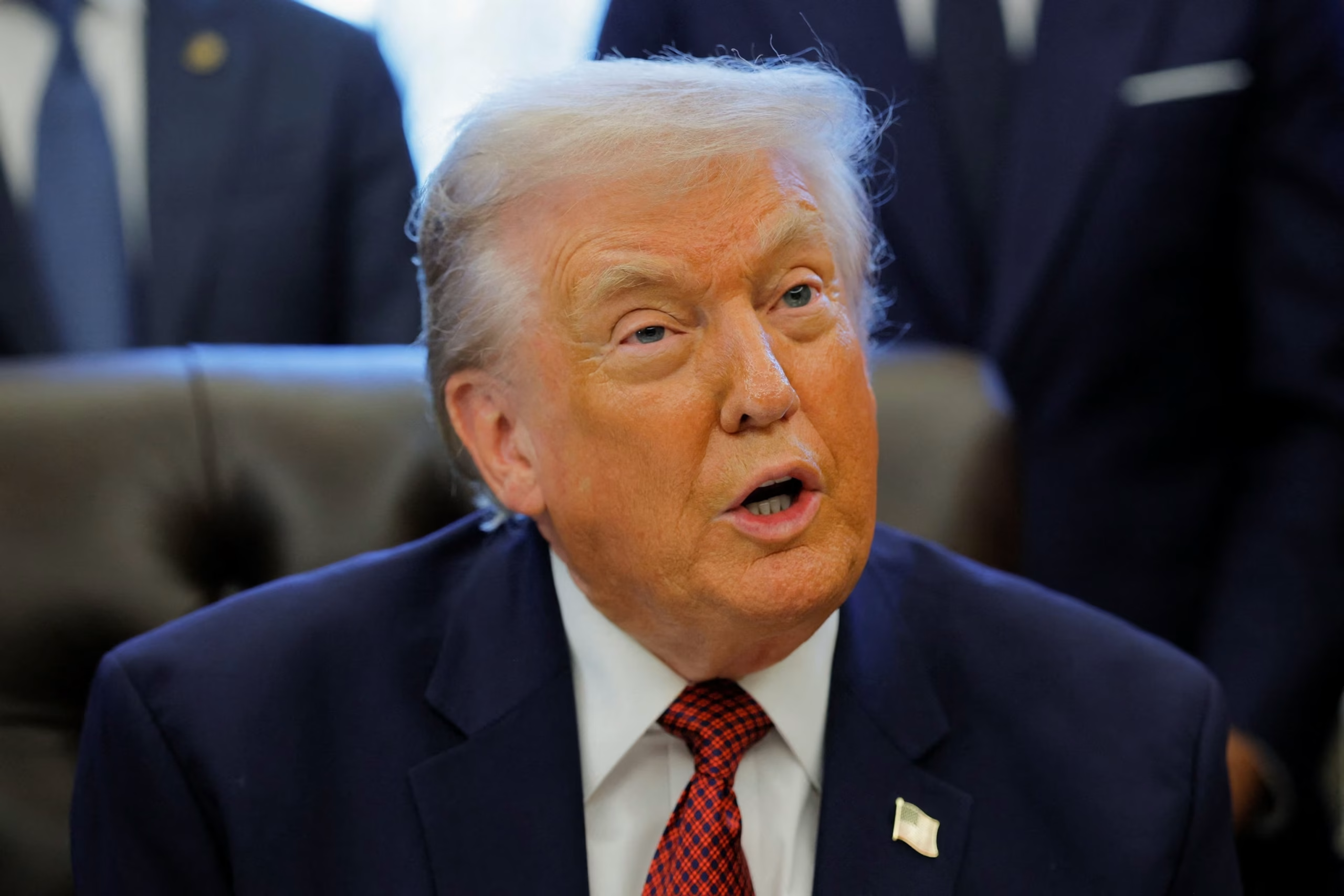
In the days following the interview, the former ally—President Donald Trump—issued a series of remarks through his social media platform, Truth Social. In a post that quickly went viral, he formally withdrew his support and endorsement of the Georgia representative, citing what he described as repeated complaints, policy disagreements, and a divergence from his vision for the party.
Trump characterized his former ally as a “ranting lunatic” and suggested that her decision-making had become increasingly erratic. He further accused her of abandoning the principles of the MAGA movement and adopting positions that he deemed inconsistent with the “America First” agenda. The president’s post also included a series of personal critiques, including comments on her intelligence and judgment, which were widely reported and shared across news outlets.
Public Reaction
The fallout from Trump’s statements and the 60 Minutes interview has provoked intense debate among political commentators, party members, and the general public. Social media has been flooded with reactions ranging from support for the former ally to defense of the president’s decision to publicly distance himself.
Some analysts have pointed out that the dispute highlights a broader challenge within the party: the tension between maintaining loyalty to influential figures and pursuing independent political goals. The situation also underscores the power of social media platforms like Truth Social to amplify disputes, turning internal disagreements into public spectacles almost instantly.
Impact on the Party
Political strategists have noted that the rift could have ripple effects in key battleground states. The former ally’s resignation and Trump’s withdrawal of support may influence voter perceptions, campaign endorsements, and the mobilization of grassroots supporters. Additionally, the public nature of the feud could impact fundraising efforts and candidate recruitment in upcoming election cycles.
While some party members have expressed concern that the dispute might alienate certain constituencies, others have argued that it presents an opportunity to clarify party values and reinforce commitments to policy objectives. The disagreement, observers suggest, may serve as a litmus test for loyalty and alignment within the broader political movement.
Broader Implications
Beyond immediate party politics, the controversy sheds light on the evolving nature of political alliances in the digital age. Platforms such as Truth Social have created environments in which rapid communication and public critique can amplify disagreements and magnify the consequences of internal disputes.
The public exchange between Trump and Marjorie Taylor Greene reflects a broader trend in which personal and professional relationships are increasingly subject to scrutiny and rapid evaluation in the court of public opinion. Analysts suggest that the combination of traditional media appearances, such as televised interviews, with social media commentary, creates a high-stakes environment where missteps can have significant ramifications.
Resignation and Next Steps
Following the interview, the Georgia representative formally announced her resignation from Congress, citing the challenges of navigating internal party dynamics and the personal pressures arising from public scrutiny. While some view her resignation as a strategic retreat, others interpret it as a reflection of the difficulties inherent in maintaining political independence within a highly polarized environment.
Her departure opens a vacancy in the House of Representatives, prompting speculation about potential successors and the impact on upcoming elections. The timing of the resignation, immediately following the interview and public rebuke, has added to the sense of drama surrounding the situation.
Analysis of Communication Style
Observers have also focused on the contrasting communication styles of the two figures. The former ally used a televised interview to articulate grievances and offer candid reflections, while Trump leveraged social media to respond quickly and directly, shaping the narrative on his terms.
The interplay of these communication methods demonstrates how political figures today must navigate multiple channels simultaneously, balancing the immediacy of social media with the perceived authority of traditional broadcast platforms. The rapid cycle of commentary and response illustrates the challenges of managing reputation, loyalty, and public perception in real time.
Looking Ahead
As the dust settles, the political community is watching closely to see how the fallout will affect relationships, party cohesion, and public perception. The rift underscores the fragility of alliances built on both personal loyalty and shared policy objectives, and serves as a reminder of the high stakes in modern American politics.
While the immediate focus remains on the implications for the Georgia representative and Trump’s political positioning, broader questions persist about how public feuds between high-profile figures influence the trajectory of policy debates, election strategies, and party identity.
Conclusion
The confrontation between Trump and his former ally marks one of the most public and consequential splits within recent political history. The sequence of events—from candid interviews to social media rebukes—offers a glimpse into the complexity of modern political alliances, where public scrutiny, loyalty, and media influence converge in unprecedented ways.
With the resignation now official, and both figures publicly asserting their perspectives, the situation remains a defining moment for party politics, offering lessons on the power and perils of personal and political relationships in today’s high-visibility, fast-moving political landscape.

Emily Johnson is a critically acclaimed essayist and novelist known for her thought-provoking works centered on feminism, women’s rights, and modern relationships. Born and raised in Portland, Oregon, Emily grew up with a deep love of books, often spending her afternoons at her local library. She went on to study literature and gender studies at UCLA, where she became deeply involved in activism and began publishing essays in campus journals. Her debut essay collection, Voices Unbound, struck a chord with readers nationwide for its fearless exploration of gender dynamics, identity, and the challenges faced by women in contemporary society. Emily later transitioned into fiction, writing novels that balance compelling storytelling with social commentary. Her protagonists are often strong, multidimensional women navigating love, ambition, and the struggles of everyday life, making her a favorite among readers who crave authentic, relatable narratives. Critics praise her ability to merge personal intimacy with universal themes. Off the page, Emily is an advocate for women in publishing, leading workshops that encourage young female writers to embrace their voices. She lives in Seattle with her partner and two rescue cats, where she continues to write, teach, and inspire a new generation of storytellers.