



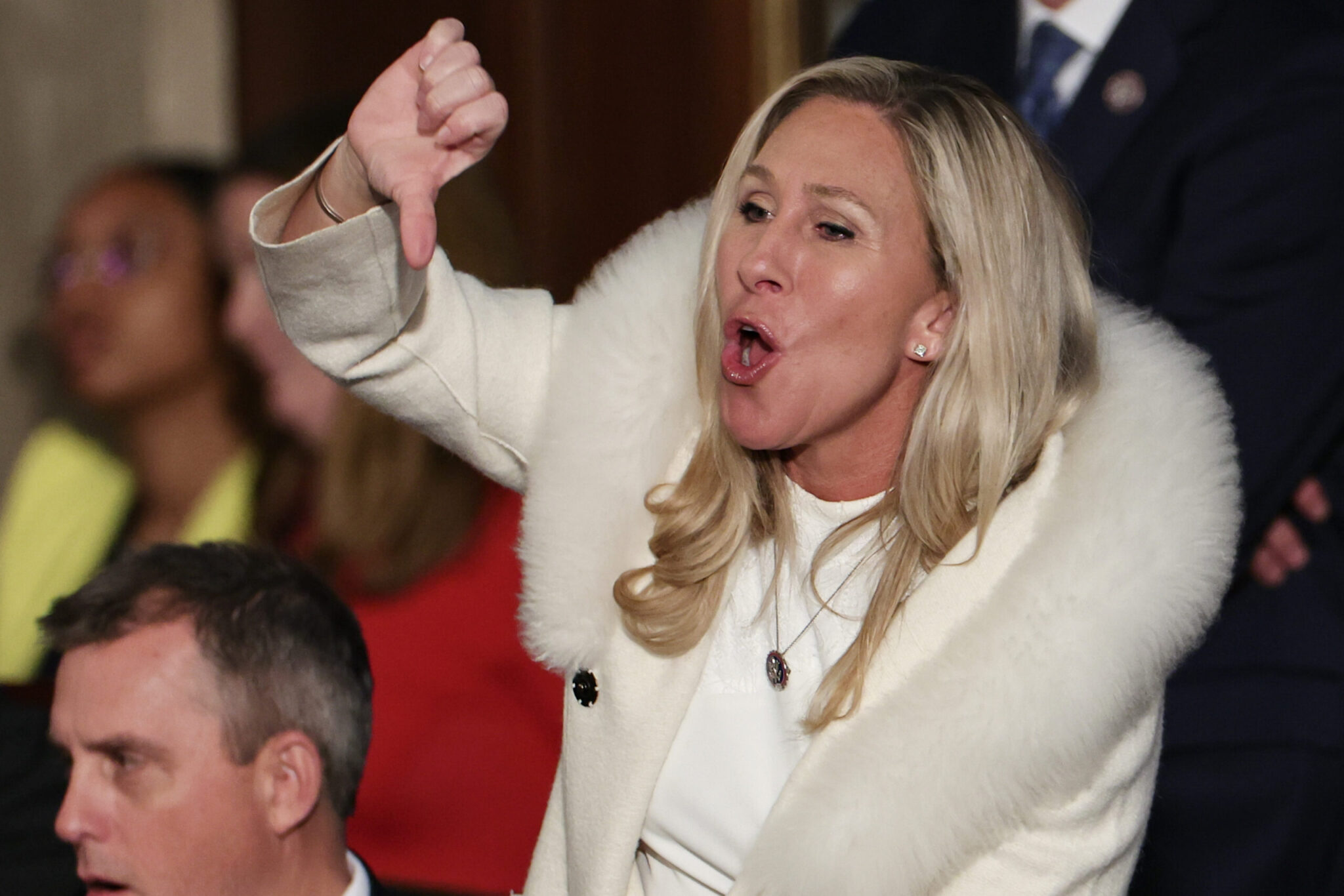
Georgia Congresswoman Marjorie Taylor Greene found herself at the center of a political firestorm after former President Donald Trump publicly announced he was cutting ties with her. The announcement came after months of growing tension between the two once-close allies, marking a stunning reversal in their political relationship.
Trump made the declaration on Truth Social on Friday, November 14, stating clearly that he was withdrawing both his support and endorsement of Greene. The post signaled a definitive break and left little room for reconciliation. In his statement, Trump emphasized that he no longer wished to associate himself with the congresswoman and suggested he was finished dealing with her entirely.
The aggressive tone of the message sent shockwaves through conservative political circles, especially given Greene’s long history as one of Trump’s most vocal defenders in Congress. The public nature of the split ensured it would dominate headlines and ignite fierce debate among Republican voters.
Trump’s Sharp Criticism and Personal Attacks
In his post, Trump did not hold back in his criticism of Greene. He complained that she had become a constant source of negativity in his orbit, accusing her of incessant complaining and self-promotion. He claimed that the conflict intensified after he shared internal polling data with her regarding potential statewide ambitions.
According to Trump, the poll showed that Greene would only receive 12 percent support if she ran for Senate or Governor, making it clear she would not succeed without his endorsement. He suggested that her anger stemmed from the realization that he would not back her future ambitions.
Trump also addressed Greene’s alleged frustration about his lack of communication. He suggested that she had been telling others that she was upset he no longer returned her phone calls. Trump dismissed those complaints, saying that with hundreds of lawmakers, dozens of senators, Cabinet members, and nearly 200 countries to manage, he did not have time for what he described as daily personal rants.
The most striking moment came when Trump referred to Greene as a “ranting lunatic,” a phrase that underscored just how hostile the relationship had become. He ended his message by stating that if another Republican challenges Greene for her seat, that person would receive his endorsement instead. He also claimed that Greene had “gone Far Left,” an accusation that stunned many observers given her reputation as a hard-right conservative.
Greene Responds with Claims of Threats and Fear for Safety
Following Trump’s explosive statement, Greene took to X, formerly known as Twitter, to respond publicly. In her posts, she said that she had begun receiving threats as a result of the public fallout with Trump, and that her personal safety was now at risk.
Greene claimed that she had been receiving warnings about her security situation and described the environment surrounding her as a growing “hotbed of threats.” She pointed directly to Trump’s influence as a driving force behind the hostility, saying that the words of the “most powerful man in the world” were now fueling dangerous attacks against her.
She also stressed that, as a woman, she takes threats from men seriously and does not dismiss them as empty rhetoric. In one of her most controversial remarks, Greene compared the pressure she claimed to be feeling to a small fraction of what victims associated with Jeffrey Epstein may have experienced. The statement drew immediate backlash from critics who felt the comparison was inappropriate and inflammatory.
Greene added that the situation was particularly shocking because she has overwhelmingly supported Trump’s legislative agenda. She argued that she has consistently voted in his favor and stood by him during past controversies, making his public hostility toward her all the more surprising.
Accusations of Organized Online Harassment
In her response, Greene went further, accusing Trump’s online supporters of launching coordinated harassment campaigns against her. She suggested that many of those attacking her online were being “paid” and that Trump’s rhetoric had empowered them to escalate their abuse.
She described their behavior as venomous and radical, claiming that Trump’s words had turned internet trolling into something far more dangerous. According to Greene, this shift from political criticism to personal threats represented a dangerous new phase of political conflict.
Her claims ignited debate over whether political leaders should be held responsible for the actions of their most aggressive supporters and whether Trump’s language had crossed a line into incitement.
Greene Denies Trump’s Claims About Communication
After Trump accused her of repeatedly trying to reach him by phone, Greene issued another statement pushing back strongly against his version of events. She denied calling him at all and said that she had only sent a few text messages on the day of his outburst.
To support her claim, she posted screenshots of text messages she said were sent to Trump. According to Greene, these messages revolved around one central issue: the Epstein files. She implied that her position on the potential release of these documents played a major role in triggering Trump’s reaction.
Greene asserted that it was not her political ambitions or polling numbers that angered Trump, but rather her willingness to raise concerns about the Epstein case. She claimed that her messages were enough to send him “over the edge,” leading directly to his public attack.
The Epstein Files and Claims of Political Intimidation
Greene’s most explosive allegations centered on her belief that Trump is attempting to stop the release of the Epstein files. She suggested that his decision to publicly attack her was not only personal but strategic.
According to Greene, Trump is using her as an example to intimidate other Republicans ahead of a key vote scheduled for the following week regarding the potential release of Epstein-related documents. She claimed that the intensity of Trump’s reaction demonstrates how determined he is to prevent the information from becoming public.
“It’s astonishing,” Greene wrote, “how hard he’s fighting to stop the Epstein files from coming out that he actually goes to this level.” Her statement framed the dispute not merely as a political falling-out but as part of a larger battle over transparency, corruption, and hidden power.
The allegation immediately fueled online speculation and conspiracy theories, with supporters and critics alike debating whether her claims had any basis in fact.
A Once-Unshakable Alliance Collapses
For years, Greene had been considered one of Trump’s most loyal allies in Congress. She rose to national prominence largely due to her unwavering support of his policies and rhetoric. In many ways, her political brand became intertwined with Trump’s movement.
The public nature of their split marks one of the most dramatic ruptures within the MAGA political world to date. Unlike previous disagreements that were resolved behind closed doors, this conflict has unfolded entirely in front of the public, leaving no ambiguity about the depth of their divide.
Political analysts note that Trump rarely turns so aggressively against his fiercest defenders unless he believes doing so serves a strategic purpose. That calculation has intensified speculation about whether Greene’s stance on the Epstein files—or something else entirely—has altered their relationship permanently.
Political Fallout for Both Figures
The consequences of this feud could be severe for both Trump and Greene. For Greene, losing Trump’s endorsement could dramatically reshape her political future. His influence among Republican voters remains powerful, particularly in deeply conservative districts. A Trump-backed challenger could pose a significant threat to her re-election prospects.
At the same time, Greene has attempted to reposition herself as a victim of political retaliation rather than a disgraced ally. By framing Trump’s actions as intimidation and censorship, she appears to be appealing to voters who distrust powerful political figures and institutions.
For Trump, the feud introduces new risks. Publicly attacking a longtime supporter opens him up to criticism that he fractures his own base. If Greene continues to escalate her claims—particularly those involving Epstein—it may create ongoing political distractions at a time when Trump is focused on securing party unity.
Reactions Across the Political Spectrum
Reactions to the conflict have been deeply divided. Some Republicans have rallied behind Trump, repeating his criticisms of Greene and accusing her of seeking attention. Others have expressed concern that the party is tearing itself apart through public disputes.
Democrats have watched the feud unfold with a mix of amusement and alarm, with some lawmakers pointing to the clash as evidence of instability within the Republican Party. Meanwhile, independent voters have questioned whether the personal nature of the attacks reflects broader issues within American politics.
On social media, the feud has dominated political discussion, with hashtags related to both figures trending as supporters and critics battle over who is telling the truth.
An Uncertain Future for Greene and Trump
At this stage, it remains unclear how far the conflict will go. Trump has shown little interest in softening his stance, while Greene appears determined to continue speaking out. If she persists in linking Trump’s actions to the Epstein files, the feud could take on even greater significance.
The upcoming vote on whether to release the Epstein-related documents may serve as a pivotal moment. Depending on the outcome, the tensions between Trump, Greene, and other Republican lawmakers could intensify further.
What is certain is that the once-unbreakable alliance between Trump and Greene has fully collapsed, replaced by public accusations, personal attacks, and political maneuvering. The fallout from this confrontation is likely to reverberate through the Republican Party for months to come.

Emily Johnson is a critically acclaimed essayist and novelist known for her thought-provoking works centered on feminism, women’s rights, and modern relationships. Born and raised in Portland, Oregon, Emily grew up with a deep love of books, often spending her afternoons at her local library. She went on to study literature and gender studies at UCLA, where she became deeply involved in activism and began publishing essays in campus journals. Her debut essay collection, Voices Unbound, struck a chord with readers nationwide for its fearless exploration of gender dynamics, identity, and the challenges faced by women in contemporary society. Emily later transitioned into fiction, writing novels that balance compelling storytelling with social commentary. Her protagonists are often strong, multidimensional women navigating love, ambition, and the struggles of everyday life, making her a favorite among readers who crave authentic, relatable narratives. Critics praise her ability to merge personal intimacy with universal themes. Off the page, Emily is an advocate for women in publishing, leading workshops that encourage young female writers to embrace their voices. She lives in Seattle with her partner and two rescue cats, where she continues to write, teach, and inspire a new generation of storytellers.