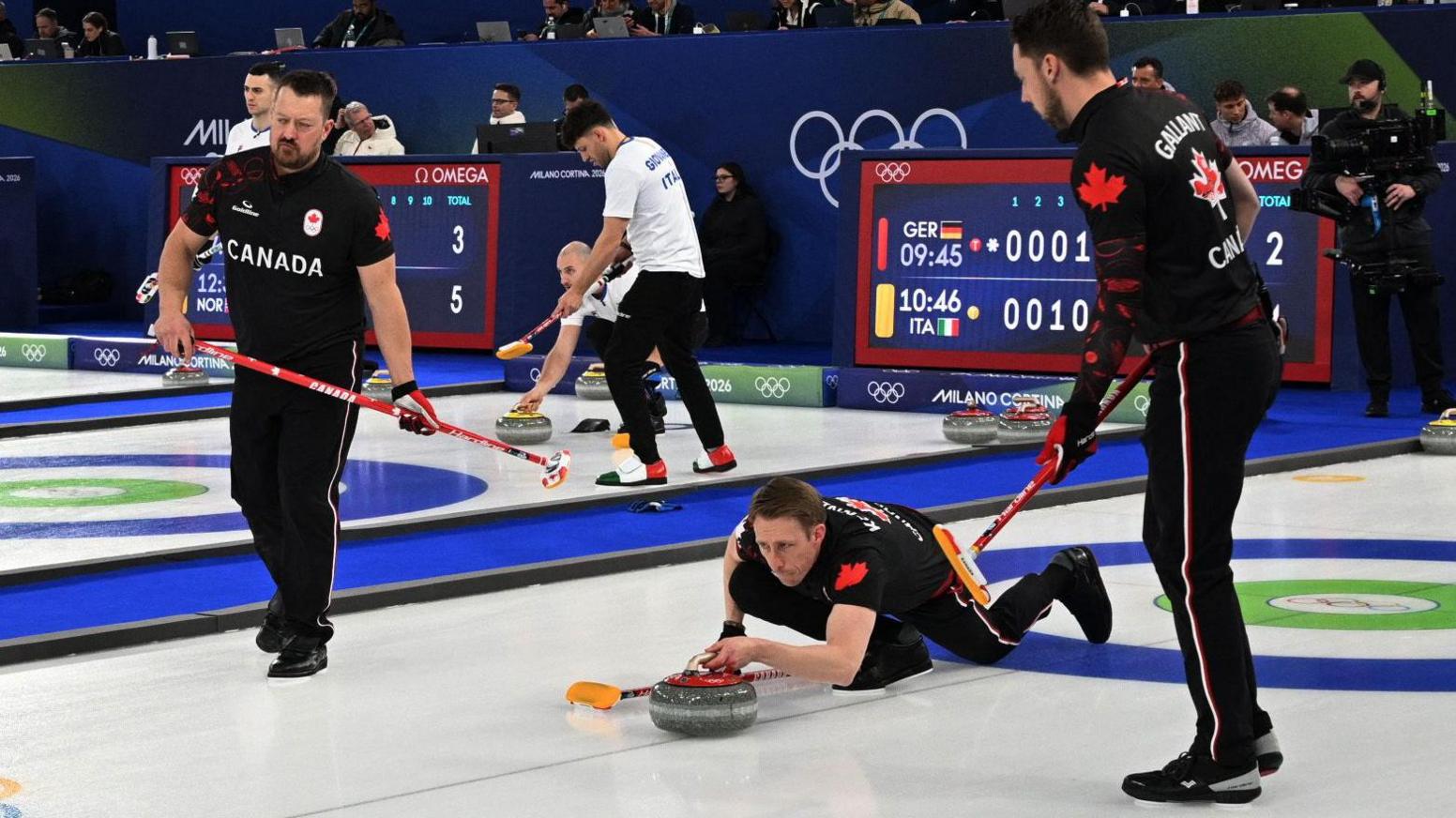
The curling community has been thrust into the spotlight after a heated incident during the 2026 Winter Olympic Games in Italy, prompting World Curling, the sport’s international governing body, to issue a formal statement addressing the controversy. The dispute unfolded during a men’s round robin match between Canada and Sweden, igniting debates over sportsmanship, rules, and player conduct in one of the Winter Games’ most traditionally composed sports.
The 2026 Winter Olympics, hosted across Milan and Cortina d’Ampezzo, have brought together roughly 2,900 athletes from more than 90 countries, competing across sixteen days of high-stakes winter sports. While curling is often regarded as a niche sport with a loyal following, this year it has unexpectedly captured global attention, with fans drawn to the tense tactical play and dramatic finishes. Yet the rising popularity of the sport was tested when the Canadian men’s curling team became embroiled in allegations of cheating during their Friday evening match against Sweden.
Tensions were apparent from the opening stones. Sweden’s team, led by skip Oskar Eriksson, raised concerns over the conduct of the Canadian players, alleging that they had touched the stones after release—a clear violation of curling rules if occurring beyond the hog line. The complaint prompted a temporary halt to the proceedings, during which officials closely monitored the game. However, the scrutiny did not ease Swedish frustrations, particularly Eriksson, who accused Canadian player Marc Kennedy of double-touching the stones, a serious infraction in competitive curling.
Kennedy’s reaction was immediate and forceful. Frustrated by the public accusation, he directed strong language at Eriksson, reportedly telling him to “f*** off,” while also expressing a willingness to review footage after the match to clarify his actions. The outburst further intensified the spotlight on the match, raising questions about conduct, rule enforcement, and the challenges faced by officials during high-pressure Olympic competitions.
In response to the controversy, World Curling released a statement clarifying the rules surrounding stone delivery and player conduct. The statement emphasized that, while game umpires are positioned at the ends of each sheet and cannot always see every detail of stone delivery, they are equipped to intervene when delivery issues arise. Specifically, the governing body highlighted that no violations had been recorded during the period in question in the Canada-Sweden match.
According to the statement, players are allowed to retouch the handle of a stone as many times as necessary before it crosses the hog line. Any contact after the stone passes the hog line, however, constitutes a violation and results in the stone being removed from play. The relevant Rule R.5(e) specifies that “a stone must be clearly released from the hand before it reaches the hog line at the delivery end. If the player fails to do so, the stone is immediately removed from play by the delivering team.” World Curling indicated that the Canadian team’s actions, including any potential second touches by Kennedy, occurred before the stones had crossed the hog line, and therefore were within the rules.
The governing body also addressed player conduct and language, noting that Kennedy had received a verbal warning regarding the offensive language used during the match. World Curling underscored that any continuation of inappropriate behavior could result in sanctions under Rule R.19, which prohibits “improper conduct, foul or offensive language, equipment abuse, or wilful damage” and allows for suspension of offending team members. The statement made clear that while the competitive intensity of Olympic curling can produce emotional moments, standards of behavior are strictly enforced to maintain the integrity of the sport.
To prevent future controversies, World Curling announced a procedural change: starting Saturday afternoon, two officials would rotate among all four sheets in play to closely observe stone deliveries. This adjustment is intended to ensure consistent rule enforcement across simultaneous matches and to reduce ambiguity about infractions. The move was widely interpreted as a proactive effort to preserve fairness while minimizing disputes that can overshadow athletic performance.
The incident has ignited broader discussions about curling’s growing international profile and the scrutiny that comes with heightened attention. Traditionally regarded as a gentlemanly sport marked by precision and strategy, curling rarely attracts headlines for conflict or confrontation. Yet the combination of global viewership, national pride, and the Olympics’ intense competitive environment can produce uncharacteristic moments of tension, as evidenced by the heated exchanges between Kennedy and Eriksson.
Observers have noted that while the rule regarding retouching stones may appear nuanced, it plays a critical role in competitive strategy. Players often adjust the stone handle before crossing the hog line to ensure proper rotation and trajectory. The distinction between allowed contact and a violation is essential for fairness, making careful observation by officials a crucial part of match management. The clarification from World Curling reassures teams and fans that the rules are both well-defined and consistently applied, even amid controversial claims.
The verbal clash between Kennedy and Eriksson has also prompted discussions on sportsmanship in curling. While passion and competitive intensity are expected in elite-level athletics, offensive language directed at opponents can undermine the spirit of the game. The governing body’s emphasis on Rule R.19 reflects a commitment to upholding standards of decorum, even under the pressures of Olympic competition, reinforcing that respect for fellow competitors is as important as skillful play.
From a broader perspective, the incident highlights the challenges faced by officials in overseeing highly tactical sports with fine technical distinctions. Curling involves rapid decision-making, precise hand-eye coordination, and subtle physical movements, all of which can be difficult to monitor from the ends of the sheet. The introduction of rotating officials is designed to address these challenges, providing closer oversight and reinforcing confidence in rule enforcement, particularly in matches with high stakes and high-profile teams.
Despite the tension, many fans remain engaged and fascinated by the unfolding story, demonstrating curling’s unexpected rise in global visibility. The controversy, while momentarily disruptive, has not diminished enthusiasm for the sport; rather, it has sparked discussion about rules, fairness, and the intensity of Olympic-level competition. Analysts have noted that incidents such as these can ultimately serve to educate audiences about the sport’s complexities while highlighting the skill, strategy, and precision required at the highest level.
As the 2026 Winter Olympics continue, the Canadian and Swedish teams are expected to move forward under the clarified rules and enhanced official supervision. Both teams have demonstrated high levels of competitive skill, and the governing body’s intervention aims to ensure that matches are decided by strategy, teamwork, and execution, rather than disputes over technicalities or player behavior.
In conclusion, the incident between Canada and Sweden has prompted an unprecedented public response from World Curling, reinforcing the governing body’s commitment to rule clarity, fair play, and professional conduct. While the controversy briefly overshadowed the excitement of the Olympic Games, it has also offered an opportunity to highlight curling’s intricacies, the pressures faced by athletes at the highest level, and the critical role of officials in maintaining integrity. As fans continue to tune in, the sport’s rising profile is likely to bring both increased attention and greater scrutiny, ensuring that curling remains a compelling and closely watched feature of the Winter Olympics.

Emily Johnson is a critically acclaimed essayist and novelist known for her thought-provoking works centered on feminism, women’s rights, and modern relationships. Born and raised in Portland, Oregon, Emily grew up with a deep love of books, often spending her afternoons at her local library. She went on to study literature and gender studies at UCLA, where she became deeply involved in activism and began publishing essays in campus journals. Her debut essay collection, Voices Unbound, struck a chord with readers nationwide for its fearless exploration of gender dynamics, identity, and the challenges faced by women in contemporary society. Emily later transitioned into fiction, writing novels that balance compelling storytelling with social commentary. Her protagonists are often strong, multidimensional women navigating love, ambition, and the struggles of everyday life, making her a favorite among readers who crave authentic, relatable narratives. Critics praise her ability to merge personal intimacy with universal themes. Off the page, Emily is an advocate for women in publishing, leading workshops that encourage young female writers to embrace their voices. She lives in Seattle with her partner and two rescue cats, where she continues to write, teach, and inspire a new generation of storytellers.