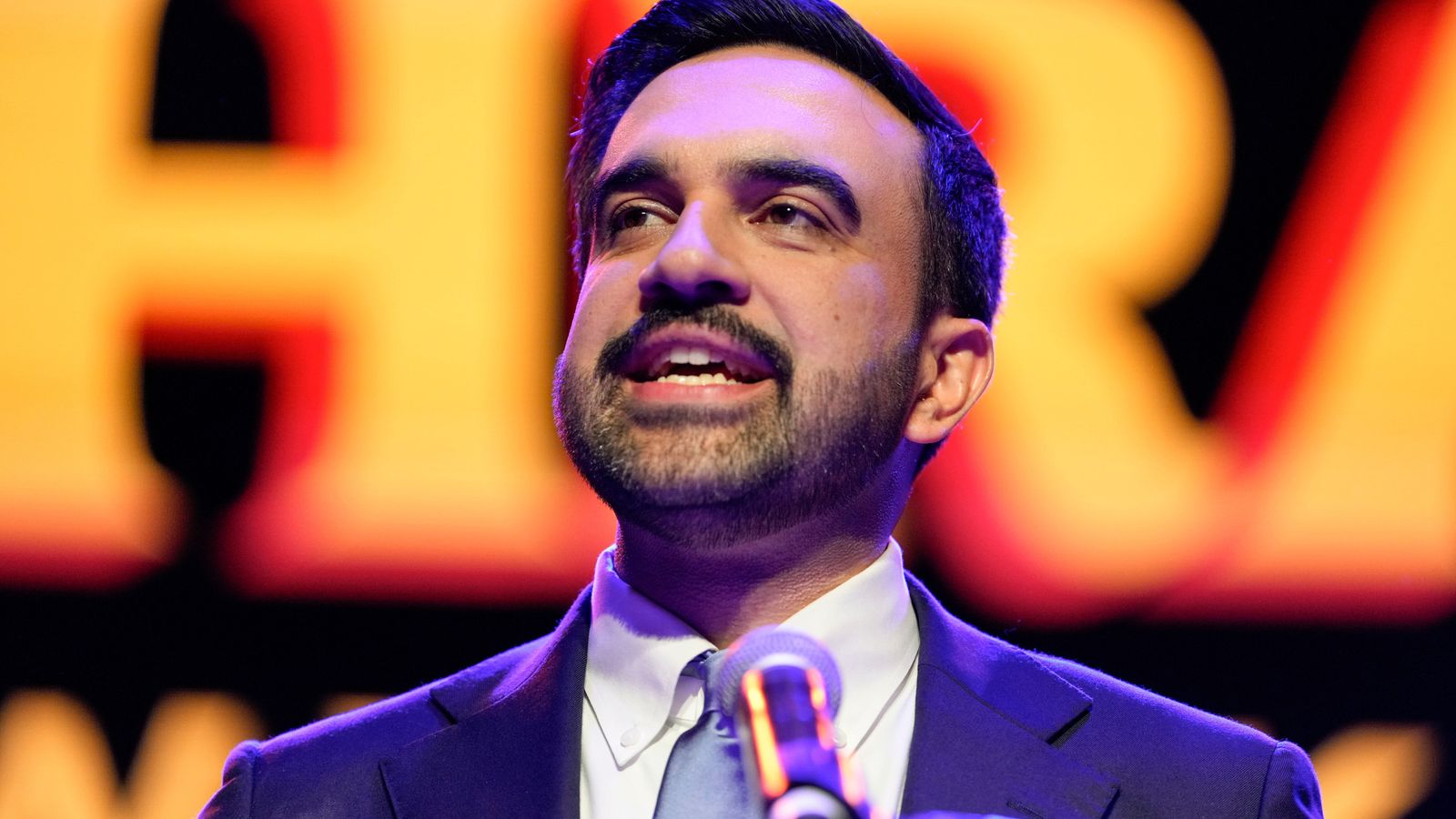
A centuries-old record error may mean New York’s newest mayor has been misnumbered — and historians say City Hall could be forced to correct 350 years of political history
Despite winning a decisive election and preparing to take office at the start of 2026, New York City’s mayor-elect Zohran Mamdani may be stepping into far more historical controversy than anyone expected. While supporters have been counting down the days until his January swearing-in, a strange revelation from the 1600s is now casting doubt over one surprising detail of his upcoming inauguration.
Mamdani, 34, made history last month in multiple ways. He became New York City’s first Muslim mayor, the first of South Asian descent, the first born in Africa, and the first Millennial to hold the powerful office. His wife, Rama Duwaji, 28, also made headlines as the city’s first-ever Gen Z first lady.
But while the city prepares to welcome what it believes will be its 111th mayor, historians now say that number may be completely wrong — and that Mamdani may actually be stepping into the role as New York’s 112th mayor instead.
And all because of a political oversight that dates back more than three centuries.
A shocking historical glitch hidden in plain sight
The extraordinary claim was first raised by Washington, D.C.–based historian and archivist Paul Hortenstine, who stumbled upon the error while researching New York’s early colonial ties to the transatlantic slave trade.
While reviewing 17th-century government documents, Hortenstine noticed something unusual about Matthias Nicolls, who officially served as New York City’s sixth mayor in the early colonial period. According to every modern list maintained by the city, Nicolls served a single term beginning in 1672.
But buried deep inside the preserved papers of colonial governor Edmund Andros, Hortenstine discovered evidence that Nicolls actually served a second, entirely separate term just a few years later.
That second term, which began in 1675, was never added to the official mayoral records.
“If you look at the documents closely, there is no question he came back into office after being replaced,” Hortenstine said. “It’s a full second term. It just vanished from the official count.”
The implication is staggering: every New York mayor after Nicolls — for more than 350 years — may have been misnumbered by exactly one.
Why Mamdani’s mayoral number could be wrong
Under U.S. political tradition, when a leader serves non-consecutive terms, each term is counted separately. This is why Grover Cleveland is listed as both the 22nd and 24th U.S. president.
By that same logic, Nicolls’ return to office in 1675 should have been counted as a brand-new mayoral term — meaning the city’s entire numbering system shifted off by one from that point forward.
That would make:
-
Eric Adams misnumbered
-
Bill de Blasio misnumbered
-
Michael Bloomberg misnumbered
-
And now, Zohran Mamdani’s incoming mayoral number misassigned as well
If the correction is formally acknowledged, Mamdani would become New York City’s 112th mayor, not its 111th.
And that means more than a century of plaques, official documents, portraits, and historical references would technically be wrong.
Historians say this error has been known before
While the discovery feels new to the public, it isn’t entirely without precedent.
In 1989, respected historian Peter R. Christoph published a detailed paper in the Record of the New York Genealogical and Biographical Society outlining the same mistake.
In that essay, Christoph famously wrote:
“Edward I. Koch is the 105th Mayor of New York. The City of New York Official Directory says so. So does The New York Times. But they are wrong: He is the 106th.”
Christoph added that after Nicolls, “99 mayors [were] misnumbered, most of them gone to the grave secure in the knowledge of their place in history — but all numerically out of whack.”
The claim drew quiet academic interest at the time but never resulted in a formal correction by the city.
Until now.
Historian has already contacted Mamdani’s office
Following Mamdani’s election victory, Hortenstine reached out directly to the mayor-elect’s team, urging them to review the archival findings before the official inauguration.
“This was in 1675,” he said. “And when I later reviewed the city’s official list, I was stunned to see that the term simply wasn’t there.”
He added that the correction would technically require every mayor after the sixth to be renumbered, including Eric Adams, who would retroactively move up one place in history.
As of now, Mamdani’s transition team has not issued any public response.
Trump’s hostility and the political backdrop
Mamdani’s rise to office has already drawn national attention — particularly from President Donald Trump, who previously branded him a “100 percent communist lunatic” and a “total nut job” during the campaign.
Despite the attacks, Mamdani won convincingly and is set to assume office on January 1, 2026, pending no legal challenges to the election itself.
Now, while the numbering error does not threaten his legitimacy as mayor, historians warn that it could quietly ignite a political and symbolic debate inside City Hall.
Because once the records are publicly corrected, every official reference plaque, archive, and ceremonial document would technically need revision.
Why this obscure detail suddenly matters
On paper, this may sound like nothing more than academic trivia. But in a city as obsessed with legacy as New York, mayoral numbering is deeply symbolic. It appears on:
-
Official seals
-
Inaugural programs
-
Museum exhibits
-
City Hall displays
-
History books
-
Political biographies
Correcting the count would instantly rewrite hundreds of years of recorded civic history.
And Mamdani would become the symbolic figure who triggered that reckoning.
What happens next is unclear
At this point, there is no legal obligation for the city to revise the mayoral numbering. But historians argue that once the evidence is acknowledged publicly, ignoring it would mean knowingly preserving a historical error.
Whether New York officials choose to act — or quietly let the error remain untouched — remains to be seen.
For now, Mamdani’s swearing-in is still scheduled for January, and the city continues to refer to him as the 111th mayor.
But behind the scenes, archivists and historians are already asking the same question:
Will New York finally fix a mistake that’s been hiding in its records for over 350 years — or will one of the city’s most unusual historical errors continue untouched?

Emily Johnson is a critically acclaimed essayist and novelist known for her thought-provoking works centered on feminism, women’s rights, and modern relationships. Born and raised in Portland, Oregon, Emily grew up with a deep love of books, often spending her afternoons at her local library. She went on to study literature and gender studies at UCLA, where she became deeply involved in activism and began publishing essays in campus journals. Her debut essay collection, Voices Unbound, struck a chord with readers nationwide for its fearless exploration of gender dynamics, identity, and the challenges faced by women in contemporary society. Emily later transitioned into fiction, writing novels that balance compelling storytelling with social commentary. Her protagonists are often strong, multidimensional women navigating love, ambition, and the struggles of everyday life, making her a favorite among readers who crave authentic, relatable narratives. Critics praise her ability to merge personal intimacy with universal themes. Off the page, Emily is an advocate for women in publishing, leading workshops that encourage young female writers to embrace their voices. She lives in Seattle with her partner and two rescue cats, where she continues to write, teach, and inspire a new generation of storytellers.