



A tense moment unfolded on daytime television this week when a prominent talk show host issued an on-air correction following a segment that criticized President Donald Trump’s response to a series of recent tragedies. The exchange, which aired live, quickly drew attention online and reignited debate over accuracy, accountability, and the speed at which public figures respond to breaking news.
The incident occurred during Monday’s broadcast of The View, a long-running daytime program known for its political commentary and outspoken panel discussions. During a heated segment, co-host Whoopi Goldberg sharply criticized the president, questioning his public response to violent incidents that had occurred days earlier in the United States and abroad.
The remarks came amid widespread public mourning following a deadly shooting near Brown University, an attack in Sydney, Australia, and the killing of filmmaker Rob Reiner and his wife, Michele Singer Reiner. Each incident had generated significant media coverage and emotional reactions across political lines.
As the discussion unfolded, Goldberg focused her criticism on what she characterized as a lack of empathy and leadership from the White House. Her comments were forceful and emotional, reflecting the gravity of the events under discussion and the show’s often confrontational tone.
Viewers watching live saw Goldberg deliver a pointed rebuke, accusing the president of failing to address the tragedies and questioning his moral authority. The comments quickly spread across social media platforms, where clips of the segment circulated alongside sharp reactions from both supporters and critics of the show.
A Segment Fueled by Anger and Grief
The on-air exchange took place against the backdrop of mounting public grief. The Brown University shooting had left two students dead and several others injured, while the Sydney attack had shocked audiences internationally. In the United States, the killing of Rob Reiner—an outspoken public figure—and his wife had further intensified emotions.
During the segment, Goldberg referenced all three events in quick succession, expressing frustration and sorrow. Her remarks suggested that the president had chosen to comment on political disputes rather than acknowledge human suffering.
Her tone escalated as she questioned whether Americans were hearing the kind of leadership they expected during moments of national and international tragedy. At one point, she openly challenged the president’s fitness to represent the country’s values, language that drew both applause and criticism from viewers.
At the time of the broadcast, Goldberg appeared unaware—or unconvinced—that the president had already issued public statements regarding the incidents she mentioned.
Public Reaction and Rapid Scrutiny
Almost immediately after the segment aired, viewers and commentators began pointing out discrepancies between Goldberg’s claims and the public record. Clips of President Trump’s remarks from a White House event the previous day resurfaced online, showing him offering condolences to victims of both the Brown University shooting and the attack in Australia.
The scrutiny intensified as journalists and media watchdogs compared the timeline of Trump’s statements with Goldberg’s assertions on air. According to publicly available footage, the president had addressed the Brown University tragedy less than two hours after it occurred, and had also referenced the violence overseas during the same appearance.
As the program continued, producers were reportedly alerted to the discrepancy.
The Mid-Program Correction
After the show returned from a commercial break, Goldberg addressed the issue directly.
She acknowledged that her earlier claim—that the president had not commented on the Brown University shooting—was incorrect. In a brief on-air statement, she clarified that Trump had, in fact, issued condolences.
“I’m going to make a correction here,” Goldberg said, noting that the president had spoken publicly about the victims. She conceded that her earlier assertion was mistaken and offered a succinct acknowledgment of the error.
While the correction was brief, it marked a clear reversal from the forceful accusations made earlier in the segment.
Goldberg added that while she disagreed with the substance and tone of the president’s broader conduct, she recognized that he had addressed the tragedy. The moment was notable not only for the correction itself, but for how quickly it occurred—within minutes of the original claim.
What the President Actually Said
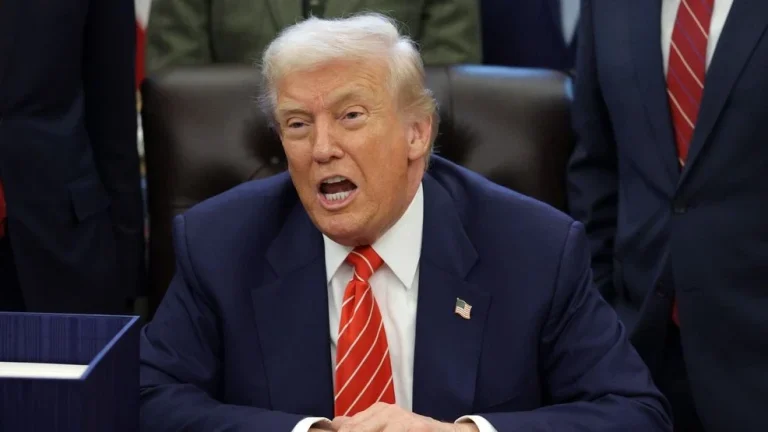
The statements in question came during a White House event held the day before the broadcast. In remarks captured on video, President Trump expressed condolences to the victims of the Brown University shooting, noting the loss of life and the injuries sustained.
“I want to pay my respects to the people—unfortunately, two are no longer with us—at Brown University,” the president said, also acknowledging those injured.
He went on to reference the attack in Australia, offering similar expressions of sympathy.
The comments were widely reported at the time and available through multiple news outlets.
Broader Implications for Live Television
The incident has renewed discussion about the challenges of live television, particularly during emotionally charged news cycles. Programs that blend commentary with breaking news often operate under intense time pressure, increasing the risk of misstatements.
Media analysts note that while on-air corrections are an essential part of responsible broadcasting, they rarely travel as far or as fast as the original claims—especially in the age of clipped videos and viral social media posts.
“The initial statement tends to stick,” said one media ethics expert. “Even when a correction is issued quickly, many viewers may never see it.”
https://twitter.com/saras76/status/2000943295908991037
A Familiar Flashpoint
For Goldberg, the episode fits into a broader pattern of high-profile political clashes on The View, a show that frequently draws headlines for its confrontations and strong opinions. Supporters argue that the panel’s passion reflects genuine public sentiment, while critics say it sometimes blurs the line between commentary and factual reporting.
The exchange also underscores how deeply polarized political discourse has become, particularly when tragedy intersects with partisan debate.
While Goldberg’s correction diffused immediate factual concerns, it did little to quell the broader argument over tone, trust, and media responsibility.
The Aftermath
Clips of both the original segment and the correction circulated widely online, fueling renewed arguments over credibility and bias in mainstream media. Supporters of the president pointed to the moment as evidence of unfair treatment, while others emphasized that Goldberg acknowledged the mistake promptly.
The network has not issued a separate statement beyond the on-air correction.
As the news cycle moves forward, the episode stands as a reminder of how quickly narratives can form—and how important it is for public figures to address errors transparently when they occur.

Emily Johnson is a critically acclaimed essayist and novelist known for her thought-provoking works centered on feminism, women’s rights, and modern relationships. Born and raised in Portland, Oregon, Emily grew up with a deep love of books, often spending her afternoons at her local library. She went on to study literature and gender studies at UCLA, where she became deeply involved in activism and began publishing essays in campus journals. Her debut essay collection, Voices Unbound, struck a chord with readers nationwide for its fearless exploration of gender dynamics, identity, and the challenges faced by women in contemporary society. Emily later transitioned into fiction, writing novels that balance compelling storytelling with social commentary. Her protagonists are often strong, multidimensional women navigating love, ambition, and the struggles of everyday life, making her a favorite among readers who crave authentic, relatable narratives. Critics praise her ability to merge personal intimacy with universal themes. Off the page, Emily is an advocate for women in publishing, leading workshops that encourage young female writers to embrace their voices. She lives in Seattle with her partner and two rescue cats, where she continues to write, teach, and inspire a new generation of storytellers.