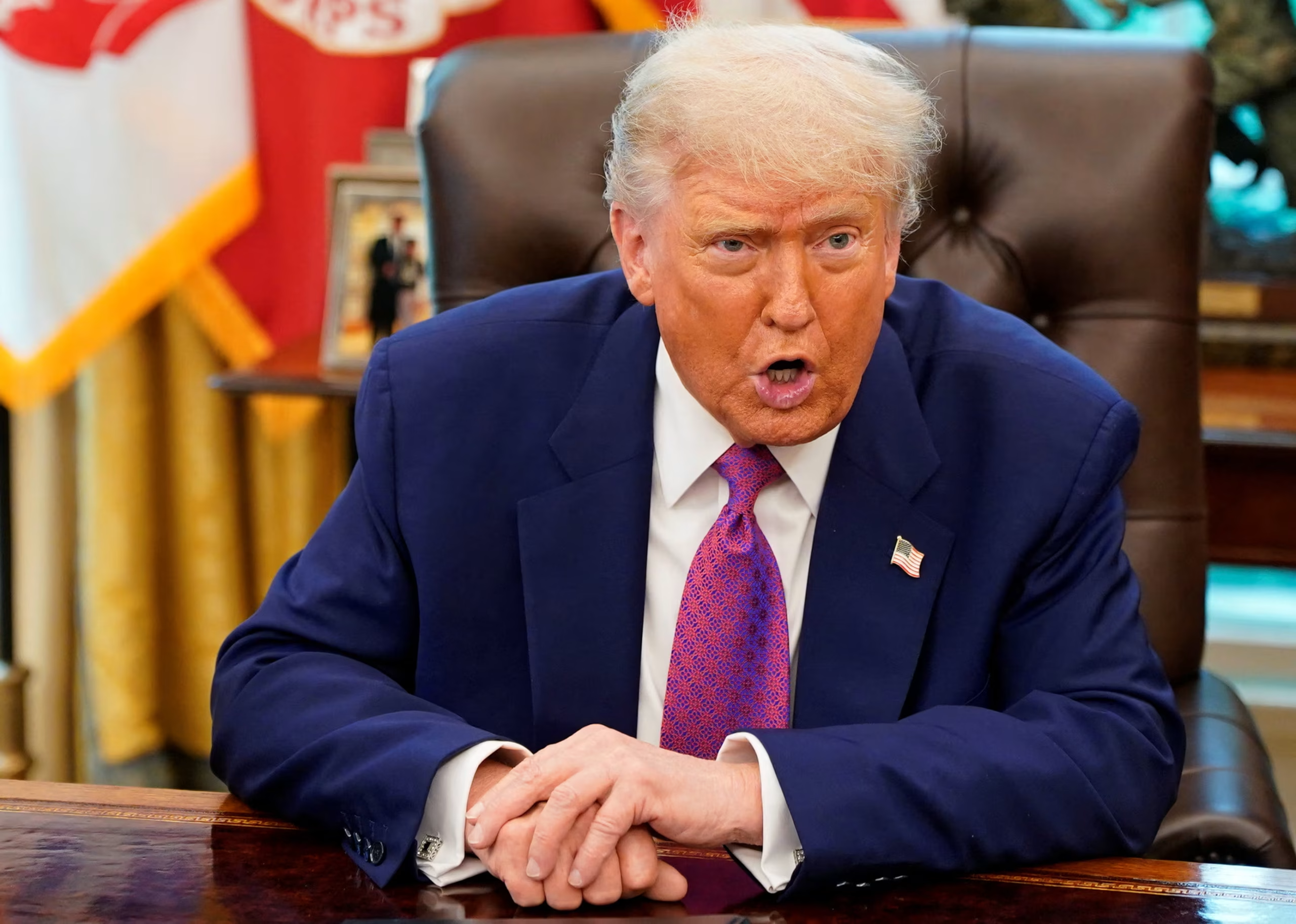
Questions about President Donald Trump’s physical condition have been circulating for weeks, fueled by speculation, scattered photos, and persistent inquiries from the press. On Monday, the White House chose to address those concerns directly by releasing the official results of Trump’s long-awaited MRI scan — a medical update that had been promised since October and one that both supporters and critics were watching closely.
The scan, performed at Walter Reed National Military Medical Center on October 10, immediately drew national interest because of the timing. It marked Trump’s second major medical evaluation in less than a year, prompting conversations about why additional imaging was necessary and whether the tests involved neurological concerns rather than routine procedures. For weeks, reporters pressed the administration about whether the scans included Trump’s brain, particularly as online discussions grew around his physical appearance and a handful of viral images that sparked questions about bruising and swelling.
The White House, however, clarified that the October MRI was primarily focused on cardiovascular and abdominal imaging — not neurological testing. According to officials, the scans were part of what they described as an “advanced executive physical” appropriate for a man of Trump’s age and responsibilities.
Why the MRI became a national talking point
The speculation surrounding the MRI did not emerge in a vacuum. Earlier in the year, images circulated showing what appeared to be makeup-covered bruises on Trump’s hand, fueling amateur diagnoses on social media. His ankles also appeared swollen in several photographs, which eventually led the White House to reveal that Trump had chronic venous insufficiency — a condition involving impaired blood flow in the veins.
The administration emphasized at the time that the condition was “benign and common,” but the explanation did little to quiet questions from those already scrutinizing Trump’s health.
The conversation reignited on Thanksgiving weekend when Trump was filmed appearing to rest his eyes briefly during an Oval Office meeting, leading some online commentators to claim he had fallen asleep. The White House dismissed the chatter, calling it a “manufactured narrative,” but it set the stage for renewed pressure on officials to release any available medical evidence.
Reporters specifically asked whether Trump underwent a brain MRI in October — a question the president himself addressed, insisting he had taken and “aced” a cognitive test and that the imaging was unrelated to neurological concerns.
The official report from Trump’s physician
On Monday, U.S. Navy Captain Sean Barbabella, Trump’s official physician, presented the findings in a memo that Press Secretary Karoline Leavitt read in full during a briefing. According to the memo, the MRI showed no abnormalities and no signs of arterial blockage, inflammation, organ dysfunction, or other conditions that might impair Trump’s long-term health.
The document described the imaging as part of a comprehensive evaluation “to identify issues early, assess cardiovascular health, examine abdominal function, and ensure the President maintains long-term vitality and performance.”
Leavitt summarized the results in clear and confident terms:
-
Trump’s cardiovascular imaging was found to be “perfectly normal.”
No arterial narrowing, no vessel abnormalities, no signs of impaired blood flow. -
The chambers of the heart were normal in size, and the vessel walls were smooth and healthy.
There were no indications of inflammation or clotting — two conditions that doctors typically monitor closely in older patients. -
Abdominal imaging showed all major organs functioning within normal limits.
The report highlighted that the liver, kidneys, pancreas, and other vital organs showed no acute or chronic concerns.
Captain Barbabella concluded:
“President Trump remains in excellent overall health.”
The memo also noted that such detailed imaging is standard for individuals Trump’s age undergoing high-level executive physicals, particularly given the continued strain and demanding schedule of the presidency.
The political reaction and Trump’s own response
While the medical findings attempted to close the discussion, political figures continued to leverage the conversation for their own messaging. Minnesota Governor Tim Walz — engaged in a recent public clash with Trump — previously called on the president to release his MRI results, a challenge Trump addressed directly when speaking to reporters aboard Air Force One.
“If you want to have it released, I’ll release it,” Trump said, adding with characteristic flair:
“Perfect — like my phone call where I got impeached.”
He also dismissed questions about the MRI’s focus, saying:
“It wasn’t the brain because I took a cognitive test and aced it. I got a perfect mark, which you would be incapable of doing.”
That line — directed at the journalist questioning him — quickly circulated online, fueling a fresh round of partisan commentary. Supporters used the release of the MRI results to argue that concerns about Trump’s health were media-driven. Critics, meanwhile, claimed the report lacked neurological detail, even though the White House had already explained the scope of the imaging.
Why an MRI matters in presidential health transparency
Presidential medical disclosures have long been a topic of debate, shaped by moments in history where health concerns carried political consequences. Franklin D. Roosevelt’s paralysis, John F. Kennedy’s Addison’s disease, and Ronald Reagan’s cognitive assessments remain points of discussion for historians and medical ethicists.
At 79, Trump is among the oldest presidents ever to hold office. Age alone makes detailed medical updates a matter of public interest, and the trend of presidents undergoing increasingly thorough examinations is likely to continue with future administrations.
An MRI is significantly more advanced than the standard scans presidents underwent decades ago. For Trump’s team, releasing this information offered a direct response to critics while providing an image of transparency — even if not all questions were fully satisfied.
What the MRI does not address
While the imaging results appear reassuring, they do not answer every question posed by the public or Trump’s political opponents.
Notably:
-
The scan did not include neurological imaging, the area that has been most heavily requested by critics.
-
Cognitive testing results were not released, though Trump has repeatedly stated that he performed perfectly on them.
-
No independent medical professionals have publicly reviewed the MRI, which is common practice for modern presidential exams but not legally required.
Still, the White House appears confident that the disclosure will counteract claims that Trump is in declining health. Whether the release shifts public perception remains to be seen.
Looking ahead
As Trump continues to balance a demanding presidential schedule and ongoing political battles, questions about his health are unlikely to fade entirely. But the new MRI report provides the clearest update yet on his physical condition — one the administration hopes will put rumors to rest.
With two major medical evaluations in less than a year, Trump has now undergone more imaging than many presidents before him. And while speculation may persist, the official word from the president’s physician is unequivocal:
Trump remains in excellent overall health, with no signs of cardiovascular or abdominal abnormality.
For now, the White House is treating the matter as closed — even if the public conversation continues.

James Jenkins is a celebrated Pulitzer Prize-winning author whose work has reshaped the way readers think about social justice and human rights in America. Raised in Atlanta, Georgia, James grew up in a community that instilled in him both resilience and a strong sense of responsibility toward others. After studying political science and creative writing at Howard University, he worked as a journalist covering civil rights issues before dedicating himself fully to fiction. His novels are known for their sharp, empathetic portraits of marginalized communities and for weaving personal stories with broader political realities. Jenkins’s breakout novel, Shadows of Freedom, won national acclaim for its unflinching look at systemic inequality, while his more recent works explore themes of identity, resilience, and the fight for dignity in the face of oppression. Beyond his novels, James is an active public speaker, lecturing at universities and participating in nonprofit initiatives that support literacy and community empowerment. He believes that storytelling is a way to preserve history and inspire change. When not writing, James enjoys jazz music, mentoring young writers, and traveling with his family to explore cultures and stories around the world.