


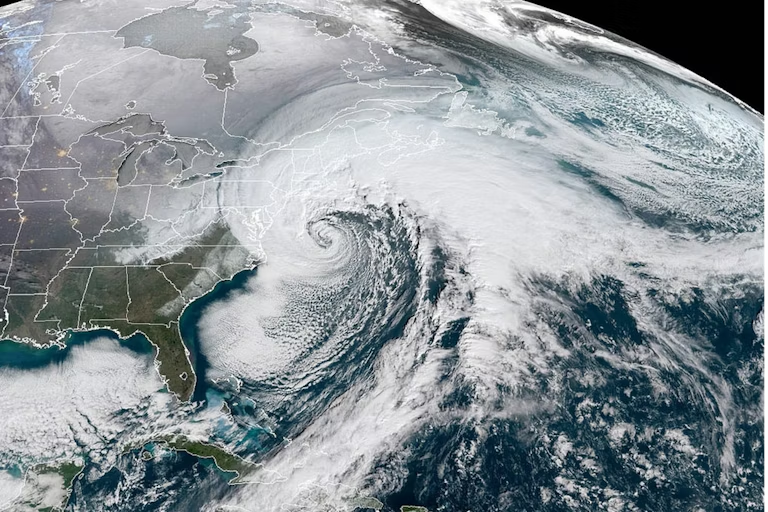
A powerful winter system is barreling toward the United States, prompting meteorologists to issue urgent warnings for millions of Americans across the eastern half of the country. Forecast models show an “arctic bomb” forming as bitterly cold air surges south from Canada and collides with moisture-laden systems from the south, creating what experts say could become one of the most disruptive winter storms in years.
The storm, named Fern, is expected to unleash a dangerous mix of heavy snow, sleet, and freezing rain across a massive swath of the nation. In some regions, snowfall totals could climb as high as 20 inches, while others may face crippling ice accumulation capable of snapping power lines and rendering roads impassable.
Weather professionals are urging the public to cancel travel plans and prepare for extended disruptions. Many communities may be without electricity for days as the storm brings not only extreme cold but also damaging precipitation and powerful winds.
Across social media, meteorologists have sounded the alarm, warning that the combination of deep cold and heavy moisture points to “bad impacts” over a wide area. The concern is not limited to snow alone. In many states, freezing rain and sleet could coat roads, trees, and infrastructure in thick layers of ice, making conditions even more hazardous than a traditional snowstorm.
Federal forecasters say the arctic air mass will plunge all the way to the Gulf Coast and the Eastern Seaboard, clashing with warmer southern systems and producing a high-impact winter event across the southern tier of the country. From the desert Southwest through the Plains, Midwest, Mid-South, and into the Appalachians and Northeast, millions are being advised to stay home and prepare for severe winter conditions.
By Friday, the first wave of the storm is expected to hammer the Midwest, Southern Rockies, Plains, and Mid-South. Snow, sleet, and freezing rain will begin spreading eastward, affecting northern Texas, Oklahoma, Kansas, and the lower Mississippi Valley through the night.
Temperatures will plunge far below normal. In parts of the Dakotas, Minnesota, Iowa, Wisconsin, and northern Illinois, readings could fall as much as 30 degrees below average. Denver is expected to dip into the teens, while cities such as Nashville, Oklahoma City, and New York hover near freezing. Chicago’s forecast includes subzero temperatures, with wind chills in the upper Midwest reaching as low as 50 degrees below zero.
In Texas, forecasters are describing the storm as potentially historic. Some models suggest more than an inch of freezing rain or over a foot of sleet and snow, even under conservative estimates. With daytime highs lingering in the 20s for days, any precipitation that falls is likely to remain on the ground, compounding travel dangers and infrastructure stress.
Saturday appears poised to be the most chaotic day of the system. Northern Texas, Louisiana, North Carolina, and Virginia are expected to be battered as the storm intensifies. Dozens of locations may experience their coldest temperatures on record. The Twin Cities could approach negative 20 degrees, while Denver nears ten degrees. Oklahoma City may fall to five degrees, Nashville to the teens, and New York City into the low teens. Chicago could sink deeper into subzero territory.
The worst of the cold is projected to push farther south and east, with temperatures across large regions running 15 to 30 degrees below seasonal averages. Radar projections suggest widespread disruption, with snow bands and ice zones overlapping across multiple states.
By Saturday night, winter chaos could reach the Texas Gulf Coast, southwestern Louisiana, central Mississippi, northern Alabama, northern Georgia, and South Carolina. Snow may intensify across the mid-Atlantic and spread into parts of the Mid-South, including Oklahoma and Texas, where such conditions are rare and often paralyzing.
Sunday will bring continued snowfall to the Northeast, with brutal wind chills dropping below zero across New England and surrounding states. While Texas may begin to see the end of precipitation, winter weather is expected to persist across Louisiana, the Tennessee Valley, the Appalachians, and the Carolinas.
Forecasters caution that the exact path and pace of the storm remain uncertain. Heavy snow is likely to continue in parts of the East, and depending on how quickly the system moves, some areas along the East Coast could still be dealing with snowfall into Monday.
What makes this storm especially dangerous is its scale. It is not confined to a single region or climate zone. Instead, it threatens deserts, plains, major metropolitan centers, and rural communities alike. Roads may become impassable. Airports could face mass cancellations. Emergency services may struggle to reach those in need.
Officials are advising households to prepare now: stock up on food, water, medications, and batteries; ensure heating systems are functioning; and be ready for prolonged power outages. Travelers are being warned that highway shutdowns and stranded vehicles are real possibilities, particularly in regions unaccustomed to extreme winter weather.
As Fern approaches, the message from experts is consistent and urgent: this is not an ordinary winter storm. It is a sprawling, high-impact system capable of disrupting daily life across much of America. The safest plan is to stay put, prepare for harsh conditions, and ride out what could be one of the most severe winter events of the season.

Emily Johnson is a critically acclaimed essayist and novelist known for her thought-provoking works centered on feminism, women’s rights, and modern relationships. Born and raised in Portland, Oregon, Emily grew up with a deep love of books, often spending her afternoons at her local library. She went on to study literature and gender studies at UCLA, where she became deeply involved in activism and began publishing essays in campus journals. Her debut essay collection, Voices Unbound, struck a chord with readers nationwide for its fearless exploration of gender dynamics, identity, and the challenges faced by women in contemporary society. Emily later transitioned into fiction, writing novels that balance compelling storytelling with social commentary. Her protagonists are often strong, multidimensional women navigating love, ambition, and the struggles of everyday life, making her a favorite among readers who crave authentic, relatable narratives. Critics praise her ability to merge personal intimacy with universal themes. Off the page, Emily is an advocate for women in publishing, leading workshops that encourage young female writers to embrace their voices. She lives in Seattle with her partner and two rescue cats, where she continues to write, teach, and inspire a new generation of storytellers.