Health officials across the United States are raising urgent concerns as the country faces a troubling convergence of infectious disease threats this winter. While a fast-spreading new strain of influenza — dubbed a “super flu” by clinicians — is forcing school closures and renewed mask mandates in hospitals, experts warn that an even more dangerous disease is resurging at an alarming rate.
Measles, the world’s most infectious virus and a disease once declared eliminated in the United States, is now spreading rapidly across multiple states. The outbreak, fueled largely by falling vaccination rates and widespread misinformation, has already claimed lives and shows no sign of slowing.
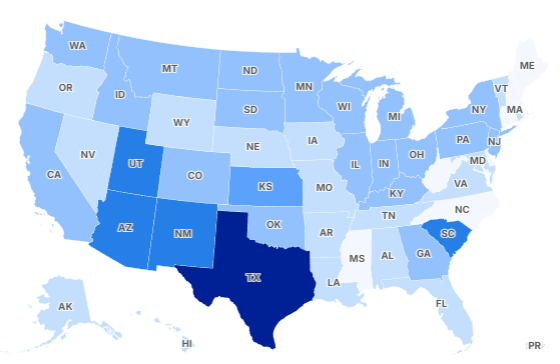
As of this month, measles has infected 1,958 Americans and caused three deaths, marking the largest national outbreak since 1992, when 2,126 cases were reported. Public health leaders warn that the country is edging closer to levels not seen in decades — a sobering reversal after years of progress.
A Preventable Disease Makes a Deadly Return
Measles was officially declared eliminated in the US in 2000, meaning continuous transmission had been halted. That milestone was achieved through widespread vaccination efforts, particularly the measles, mumps, and rubella (MMR) vaccine. However, declining immunization rates over the past decade have eroded the protective barrier that once kept the virus at bay.
Earlier this year, a deadly outbreak in Texas brought the issue into sharp focus. The outbreak occurred within a largely unvaccinated religious community, highlighting how pockets of low vaccination coverage can quickly become epicenters of disease spread.
Now, new cases are emerging weekly across the country.
Last week, Connecticut confirmed its first measles case since 2021. Health officials reported that the patient was an unvaccinated child under the age of 10 from Fairfield County who had recently traveled internationally. Contact tracing is currently underway to prevent further spread.
In South Carolina, the situation has escalated dramatically. Between Friday and Tuesday alone, 27 new cases were recorded, bringing the state’s total to 142 cases this year, compared to just one case in all of 2024. More than 250 people are currently quarantined as health authorities race to contain the outbreak.
Utah has also seen a sharp rise, with 122 cases reported this year, including 26 new infections in the past three weeks. Arizona, which recorded only five cases in 2024, has now logged 182 cases in 2025.
Public health officials warn that these numbers likely underestimate the true scale of the outbreak due to delayed diagnoses and asymptomatic exposures.
Falling Vaccination Rates at the Core of the Crisis
Medical experts say the resurgence of measles is not mysterious — it is the predictable result of declining childhood vaccination rates.
Dr. Renee Dua, medical advisor to Ten Dollar Telehealth, told Daily Mail that herd immunity for measles requires exceptionally high coverage.
“Measles requires about 95 percent community immunity to prevent spread,” she said. “Many regions are now well below that threshold.”
The current nationwide MMR vaccination rate stands at 92.5 percent, which may appear high but is dangerously insufficient given the virus’s extreme contagiousness. Among those who receive both doses of the vaccine, protection is 97 percent effective, according to the Centers for Disease Control and Prevention (CDC). One dose offers 93 percent effectiveness, but even small gaps in coverage can allow outbreaks to explode.
Dr. Dua emphasized that misinformation has played a major role in undermining vaccine confidence.
“Vaccine misinformation is a major driver of declining uptake, not only for MMR and varicella, but increasingly for routine vaccines like the flu shot,” she said. “This erosion of trust has accelerated since the Covid era.”
She added that the consequences are now undeniable.
“We are seeing preventable outbreaks, hospitalizations, and deaths from diseases that were previously well controlled. These are measurable public-health failures.”
One of the Most Contagious Viruses on Earth
Measles is widely regarded as the most infectious disease known to humans. According to the CDC, unvaccinated individuals have a 90 percent chance of becoming infected if they are exposed — even if they only share the same airspace briefly or enter a room hours after an infected person has left.
The virus spreads through airborne droplets released when an infected person coughs or sneezes. Patients are contagious from four days before the rash appears to four days afterward, making early containment particularly difficult.
Symptoms typically begin with fever, cough, runny nose, and red eyes, followed by a distinctive rash that starts on the face and spreads downward across the body. While many recover, complications can be severe.
Measles can lead to pneumonia, seizures, brain inflammation, permanent neurological damage, and death. Approximately three in every 1,000 infected individuals die, a risk that rises sharply among young children and immunocompromised adults.
Of the current US cases:
-
500 are in children under age five
-
786 are in individuals aged five to 19
-
613 are in adults aged 20 and older
-
13 are of unknown age
CDC data shows that 93 percent of cases are among people who are unvaccinated or whose vaccination status is unknown. Only four percent of patients had received both recommended MMR doses.
Hospitalizations are rising as well. So far, 222 patients — roughly 11 percent — have required hospital care, with children under five accounting for the largest share.
A Stark Reminder of the Pre-Vaccine Era
Before the introduction of the two-dose measles vaccine in 1968, the disease was a constant presence in American life. Each year, three to four million people were infected, resulting in 48,000 hospitalizations, 1,000 cases of brain inflammation, and up to 500 deaths annually.
Health officials warn that without decisive action, the country risks sliding back toward those grim statistics.
South Carolina epidemiologist Linda Bell described the recent surge bluntly during a public briefing.
“Accelerating is an accurate term,” she said. “That is a spike in cases we are concerned about.”
In an earlier statement, Bell cautioned that containment efforts face significant challenges.
“The measles virus won’t be contained within schools, school districts, or county lines,” she said. “But the MMR vaccine, by providing lifelong immunity to the majority of those vaccinated, will contain the virus.”
A Call to Restore Trust and Immunity
As the US battles both a severe flu season and a rapidly expanding measles outbreak, health experts stress that vaccines remain one of the most powerful tools in modern medicine.
“Vaccines remain among the safest and most effective tools we have,” Dr. Dua said. “Rebuilding trust through clear, evidence-based communication is now as critical as vaccine access itself.”
Public health agencies are urging unvaccinated individuals to seek immunization immediately, particularly before travel or school attendance. Officials warn that failure to reverse declining vaccination trends could allow measles to regain a permanent foothold in the country.
For now, the outbreak stands as a stark reminder: diseases once thought conquered can return swiftly — and with deadly consequences — when public confidence falters and protection wanes.

Emily Johnson is a critically acclaimed essayist and novelist known for her thought-provoking works centered on feminism, women’s rights, and modern relationships. Born and raised in Portland, Oregon, Emily grew up with a deep love of books, often spending her afternoons at her local library. She went on to study literature and gender studies at UCLA, where she became deeply involved in activism and began publishing essays in campus journals. Her debut essay collection, Voices Unbound, struck a chord with readers nationwide for its fearless exploration of gender dynamics, identity, and the challenges faced by women in contemporary society. Emily later transitioned into fiction, writing novels that balance compelling storytelling with social commentary. Her protagonists are often strong, multidimensional women navigating love, ambition, and the struggles of everyday life, making her a favorite among readers who crave authentic, relatable narratives. Critics praise her ability to merge personal intimacy with universal themes. Off the page, Emily is an advocate for women in publishing, leading workshops that encourage young female writers to embrace their voices. She lives in Seattle with her partner and two rescue cats, where she continues to write, teach, and inspire a new generation of storytellers.