NOTE: VIDEO INSIDE THE ARTICLE.
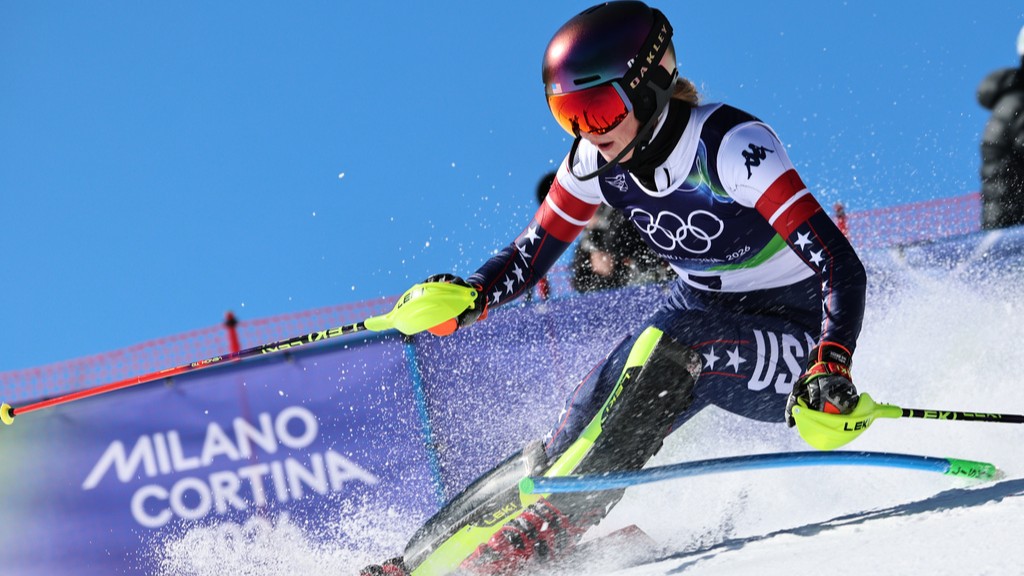
Redemption never felt so sweet. For Mikaela Shiffrin, Wednesday’s women’s slalom at the 2026 Milano Cortina Winter Olympics was more than a race—it was the culmination of years of triumph, heartbreak, and personal growth. The 30-year-old American skier conquered the course at Tofane Alpine Skiing Centre with a dominant performance, capturing gold and exorcising the lingering demons from past Olympic disappointments.
Shiffrin’s path to the top of the podium was marked by immense pressure and personal grief. She entered the 2026 Games carrying the weight of two major Olympic letdowns. In Beijing 2022, she failed to finish both the slalom and giant slalom, leaving her without a medal. Four years prior, in Pyeongchang, she achieved a career milestone, collecting three medals including her second career gold, but her subsequent struggles underscored how fleeting success in alpine skiing can be. In addition, Shiffrin has faced a series of injuries and setbacks, including a serious World Cup crash in November 2024 that caused a puncture wound and left her battling post-traumatic stress.
Despite these challenges, Shiffrin approached the Cortina course with a renewed focus. “The skiing is what I cared about and, of course, medal and [win] gold. I mean, that’s a dream come true,” she told NBC following her victory. “But at some point this week, I just said, like, ‘Stop dreaming, just ski.’ This whole time has been waiting for two times 45 seconds today to be able to ski, and I’m so happy to be able to do the right thing in the right moment.”
From the outset, Shiffrin established her dominance. In the first run, she clocked a 47.13-second descent, giving her a 0.82-second lead over the nearest competitor. Germany’s Lena Duerr and Sweden’s Cornelia Oehlund followed in second and third, but both skiers faltered in the second run—Duerr hooked the first gate with her right ski, while Oehlund snapped her left pole against a gate, throwing her off balance. These errors left Shiffrin unchallenged, and she completed her second run to finish a full 1.50 seconds ahead of the field—a margin rarely seen in Olympic alpine skiing.
Crossing the finish line, Shiffrin’s emotions overtook her. The Olympic veteran squatted down, her head between her knees, before turning to wave to the cheering crowd and embrace her mother. “It’s like… being born again,” she said of the victory, pausing to collect herself. “This was a moment I have dreamed about — I’ve also been very scared of this moment. Everything in life that you do after you lose someone you love is like a new experience.” Her father, who died in 2020, has been a lasting presence in her reflections, and Shiffrin admitted that Wednesday may have been the first time she could truly accept his absence.
Shiffrin’s triumph also solidified her place in history. With the 2026 gold, she now holds the most Olympic gold medals of any U.S. skier and is both the youngest and oldest American woman to win alpine skiing gold. She first claimed Olympic gold at the 2014 Sochi Games at 18, and her sustained excellence across multiple Olympic cycles speaks to her remarkable longevity and consistency at the highest levels of the sport.
“This feels like a really big moment. It’s just part of it… part of the journey,” Shiffrin said, describing how the race represented both personal healing and professional achievement. Her victory over Switzerland’s Camille Rast, who finished second at 1:40.60, and Sweden’s Anna Swenn-Larsson, who earned bronze at 1:40.81, underscored her superiority in the slalom discipline, where she has achieved 71 of her record 108 World Cup wins.
While the slalom gold was her crowning achievement at Cortina, the Games offered additional opportunities and challenges. Shiffrin and teammate Breezy Johnson competed in the women’s team combined event, finishing fourth after Johnson led a strong downhill portion but Shiffrin placed 15th in the slalom segment. She also competed in the giant slalom, where she finished 11th, an event in which she is less dominant, but nonetheless managed a respectable showing given her previous injuries.
Shiffrin’s journey to the 2026 Olympics has been defined by resilience. Beyond the physical demands of the sport, she has endured mental and emotional hurdles, including PTSD from past crashes and the enduring grief of losing loved ones. Her performance in Cortina demonstrates not only technical mastery on the slopes but also a remarkable capacity to confront and overcome personal adversity.
Her comments following the slalom victory highlighted the intertwined nature of sport and life. “And,” she said, her voice trembling, “I still have so many moments where I resist this. I don’t want to be in life without my dad. And maybe today was the first time that I could actually accept this, like, reality.” In many ways, the race was as much a psychological triumph as a physical one, symbolizing closure, acceptance, and the fulfillment of years of hard work and dedication.
Mikaela Shiffrin’s dominance in the slalom is also a testament to her strategic precision and technical skill. The course at Tofane Alpine Skiing Centre posed numerous challenges, from tight turns to varying snow conditions, yet she navigated each obstacle with a blend of calculated risk and instinctual agility. Her first run established control, while her second run demonstrated her ability to maintain composure under the intense pressure of Olympic competition, where milliseconds can determine medal placements.
The broader context of Shiffrin’s victory includes a history of setbacks that make her accomplishments even more remarkable. Her early career was characterized by meteoric success, but the intervening years tested her resilience. Crashes, injuries, and the high expectations of both herself and the skiing world have created a landscape where triumph requires not just skill, but mental fortitude. Her 2026 gold medal reflects not only her technical abilities but also her capacity to rise above these challenges.
For fans and fellow athletes, Shiffrin’s performance serves as an inspiring narrative of perseverance. Young skiers and aspiring Olympians can look to her journey as a blueprint for overcoming obstacles, embracing vulnerability, and ultimately achieving excellence. The combination of athletic prowess, emotional honesty, and personal courage exemplifies the qualities that define true champions, on and off the slopes.
PLAY:
As Shiffrin continues to compete in World Cup events and future Olympic Games, her 2026 victory in Milan Cortina will stand as a pivotal chapter in a storied career. It is a testament to her unwavering commitment, her ability to face fear and loss, and her relentless pursuit of perfection in one of the most demanding sports in the world.
In the wake of her triumph, Shiffrin’s words reflect a grounded perspective on success: “I don’t even think we’re 5 percent of the way through the book. This feels like a really big moment. It’s just part of it… part of the journey.” For an athlete whose career has been defined by both exceptional talent and profound personal trials, Wednesday’s slalom gold will remain a defining moment, not only in her career but in the history of U.S. alpine skiing.
With Switzerland’s Camille Rast taking silver and Sweden’s Anna Swenn-Larsson earning bronze, the podium reflected the global competition Shiffrin has navigated and conquered. Fellow Americans Paula Moltzan and AJ Hurt placed eighth and 19th, respectively, while Nina O’Brien did not finish her first run. These results underscore Shiffrin’s exceptional performance, setting her apart as the dominant force in the event and cementing her legacy as one of the greatest skiers of all time.

James Jenkins is a celebrated Pulitzer Prize-winning author whose work has reshaped the way readers think about social justice and human rights in America. Raised in Atlanta, Georgia, James grew up in a community that instilled in him both resilience and a strong sense of responsibility toward others. After studying political science and creative writing at Howard University, he worked as a journalist covering civil rights issues before dedicating himself fully to fiction. His novels are known for their sharp, empathetic portraits of marginalized communities and for weaving personal stories with broader political realities. Jenkins’s breakout novel, Shadows of Freedom, won national acclaim for its unflinching look at systemic inequality, while his more recent works explore themes of identity, resilience, and the fight for dignity in the face of oppression. Beyond his novels, James is an active public speaker, lecturing at universities and participating in nonprofit initiatives that support literacy and community empowerment. He believes that storytelling is a way to preserve history and inspire change. When not writing, James enjoys jazz music, mentoring young writers, and traveling with his family to explore cultures and stories around the world.