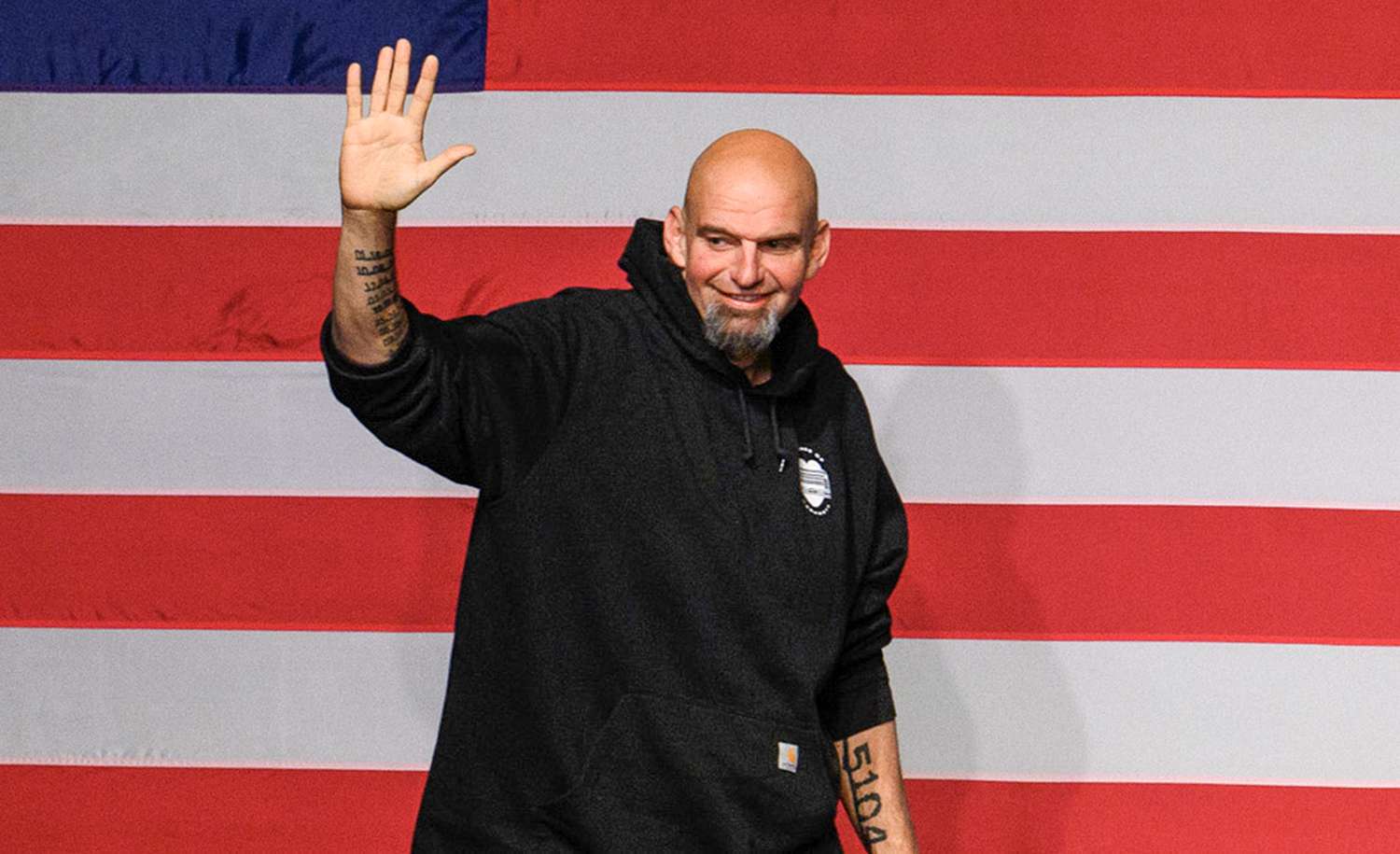
In an era of deep partisan division, elected officials from both sides of the political aisle periodically make headlines for unexpected statements that cross ideological boundaries. Over the past few weeks, one prominent legislator has attracted attention for acknowledging aspects of the current presidential administration’s policies — remarks that have drawn both praise and criticism from colleagues and constituents alike.
The comments have underscored a notable departure from hardline party positions on national security and foreign policy, as well as a willingness to recognize areas where members of opposing parties may share common ground. While such acknowledgments can be rare in the contemporary political landscape, this instance has sparked discussion about whether bipartisanship remains possible on certain issues, even amid broader disagreement.
Observers say that when lawmakers publicly highlight points of agreement with a president from the opposing party, it can signal shifting priorities, strategic political positioning, or genuine convergence on national imperatives. The recent remarks touch on matters of military policy, geopolitical strategy, and the role of congressional oversight, and they have prompted reactions from all corners of the political spectrum.
Recent Support for Specific Presidential Actions
In early January 2026, the senator spoke with a conservative news outlet and expressed support for the president’s potential conduct of limited military strikes against the government of Iran. The lawmaker indicated that such actions, if carefully targeted, would merit approval — even though many in the senator’s own party have been hesitant or opposed to unilateral action without broader international or congressional backing.
During the interview, the senator said that the human rights abuses and repression being carried out by the Iranian regime justified a robust response from the United States. In describing the president’s consideration of limited military strikes, the lawmaker indicated that he would support “very targeted or very specific kinds of limited strikes” if they aligned with broader U.S. security interests. This stance puts him at odds with more cautious voices within his own party, while aligning with statements made by some Republicans calling for a tougher approach to Tehran.
These remarks were among the more notable instances in recent weeks, as they explicitly endorsed a course of action associated with the president’s foreign policy agenda — a rare occurrence for a legislator from the opposing party.
Context of Broader Political Debate
The support for limited military action followed months of intense global scrutiny of Middle East dynamics, including ongoing protests and international responses to internal repression in Iran. Lawmakers from both parties have been debating how best to respond, with some calling for diplomatic pressure and others urging a firmer stance. In this environment, the senator’s acknowledgment of the president’s strategic choices gained added significance.
Earlier in the year, several Republican leaders publicly supported the president’s prior airstrikes on Iranian nuclear facilities, describing them as decisive and necessary to counter potential threats. Those endorsements came amid broader debate about executive authority and the role of Congress in authorizing military actions. Factions within both parties have struggled to find consensus on the proper balance between national defense and legislative oversight.
Against this backdrop, the senator’s comments stood out because they bridged typical partisan divides on national security issues, even as he continued to differ from the president in other areas.
Political Background
The lawmaker making these remarks is Senator John Fetterman, a Democrat representing one of the nation’s most politically contested states.
Senator Fetterman has served in the U.S. Senate since 2023 and is known for his unconventional approach to politics, often emphasizing his independence from strict party orthodoxy. His willingness to break with parts of his own party on certain policies has been a defining feature of his tenure, prompting both praise and criticism.
His recent statements about the president’s potential military actions are consistent with that pattern — acknowledging strategic decisions from an opposing administration while maintaining clear differences on other policy fronts.
Views on Presidential Rhetoric and Political Dialogue
Beyond the foreign policy support, the senator has also commented on how political dialogue is conducted nationally. In recent months, he has pushed back against some of the more extreme rhetoric used by politicians on both sides, including language that he says does not advance constructive debate.
In an appearance on national television last year, he criticized colleagues for using labels that he believes exaggerate differences and inflame partisanship. He argued that branding political opponents with terms like “fascist” or other highly charged descriptors harms the possibility of productive discourse and may alienate voters who otherwise care deeply about civic engagement. This call for more disciplined rhetoric was part of a broader critique of how political discourse can overshadow policy substance.
While he did not fully endorse all of the president’s views, the senator’s remarks about avoiding extreme language pointed to an understanding that governing in a deeply divided country may require restraint in public commentary — a stance that has resonated with some moderate and independent voters.
Reactions From Across the Political Spectrum
The senator’s comments have generated a wide range of responses. Some Republican observers welcomed his acknowledgment of alignment on national security issues, seeing it as evidence that bipartisan cooperation remains possible on matters of strategic importance. Others, particularly more conservative commentators, viewed the remarks as an opening for further dialogue on how the opposing party approaches defense and security.
On the other hand, many Democratic colleagues expressed concern that supporting any aspect of the president’s foreign policy could undermine party cohesion and messaging. Critics within his own party argued that his public support for certain measures may embolden the opposition and could complicate efforts to present a unified front on broader policy debates.
This internal tension reflects a deeper debate within the Democratic Party about how best to respond to a presidency led by a highly polarizing figure. Some argue that strict opposition is necessary to uphold core principles, while others believe that strategic concessions or acknowledgments can build credibility with a broader electorate.
Implications for Upcoming Elections
The senator’s remarks arrive at a crucial moment in the lead-up to the 2026 midterm elections, where control of Congress and state-level races will help shape the legislative environment for the remainder of the presidential term. Pennsylvania, in particular, is viewed as a battleground state where shifts in voter sentiment can have outsized consequences.
Political analysts note that the senator’s willingness to voice support for certain presidential policies may appeal to moderate and independent voters who prioritize national security and bipartisan action. However, it may also alienate more progressive or partisan voters who expect sharper criticism of a president from the opposing party.
His stance highlights a broader strategic question facing many lawmakers: whether to emphasize ideological purity or pragmatic cooperation in a political environment where voters’ priorities are rapidly evolving.
Broader Shift in Political Styles
The senator’s recent approach reflects a more general trend among some members of Congress who are increasingly willing to cross traditional party lines on specific issues. This phenomenon is not unique to debates over national security; it can also be seen in discussions about immigration, economic policy, and foreign aid.
Lawmakers who adopt this style often frame their decisions around constituent interests rather than strict party orthodoxy, arguing that elected officials should respond to the needs of their states or districts even when doing so involves compromise. Critics of this approach argue that it can weaken party effectiveness and blur ideological clarity, making it harder to hold leadership accountable.
Supporters, however, contend that such flexibility can foster more sustainable policy outcomes by incorporating a wider range of perspectives and reducing gridlock.
The Personal and Political Calculus
For the senator in question, balancing political identity with policy pragmatism has defined his tenure. His recent statements about the president’s actions against Iran and his broader views on political dialogue signal an effort to navigate a complex political landscape in which voters are increasingly disillusioned with extreme partisanship.
The long-term impact of his remarks is difficult to predict. Some political scientists believe that lawmakers who demonstrate independence may cultivate a reputation for integrity and attract support from voters tired of polarized politics. Others caution that diverging from one’s party on high-profile issues can invite primary challenges and reduce institutional influence.
Regardless of how events unfold, the senator’s comments about the president in recent weeks have brought renewed attention to the evolving nature of political alliances and distinctions in the United States.
What Comes Next
With midterm elections approaching and geopolitical tensions continuing to evolve, the senator’s willingness to publicly acknowledge alignment with certain presidential policies may continue to draw attention. Whether it leads to substantive legislative cooperation or remains symbolic of a broader political stance will depend on developments in Congress and global affairs.
For now, his remarks have sparked debate about the role of bipartisan engagement in a highly partisan era — and whether finding common ground on specific issues can coexist with robust debate on others.

Emily Johnson is a critically acclaimed essayist and novelist known for her thought-provoking works centered on feminism, women’s rights, and modern relationships. Born and raised in Portland, Oregon, Emily grew up with a deep love of books, often spending her afternoons at her local library. She went on to study literature and gender studies at UCLA, where she became deeply involved in activism and began publishing essays in campus journals. Her debut essay collection, Voices Unbound, struck a chord with readers nationwide for its fearless exploration of gender dynamics, identity, and the challenges faced by women in contemporary society. Emily later transitioned into fiction, writing novels that balance compelling storytelling with social commentary. Her protagonists are often strong, multidimensional women navigating love, ambition, and the struggles of everyday life, making her a favorite among readers who crave authentic, relatable narratives. Critics praise her ability to merge personal intimacy with universal themes. Off the page, Emily is an advocate for women in publishing, leading workshops that encourage young female writers to embrace their voices. She lives in Seattle with her partner and two rescue cats, where she continues to write, teach, and inspire a new generation of storytellers.