
MILAN, ITALY — The excitement of the Winter Olympics is rarely without drama, both on and off the ice. This year, the spotlight on Team USA’s men’s hockey squad has gone beyond their gold medal triumph, as headlines have been dominated not just by their historic victory, but by comments made by a prominent political figure during postgame celebrations — remarks that have since ignited a firestorm of criticism online and across social media platforms.
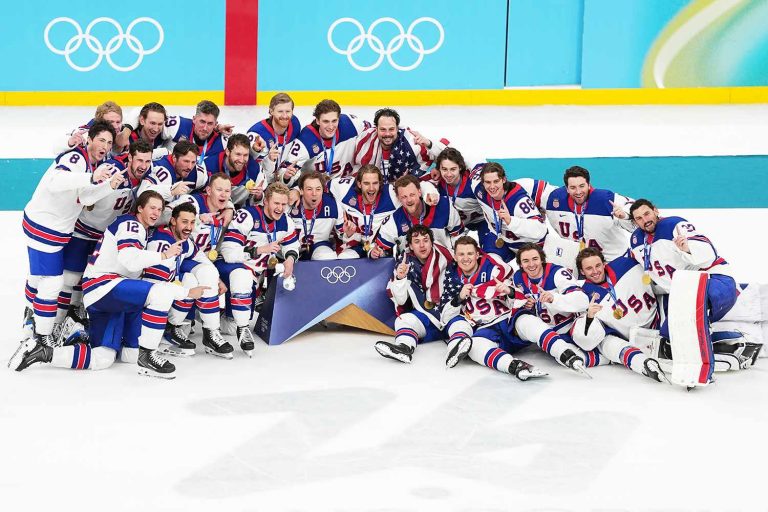
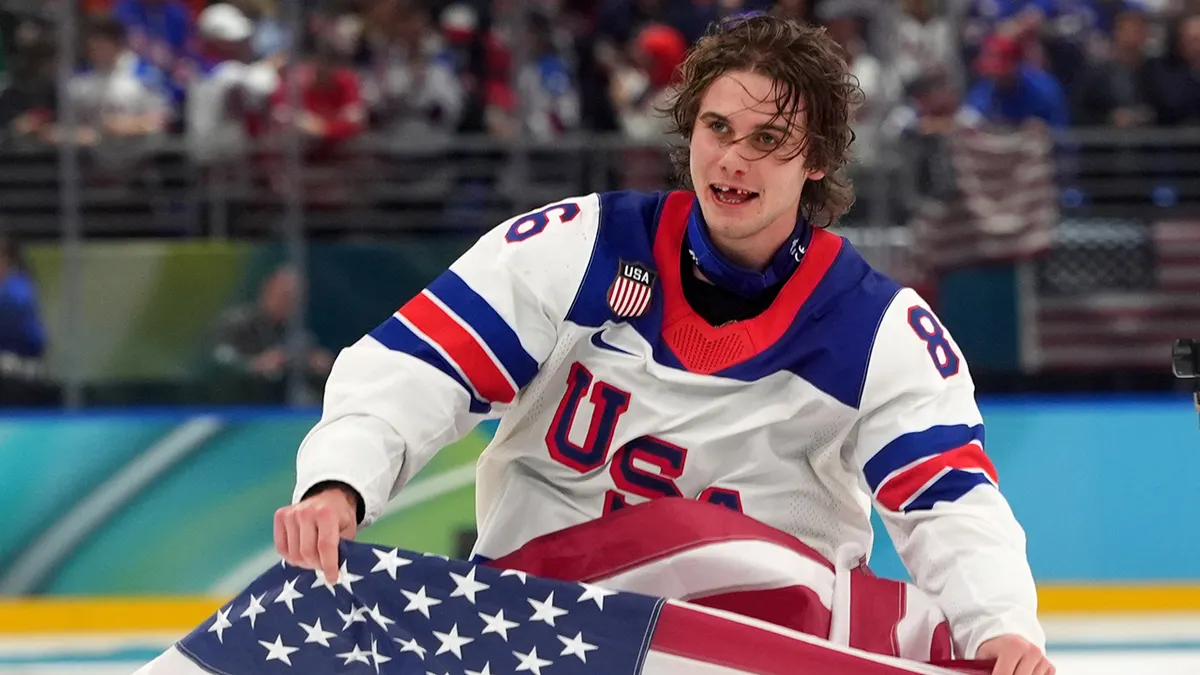
For the men’s team, the moment was supposed to be about accomplishment. After a hard-fought 2-1 overtime win against Canada, the squad celebrated a milestone that marked their first Olympic gold since the storied Miracle on Ice in 1980. Social media was flooded with highlights: fans applauded key plays, viral clips captured moments of jubilation, and commentators dissected strategies that led to the victory. But amid the cheers and the confetti, an unexpected twist would bring the team into the center of a national controversy.
Footage from the celebration quickly circulated online, showing officials and team representatives engaged in what appeared to be a routine congratulatory exchange. In one viral clip, a senior U.S. official could be seen holding a phone as a high-profile political leader placed a call to the athletes to offer congratulations. At first, it seemed like a typical ceremonial acknowledgment — a call to recognize their achievements. But during the exchange, the conversation veered into territory that many observers have labeled shocking.
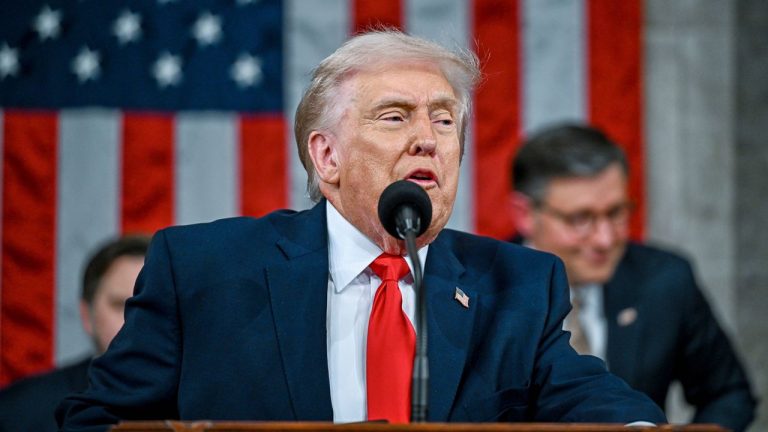
The leader in question praised the men’s team and extended an invitation to visit a formal address scheduled for the following week. Over the speakerphone, he said: “We’re giving the State of the Union speech on Tuesday night. I could send a military plane or something, if you would like to. It’s the coolest night. It’s the biggest speech.” His words were met with laughter, shouts of excitement, and what seemed to be genuine enthusiasm from the players on the line.
However, the comments quickly took a controversial turn. The political figure made a pointed remark comparing the men’s team to the women’s squad, whom he suggested should also be brought along — but in a manner that many online observers found dismissive and, at times, sexist. Several team members appeared to react with laughter during the call, an act that has since sparked debate about whether their response constituted tacit approval or simply polite amusement in a complex, public-facing situation.
Social media erupted almost immediately. Critics labeled the remarks “misogynistic,” calling attention to the fact that Team USA’s women’s hockey team has consistently outperformed the men in recent Winter Olympic cycles. The women have won medals in every Olympic tournament since the sport’s introduction, with a gold medal in 2018, silver in 2022, and bronze in other years, building a legacy of excellence that rivals — and often surpasses — that of their male counterparts.
It was against this backdrop of criticism and online debate that a leading figure from the men’s team finally spoke out: Olympian Jack Hughes, 24, who scored the winning goal in the gold medal match. In an exclusive interview, Hughes addressed both the celebration footage and the backlash surrounding the political comments.
“They’ve got busy schedules, too. Everyone is giving us backlash for all the social media stuff today,” Hughes told reporters. “People are so negative out there, and they are just trying to find a reason to put people down and make something out of almost nothing.”
Hughes emphasized the camaraderie between the men’s and women’s teams during the Olympics. “Our relationship with them, over the course of being in the Athletes’ Village, I think we are so tight with their group,” he said. “After we won the gold medal, we were in the cafeteria at 3:30 a.m. with them, and we go from there, pack our bags, and we’re on the bus. People are so negative about things. I think everyone in that locker room knows how much we support them, how proud we are of them, and we know the same way we feel about them, they feel about us.”
Hughes also addressed the excitement surrounding the planned visit to the political leader’s upcoming address. “Yeah, we’re excited. Everything is so political. We’re athletes. We’re so proud to represent the U.S., and when you get the chance to go to the White House and meet the President, we’re proud to be Americans, and that’s so patriotic. No matter what your views are, we’re super excited to go to the White House tomorrow and be a part of that.”
While Hughes’ comments sought to clarify the team’s intentions and show respect for their fellow athletes, another piece of the story came into focus: the women’s team’s decision regarding the invitation. Contrary to some online assumptions, the women’s team did not attend the upcoming address. A spokesperson confirmed that both the men’s and women’s hockey teams had been formally invited, but the women declined.
“We are sincerely grateful for the invitation extended to our gold medal-winning U.S. Women’s Hockey Team and deeply appreciate the recognition of their extraordinary achievement,” the statement read. “Due to the timing and previously scheduled academic and professional commitments following the Games, the athletes are unable to participate. They were honored to be included and are grateful for the acknowledgment.”
This clarification shifted much of the narrative away from initial criticisms directed at the men’s team, placing the focus instead on the broader context of Olympic schedules, professional obligations, and media coverage. Analysts noted that social media outrage had been fueled in part by clips taken out of context, while Hughes’ comments highlighted the spirit of cooperation and mutual support between the men’s and women’s teams during the Games.
Beyond the immediate controversy, the exchange has ignited a larger conversation about gender dynamics in sports. While the women’s team has consistently achieved superior results on the international stage, public perception often skews toward male athletic achievements, particularly in high-profile sports like hockey. Many commentators have used the incident to draw attention to the need for equitable recognition, coverage, and institutional support for female athletes.
The men’s team victory itself remains a milestone in U.S. hockey history. The 2-1 overtime win over Canada was not just a statistical achievement; it was a culmination of years of preparation, international competition, and high-pressure performance under the global spotlight. Players like Hughes demonstrated remarkable skill, speed, and strategic awareness that ultimately led to the game-winning goal — a moment celebrated by fans, teammates, and coaches alike.
Meanwhile, the women’s team’s decision to decline the invitation underscores their autonomy and the importance of professional and academic obligations, even amid highly publicized opportunities. Observers have praised their choice, noting that it highlights a commitment to planning, career development, and personal priorities — all while maintaining excellence on the ice.
As the story continues to unfold, both teams have remained united in emphasizing mutual respect. Hughes’ statement serves as a reminder that athletes often operate in high-pressure, highly publicized environments where words and actions can be misinterpreted or politicized. In this case, his comments have sought to clarify that any perceived endorsement of controversial remarks was unintended and that the men’s team remains fully supportive of their female counterparts.
In the end, the incident is a complex mix of athletic achievement, political attention, and media amplification. Social media reactions, viral clips, and public commentary have elevated what might have otherwise been a routine celebration into a broader discussion about respect, representation, and recognition in U.S. sports. Hughes’ remarks provide perspective from those directly involved, helping to contextualize both the celebration and the reactions that followed.
While debates about the political comments continue online, the focus for both teams now shifts back to their accomplishments, future competitions, and the ongoing legacy of U.S. hockey. The incident, though controversial, has highlighted the dedication, professionalism, and camaraderie of the athletes who continue to represent their country on the world stage, both on and off the ice.

Emily Johnson is a critically acclaimed essayist and novelist known for her thought-provoking works centered on feminism, women’s rights, and modern relationships. Born and raised in Portland, Oregon, Emily grew up with a deep love of books, often spending her afternoons at her local library. She went on to study literature and gender studies at UCLA, where she became deeply involved in activism and began publishing essays in campus journals. Her debut essay collection, Voices Unbound, struck a chord with readers nationwide for its fearless exploration of gender dynamics, identity, and the challenges faced by women in contemporary society. Emily later transitioned into fiction, writing novels that balance compelling storytelling with social commentary. Her protagonists are often strong, multidimensional women navigating love, ambition, and the struggles of everyday life, making her a favorite among readers who crave authentic, relatable narratives. Critics praise her ability to merge personal intimacy with universal themes. Off the page, Emily is an advocate for women in publishing, leading workshops that encourage young female writers to embrace their voices. She lives in Seattle with her partner and two rescue cats, where she continues to write, teach, and inspire a new generation of storytellers.