The football world is mourning the loss of a former professional standout whose impact was felt both on the field and far beyond it. News of the death of a two-time Super Bowl champion at the age of 60 spread quickly over the weekend, prompting an outpouring of tributes from former teammates, college programs, and fans who remembered his toughness, leadership, and lasting legacy.
According to statements released by those close to the former player, he died following a prolonged battle with cancer. While details surrounding his illness were kept largely private, the announcement confirmed that he passed peacefully, surrounded by loved ones.
The loss has resonated deeply across multiple levels of the sport, particularly among those connected to one of college football’s most storied defensive traditions and an NFL dynasty that defined an era.
A Legacy That Began Long Before the NFL
Long before championship rings and postseason interceptions, the player built his reputation at the collegiate level, where he became synonymous with defensive excellence. As a young athlete, he quickly distinguished himself with a rare combination of intelligence, physicality, and instinct — traits that made him a cornerstone of his team’s defense.
During his college years, he was part of a unit that dominated opponents and reshaped how defense was perceived within the conference. His leadership helped fuel multiple championship runs and bowl appearances, and he earned individual accolades that reflected both his production and his influence.
Coaches and teammates from that era often credited him not just for his play, but for helping define the identity of the defense itself — an identity that would become part of the program’s lasting culture.
College Honors and Defensive Dominance
At the height of his college career, the defensive back earned conference-wide and national recognition, including All-Conference and All-American honors. His presence in the secondary brought stability and confidence, allowing the defense to play aggressively and cohesively.
Over several seasons, his team captured multiple conference championships and appeared in major bowl games, cementing its place among the elite programs of the time. His role extended beyond statistics; he was known for film study, communication, and a relentless approach that elevated those around him.
One of his most enduring contributions from that era was his role in popularizing a nickname for the defense — a phrase that would endure long after his playing days ended.
From College Star to Professional Opportunity
Despite his collegiate success, his path to the professional level was not marked by immediate fanfare. He entered the NFL through the later rounds of the draft, selected by a franchise that would soon become one of the most dominant teams in league history.
Rather than being deterred by draft position, he embraced the challenge. Through preparation and persistence, he earned playing time on a roster filled with future Hall of Famers and established stars. His football intelligence and reliability quickly made him a trusted presence, particularly in high-pressure situations.
It was with this team that his career reached its pinnacle.
Championship Moments on Football’s Biggest Stage
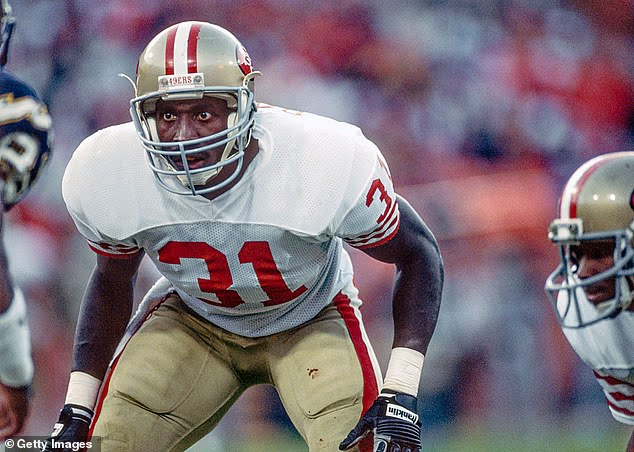
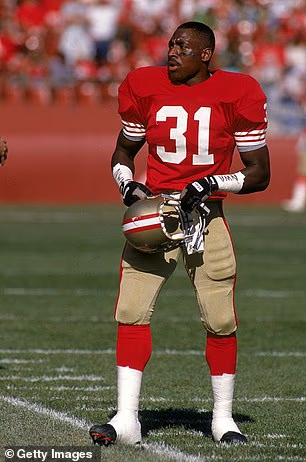
Now revealed as Terrance “Chet” Brooks, the former defensive back became a key contributor for the San Francisco 49ers during their late-1980s championship run.
Brooks played three seasons with the 49ers and was part of back-to-back Super Bowl-winning teams in the 1988 and 1989 seasons. Though not always in the spotlight, his role was crucial, particularly during the postseason.
One of his most memorable moments came in Super Bowl XXIV, when he intercepted a pass from Denver Broncos quarterback John Elway and returned it deep into opposing territory — a play that underscored his readiness on the game’s biggest stage.
A Short but Impactful NFL Career
Over the course of his NFL tenure, Brooks appeared in 33 games, starting 23 of them. He recorded multiple interceptions, a sack, and a forced fumble, while consistently earning praise for his discipline and awareness.
He also received All-Madden Team recognition, a nod that reflected his respect among players and analysts alike. Despite his success, Brooks stepped away from professional football after just three seasons, choosing a quieter life beyond the field.
Though his professional career was relatively brief, its impact — particularly within championship contexts — secured his place in football history.
Tributes Pour In From Across the Football World
Following news of his passing, tributes flooded social media from former teammates, college alumni, and fans. Many associated with his alma mater posted a simple but powerful message traditionally used to honor members of the community who have passed — a sign of respect deeply rooted in the program’s culture.
Former players remembered Brooks as a mentor and leader, while fans recalled his poise in critical moments and his contribution to two championship teams. Coaches praised his preparation and character, noting that his influence extended well beyond the stat sheet.
The tone of the tributes reflected not only admiration for his accomplishments, but affection for the person he was off the field.
Honors That Reflected His Impact
Brooks’ contributions did not go unrecognized after his playing days ended. In 2009, he was inducted into the Texas Black Sports Hall of Fame, an honor celebrating his athletic excellence and broader significance.
Two years later, he was enshrined in the Texas A&M Athletics Hall of Fame, cementing his legacy within the program where his football journey truly began. These honors served as formal acknowledgments of a career that bridged college dominance and professional success.
Remembering a Champion
Terrance “Chet” Brooks is remembered as a champion in every sense — a player who excelled at the highest levels of football and carried himself with humility and purpose. His journey from college standout to Super Bowl winner stands as a testament to perseverance, preparation, and quiet leadership.
As the football community reflects on his life and career, his legacy endures in championship history, institutional traditions, and the memories of those who watched him play. His passing at 60 marks a profound loss, but his impact on the sport remains firmly intact.