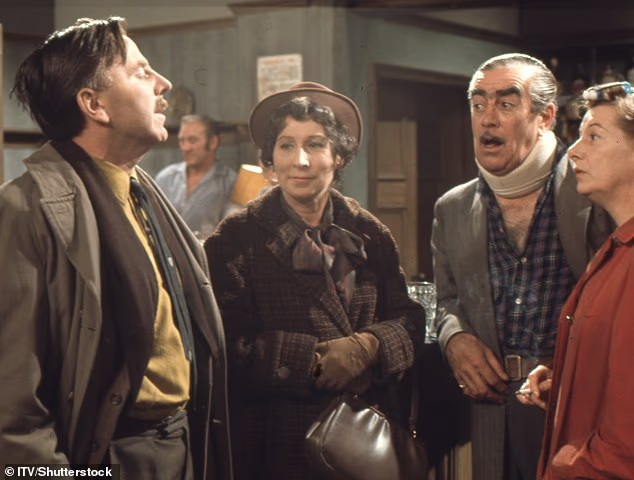
The world of television has lost a remarkable figure, a woman whose career spanned more than four decades and left an indelible mark on British screens. Known for her unwavering professionalism, warm presence, and sharp wit, she became a familiar face in countless households, enchanting audiences with roles that brought humor, pathos, and authenticity to everyday life. Her passing marks the end of an era for fans who remember tuning in to see her portray a variety of characters, each one imbued with her unique charm.
Those who worked alongside her often spoke of her dedication to the craft. Colleagues described her as someone who approached every role, no matter how small, with a meticulous attention to detail and a warmth that made sets feel like extended family homes. She had the rare ability to make even minor characters memorable, giving depth and humanity to each performance. Producers and directors frequently commented on her reliability; no matter the pressures of filming schedules, she was consistently prepared, ready, and present.
Her career began in the post-war era of television, when the medium was still finding its footing. With a background in stage performance, she transitioned to television at a time when opportunities for women in the industry were still limited. Her early roles were small but noteworthy, appearing in dramas, variety shows, and occasional comedies. By the 1960s and 1970s, she had become a recognizable name among TV viewers, often cast as the matriarchal figure, the neighbor with sage advice, or the town busybody who inadvertently created chaos. Critics praised her versatility, noting that she could move seamlessly from a lighthearted scene to one filled with tension or emotion.
Off-screen, she led a quiet, disciplined life. Friends describe her as fiercely independent, even into her later years, maintaining her own home and routines long after many of her contemporaries had slowed down. She often spoke about her love for family, and despite the demands of a long television career, she remained close to her children, grandchildren, and great-grandchildren. Her home was reportedly filled with mementos from her career: framed photographs, signed scripts, and awards that celebrated her contributions to British television.
Over the years, she developed a reputation not only for her talent but also for her generosity. She frequently mentored younger actors, offering guidance on everything from technical aspects of acting to navigating the complexities of working in television. Many of those who trained under her would later speak of the impact she had on their careers, crediting her insight and patience for helping them navigate what can be a challenging industry.
While she enjoyed recognition, she was never one to seek the limelight for personal gain. Interviews and media appearances were approached with caution; she preferred letting her work speak for itself. She was known for her honesty and humility, often deflecting praise and giving credit to her fellow actors, directors, and crew members. Fans who met her at public events or fan conventions recall her warmth, her willingness to engage in conversation, and the way she made every interaction feel personal.
It was during the 1990s that she achieved her most widely recognized role, one that endeared her to a new generation of viewers and solidified her status as a television mainstay. She joined a long-running British soap opera, portraying a character who quickly became a staple of the show. Known for her quick wit, nosy charm, and ability to weave humor into tense situations, she brought the role to life in a way that few others could. Audiences grew to love her as the busybody relative, the one who knew everyone’s business yet maintained a sense of innocence and warmth that made her unforgettable.
Her portrayal resonated with viewers not only because of the writing but also due to the skill and nuance she brought to the character. Episodes featuring her often drew some of the highest ratings of the week, and her interactions with other central characters became iconic moments for the show. Even after her storyline concluded, she remained a beloved figure in fan circles, often appearing at charity events and special programming celebrating the series.
The actress, Elizabeth Kelly, passed away on Christmas Day at the age of 104, a centenarian who lived long enough to see multiple generations of fans come to know her work. Her funeral is scheduled to take place at St Peter’s Church in Scarborough on February 17, a service expected to draw family, friends, former colleagues, and devoted fans who wish to pay tribute to her legacy. She is survived by her children, grandchildren, and great-grandchildren, many of whom have spoken publicly about the love, guidance, and humor she shared with them throughout her life.
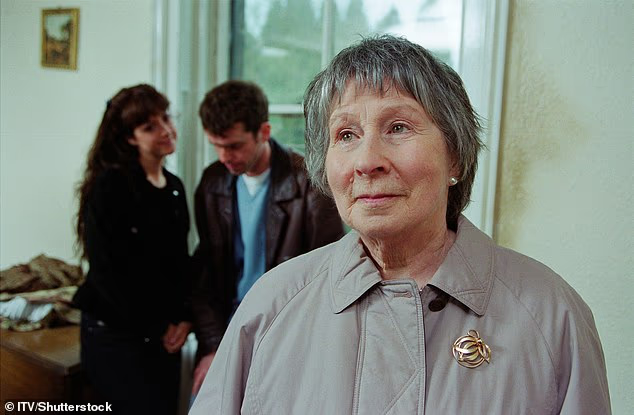
Following her retirement from acting in 2007, after her final role in a medical drama series, Elizabeth spent her later years in North Yorkshire. She divided her time between her family and various care homes, always maintaining her distinctive charm and a sharp mind. Despite the physical limitations that came with age, she reportedly remained mentally active, enjoying books, correspondence with fans, and keeping up with television and theater. Her family recalls that she never lost her curiosity about the world, a trait that helped her stay engaged and connected with people until her final days.
Father Eddie Gubbins, the priest at St Peter’s Church, spoke fondly of Elizabeth, saying, “She was a very strong lady and had a beautiful voice. She had a very peaceful death in the end. She was a beautiful lady and very gracious.” His words echoed the sentiments of many who knew her personally and professionally, capturing both her dignified presence and her warmth.
Elizabeth Kelly’s impact on British television cannot be overstated. She was part of a generation of performers who helped define early television acting and carried their craft forward into the modern era. Her ability to adapt to changing styles, embrace new storytelling methods, and connect with audiences over decades stands as a testament to her dedication, talent, and resilience.
Tributes from fans poured in on social media and the BBC Radio Cumbria page, with many recalling fond memories of tuning in to watch her performances. Comments included praise for her wit, her unique voice, and the way she could make everyday stories compelling. For many, she was more than an actress; she was a symbol of continuity, a comforting presence in homes across the country for generations.
In reflecting on Elizabeth Kelly’s life and career, it becomes clear that her contributions extend far beyond her most famous roles. She demonstrated that longevity in the entertainment industry is achieved not just through talent, but through perseverance, humility, and a genuine connection to audiences. Her life story serves as an example to aspiring actors, highlighting the importance of dedication to one’s craft while remaining grounded and committed to personal values.
Elizabeth’s legacy will continue to resonate in the programs she appeared in, the memories of viewers, and the guidance she provided to colleagues and younger actors. As the television landscape continues to evolve, her career serves as a reminder of the timeless qualities that make great performers unforgettable: authenticity, passion, and the ability to touch people’s lives through storytelling.
As fans and colleagues prepare to say their final goodbyes at St Peter’s Church, her story stands as a celebration of a life well-lived, one that combined professional accomplishment with personal integrity and familial devotion. Elizabeth Kelly’s journey, from her early days in North Devon to her status as a beloved television figure, will be remembered for generations to come.

Emily Johnson is a critically acclaimed essayist and novelist known for her thought-provoking works centered on feminism, women’s rights, and modern relationships. Born and raised in Portland, Oregon, Emily grew up with a deep love of books, often spending her afternoons at her local library. She went on to study literature and gender studies at UCLA, where she became deeply involved in activism and began publishing essays in campus journals. Her debut essay collection, Voices Unbound, struck a chord with readers nationwide for its fearless exploration of gender dynamics, identity, and the challenges faced by women in contemporary society. Emily later transitioned into fiction, writing novels that balance compelling storytelling with social commentary. Her protagonists are often strong, multidimensional women navigating love, ambition, and the struggles of everyday life, making her a favorite among readers who crave authentic, relatable narratives. Critics praise her ability to merge personal intimacy with universal themes. Off the page, Emily is an advocate for women in publishing, leading workshops that encourage young female writers to embrace their voices. She lives in Seattle with her partner and two rescue cats, where she continues to write, teach, and inspire a new generation of storytellers.