The Department of Homeland Security (DHS) is preparing for a notable shift in its communications leadership, as one of its most prominent voices in shaping and defending the Trump administration’s immigration agenda is set to depart. Sources familiar with the decision say that the official plans to notify colleagues imminently, with her exit expected to take effect next week. While the announcement has not yet been made public by the department, insiders describe the move as part of a broader transition in the DHS communications apparatus.
This departure comes at a particularly sensitive moment for the department. DHS has been navigating a temporary funding lapse while congressional negotiations continue over potential modifications to Immigration and Customs Enforcement (ICE) and Customs and Border Protection (CBP) operations. Any shift in leadership within the agency’s communications team has the potential to influence how these debates are perceived by the public, especially as discussions about border security and immigration policy remain politically charged.
Over the past several years, the official leaving DHS has been widely recognized as a combative and highly visible spokesperson. During some of the administration’s most high-profile and controversial immigration enforcement actions, she consistently emerged as a central figure in both defending policy decisions and countering criticism in the media. Her strategy relied heavily on rapid responses to news cycles, frequent television appearances, and active engagement with journalists across print, broadcast, and digital platforms.
Colleagues and political observers describe her as someone who understood the interplay between policy and perception. In her own words, she has often framed the public debate over immigration not simply as a matter of law or enforcement, but as a broader “PR war” in which shaping the narrative was as critical as executing operations on the ground. That approach helped the administration convey its messaging during contentious events in cities such as Chicago and Minneapolis, even amid widespread public scrutiny.
Before joining DHS, this strategist accumulated extensive experience in both political campaigns and government communications. She served as a communications aide for Ohio Governor Mike DeWine and also worked on Vivek Ramaswamy’s 2024 presidential campaign, experiences that honed her skills in rapid-response messaging, media relations, and political strategy. These roles allowed her to develop the kind of expertise that would later make her a go-to voice during the Trump administration’s immigration operations.
Despite her high-profile role, the decision to leave DHS has reportedly been in the works for several months. According to insiders, she had initially planned to depart in December but delayed her exit following a pair of high-profile incidents in which the department faced intense media scrutiny, including two fatal shootings that dominated headlines. These events, coupled with internal tensions within DHS, likely influenced the timing and nature of her departure.
Sources suggest that some senior officials have privately expressed frustration with DHS leadership during this period. Criticism has centered on the speed and framing of public messaging in response to sensitive incidents, as well as broader questions about strategic direction. At times, the White House has intervened directly, appointing senior personnel to oversee operations in contested areas, reflecting the high stakes and complex political calculations involved.
It is against this backdrop of operational complexity and political tension that this official built her reputation. At the height of her tenure, she was known to make multiple television appearances in a single day, appearing across outlets that spanned the political spectrum, from CNN and CBS News to Fox News, NPR, and Newsmax. Her visibility was complemented by frequent podcast interviews and digital engagement, ensuring that her voice shaped both the narrative and public perception of DHS policies.
Through these efforts, she positioned herself not only as a spokesperson but also as a strategic advocate for the administration’s approach to immigration. Colleagues noted that her ability to articulate policy decisions in clear, persuasive language contributed to the administration’s broader communications strategy, which relied on proactive messaging and rapid responses to critics.
Yet the intensity of this role has not been without personal cost. The combination of high visibility, relentless media cycles, and the scrutiny inherent in managing messaging for one of the federal government’s most controversial policy areas has reportedly taken a toll. Political communications professionals often speak of the burnout associated with continuous public exposure, and her tenure at DHS exemplifies these pressures.
This official’s portfolio extended well beyond immigration enforcement. She managed messaging related to a range of DHS activities, including the Transportation Security Administration’s (TSA) response to last year’s government shutdown, Coast Guard operations in Caribbean drug interdiction, and FEMA’s emergency response to storm-related disasters. Her oversight ensured consistency in communication across diverse missions, demonstrating the scope and complexity of the role.
Her career within the Trump administration also includes previous service in other federal departments. She held communications roles under Treasury Secretary Steven Mnuchin and later worked on arms control issues at the State Department. These experiences provided a foundation for managing the high-stakes messaging required at DHS, where decisions often carry immediate political and public implications.
While speculation about her next steps remains, insiders note that she has left open the possibility of returning to political work outside the federal government. In a recent interview, she hinted that a return to her home state could include political engagement, though she did not provide specifics. Observers have noted her marriage to a well-known Republican consultant, further highlighting the breadth of her connections within party circles.
Trump top official departing DHS is Tricia McLaughlin, the spokesperson for Homeland Security Secretary Kristi Noem. McLaughlin emerged as one of the administration’s most outspoken defenders of its tough immigration agenda, frequently engaging with the media to explain, contextualize, and defend DHS policies during contentious operations. Her role made her a visible and sometimes polarizing figure in national debates on immigration enforcement.
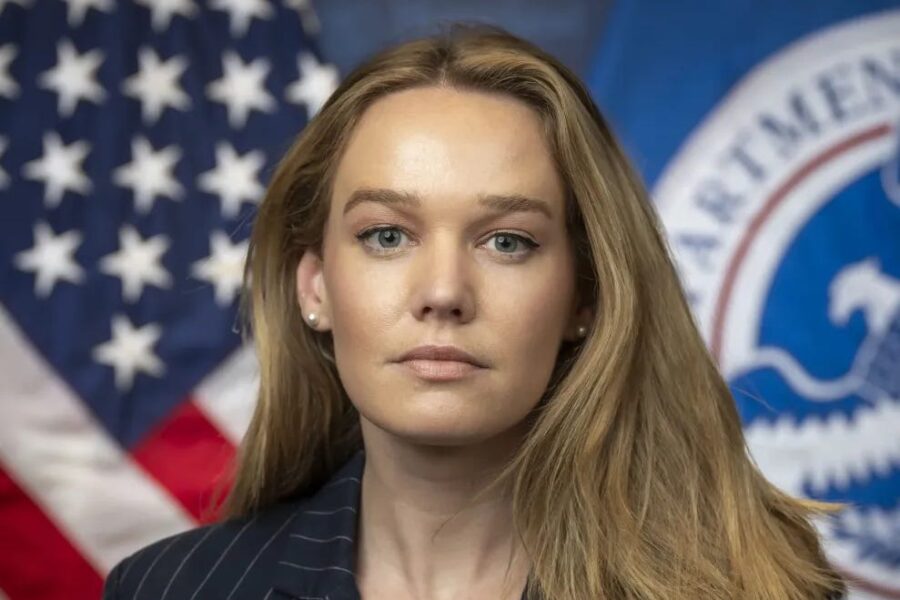
Her departure marks a significant shift for DHS at a moment when public attention remains focused on immigration policy and the department’s broader operational responsibilities. While the agency has not yet announced who will assume communications duties, McLaughlin’s exit will leave a vacuum in a role that has traditionally served as the public face of the department’s messaging strategy.
Analysts suggest that DHS will need to carefully manage the transition to maintain consistency in its public messaging. Given the heightened scrutiny surrounding immigration enforcement and the political stakes of upcoming congressional negotiations, the incoming communications leadership will face immediate pressure to articulate policies clearly, respond to criticism, and sustain the department’s credibility.
The timing of McLaughlin’s exit is also noteworthy. It coincides with ongoing debates over funding and the structure of ICE and CBP operations, as well as broader discussions about the federal government’s approach to border security. Leadership changes within DHS can have implications not only for communications but also for internal morale, coordination with Congress, and public trust.
As she prepares to leave her post, colleagues and observers alike are reflecting on the impact of McLaughlin’s tenure. Her visibility, combative style, and strategic engagement with the media have left an indelible mark on the department, shaping public discourse around some of the Trump administration’s most high-profile immigration policies.
For now, the focus within DHS is on ensuring continuity while preparing for a leadership transition in communications. Meanwhile, McLaughlin’s future plans remain a subject of speculation, though her record suggests she will remain an influential figure in political and media circles, whether in communications, consulting, or potentially elected office.
In summary, Tricia McLaughlin’s departure represents more than a personnel change. It signals a moment of transition for DHS communications, highlights the pressures and demands faced by high-profile government spokespersons, and underscores the continuing intensity of public debate over immigration policy in the United States. Her tenure serves as a case study in how media strategy, political advocacy, and public engagement intersect in the realm of federal governance.

Emily Johnson is a critically acclaimed essayist and novelist known for her thought-provoking works centered on feminism, women’s rights, and modern relationships. Born and raised in Portland, Oregon, Emily grew up with a deep love of books, often spending her afternoons at her local library. She went on to study literature and gender studies at UCLA, where she became deeply involved in activism and began publishing essays in campus journals. Her debut essay collection, Voices Unbound, struck a chord with readers nationwide for its fearless exploration of gender dynamics, identity, and the challenges faced by women in contemporary society. Emily later transitioned into fiction, writing novels that balance compelling storytelling with social commentary. Her protagonists are often strong, multidimensional women navigating love, ambition, and the struggles of everyday life, making her a favorite among readers who crave authentic, relatable narratives. Critics praise her ability to merge personal intimacy with universal themes. Off the page, Emily is an advocate for women in publishing, leading workshops that encourage young female writers to embrace their voices. She lives in Seattle with her partner and two rescue cats, where she continues to write, teach, and inspire a new generation of storytellers.