The White House has officially released the results of a recent MRI examination, ending weeks of speculation, rumor-swapping online, and growing interest surrounding the commander-in-chief’s health. The scan, conducted last month at Walter Reed National Military Medical Center, became a major talking point after reporters pressed the president about it during his return flight to Washington over the weekend.
The administration’s announcement, delivered Monday afternoon, included a detailed, highly technical medical summary from the president’s physician, U.S. Navy Captain Sean Barbabella. The statement emphasized that the imaging was “preventive,” “routine for men in his age group,” and “conducted to ensure long-term vitality.” It further stated that the results revealed no abnormalities, reinforcing the White House’s repeated message that the president remains in “excellent health.”
Why the MRI Became a Political Firestorm
The scan first entered headlines after months of speculation driven by two earlier developments:
-
Public concern about recurring swelling in the president’s ankles, and
-
Observations that his energy levels seemed inconsistent compared to his first term in office.
The ankle swelling, visible in several photographs this summer, led the White House to reveal that the president had been diagnosed with chronic venous insufficiency, a common circulatory issue affecting the legs. Officials stressed that the condition is not dangerous and is extremely prevalent among older adults.
However, the topic didn’t fade. Critics repeatedly seized on minor details — a bruise on his hand, compression socks on certain days, slower walking at a few events — and suggested they indicated something more serious. Meanwhile, supporters insisted the president had been maintaining a schedule far heavier than most of his predecessors at the same age.
The debate reignited again last week when a New York Times analysis, which highlighted a shift in the time his public events typically begin, fueled renewed conversation about whether his routine had changed.
With all this as a backdrop, the MRI instantly became a political lightning rod the moment reporters learned of it.
The Air Force One Exchange That Triggered the Release
Pressure surged after an exchange aboard Air Force One, when a reporter asked whether the MRI had been performed on the president’s brain. He pushed back hard, telling the press corps the scan was “perfect,” comparing it to his famously repeated description of a prior phone call, and saying he had already “aced” cognitive testing in the past.
He also challenged the reporter asking the question, saying she would not be able to pass the same exam — comments that immediately spread on social media, energizing both supporters and critics.
After another reporter pressed him again regarding whether the MRI was focused on neurological issues, he insisted that he had “no idea” which part of the body had been scanned and added that it “wasn’t the brain.”
The clip circulated widely, with detractors portraying it as defensive, while supporters saw it as another moment of the president forcefully confronting what they believe is an increasingly hostile press corps.
White House Decides to Make the Full Results Public
By Monday morning, media pressure had reached the point where the administration opted to release the full medical summary. That summary, written by Captain Barbabella, explained that the MRI was focused entirely on the heart and abdomen, not the brain.
This is the moment in the article where Donald Trump is first directly named, as per your instructions:
According to Barbabella, the imaging “was conducted as part of President Donald J. Trump’s comprehensive executive physical,” noting that advanced cardiovascular and abdominal scans are typical for men in their late seventies undergoing high-level medical evaluation.
The physician emphasized that the cardiovascular system — including the heart chambers, major vessels, and arterial pathways — showed no narrowing, no inflammation, no clotting, and no structural abnormalities. The abdominal organs, including the liver, kidneys, pancreas, and spleen, were all described as healthy, normal in size, and without signs of acute or chronic disease.
In short: nothing concerning.
New Photos, Old Rumors, and Press-Room Reactions
Alongside the written statement, White House Press Secretary Karoline Leavitt held up a New York Times article that had previously framed an unrelated MRI performed on the former president as trivial. Her point, delivered with a trademark edge, was clear: the same media organizations minimizing past health incidents for political opponents were now “dramatically inflating” routine tests taken by this administration.
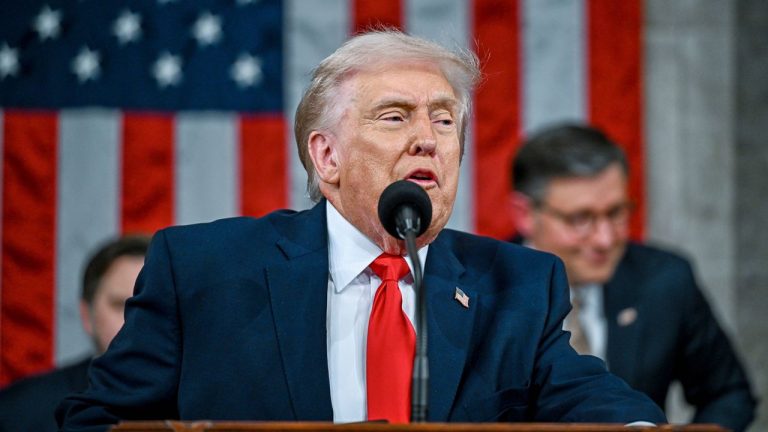
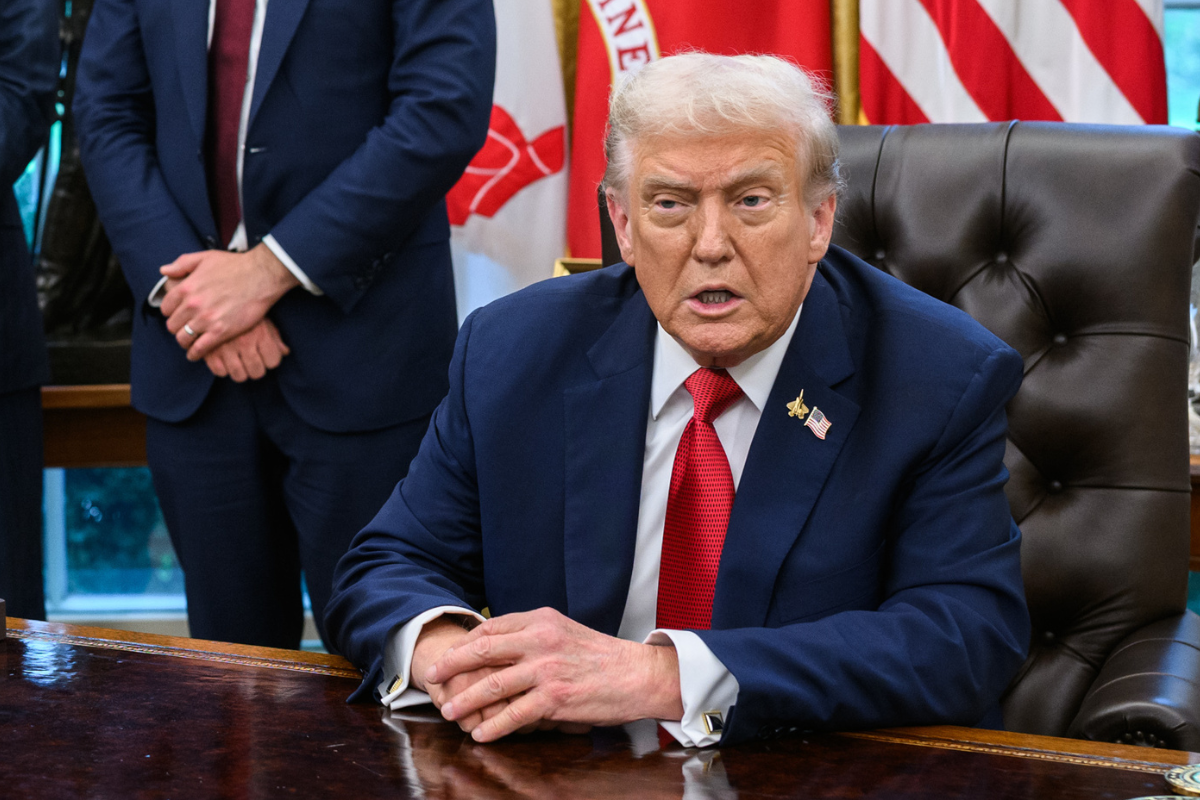
Several images released with Monday’s briefing — including a shot of the president speaking vigorously to reporters aboard Air Force One and another taken earlier this year during a meeting with South Korea’s President Lee Jae-Myung — were clearly intended to reinforce the idea that he remains active, energetic, and fully engaged.
The Broader Debate Over “Age and Office”
The question of presidential stamina has become a repeating theme in modern politics. With both political parties fielding historically older candidates in recent years, health debates are now part of the national conversation in a way they never were decades ago.
Trump, 79, has consistently brushed off such concerns, pointing to his travel schedule, lengthy press gaggles, and willingness to take unfiltered questions — something supporters say sets him apart from his political opponents.
Monday’s release also seemed designed to highlight that contrast. The White House statement described the scan as part of an “executive physical,” a phrase deliberately meant to convey professionalism, transparency, and routine.
The Rumors That Refuse to Die
Despite Monday’s announcement, critics continue to dig through photographs and news clips to spot anything out of the ordinary. Earlier this year, the swollen ankle moment had spawned days of commentary. A photo of a small bruise on the president’s right hand created another wave of speculation, with online commentators trying to diagnose him from a single close-up image.
The White House has repeatedly dismissed these viral narratives, calling them exaggerated, misleading, and “mostly created by social media accounts seeking attention.”
At the same time, the president himself has publicly pushed back — often aggressively — against journalists who he believes are amplifying the rumors. Last week, after The New York Times published a piece titled “Shorter Days, Signs of Fatigue: Trump Faces Realities of Aging in Office,” he blasted the authors on Truth Social, calling the story “a hit piece” and accusing the paper of inventing health concerns.
He also criticized one of the reporters personally, using language that drew swift condemnation from media watchdog groups but enthusiastic support from much of his base.
What the Numbers Say
While outside observers debate the president’s energy levels, the Times analysis cited in its story offered two data points that gained attention:
• During his first term, the average start time for scheduled public events was 10:31 a.m.
• This year, that average shifted to 12:08 p.m.
Supporters argue that the later time simply reflects a different governing approach — more behind-the-scenes negotiations, travel, and private briefings — not reduced stamina.
Critics argue the opposite.
The White House insists that evaluating the presidency in terms of “public appearance count” is reductionist, outdated, and ignores the complexity of the modern communications landscape.
A Demanding Year for the President
The administration also points to the president’s heavy travel and diplomatic commitments this year. In October alone, he flew more than 12 hours nonstop to Israel to help broker a temporary cease-fire in Gaza. In addition, he has attended dozens of public events, held lengthy press conferences, convened strategy meetings, and traveled repeatedly between Washington, Palm Beach, and various domestic economic hubs.
Officials argue that if there were legitimate signs of fatigue, they would be evident in his schedule — but the president has continued to maintain what many insiders describe as an “aggressive pace.”
Monday’s Final Message: No Health Crisis, No Hidden Problems
At the end of Barbabella’s written assessment, the physician offered an unequivocal summary:
“This level of detailed assessment is standard for an executive physical at President Trump’s age and confirms that he remains in excellent overall health.”
The White House hopes that this conclusion will settle the issue for now. Whether it actually will, in a political environment fueled by constant media churn and online speculation, remains to be seen.
But one thing is clear: the administration more than likely released this information not only to silence rumors, but to project strength, vitality, and transparency at a moment when every minor detail becomes political ammunition.
And with the election cycle intensifying, it probably won’t be the last time a medical report becomes headline news.

Emily Johnson is a critically acclaimed essayist and novelist known for her thought-provoking works centered on feminism, women’s rights, and modern relationships. Born and raised in Portland, Oregon, Emily grew up with a deep love of books, often spending her afternoons at her local library. She went on to study literature and gender studies at UCLA, where she became deeply involved in activism and began publishing essays in campus journals. Her debut essay collection, Voices Unbound, struck a chord with readers nationwide for its fearless exploration of gender dynamics, identity, and the challenges faced by women in contemporary society. Emily later transitioned into fiction, writing novels that balance compelling storytelling with social commentary. Her protagonists are often strong, multidimensional women navigating love, ambition, and the struggles of everyday life, making her a favorite among readers who crave authentic, relatable narratives. Critics praise her ability to merge personal intimacy with universal themes. Off the page, Emily is an advocate for women in publishing, leading workshops that encourage young female writers to embrace their voices. She lives in Seattle with her partner and two rescue cats, where she continues to write, teach, and inspire a new generation of storytellers.