A growing political storm is forming in Washington as newly released federal documents revive uncomfortable questions about powerful figures once connected to Jeffrey Epstein. What began as a long-anticipated disclosure of millions of pages of records has quickly evolved into a test of transparency, ethics, and political credibility at the highest levels of government. With lawmakers from both parties now weighing in, the controversy has expanded beyond Epstein himself and into the heart of the current administration.
The Justice Department’s release of roughly three million pages of unredacted material tied to Epstein has drawn intense scrutiny from Congress, advocacy groups, and the public. The documents, which include emails, calendars, financial records, and travel references, are being examined closely for evidence of who maintained contact with Epstein after his 2008 conviction for sex crimes. For many lawmakers, the release represents a long-delayed opportunity to understand how Epstein continued to wield influence for years despite his criminal record.
As members of Congress gained access to the files, attention quickly shifted to a senior Cabinet official whose name appeared repeatedly in the records. The revelations have prompted rare bipartisan concern, with critics arguing that the issue is no longer about guilt by association, but about credibility, honesty, and judgment.
Republican Rep. Thomas Massie of Kentucky was among the first to publicly raise alarms. Speaking on national television, Massie said the documents raise serious questions that cannot be ignored. He argued that any official who maintained a relationship with Epstein after his conviction owes the public clear answers, particularly when that official serves in a role that demands trust and integrity.
Democratic lawmakers echoed those concerns. Several pointed to inconsistencies between past public statements and what the newly released documents appear to show. They argue that if senior officials were not fully forthcoming about their past interactions, it undermines public confidence not only in that individual, but in the administration as a whole.
At the center of the controversy is a Cabinet member whose portfolio places him at the intersection of business, government, and international influence. For weeks, his past comments had suggested a clean break from Epstein well before the disgraced financier’s legal troubles became widely known. But the documents now being reviewed appear to complicate that narrative.
According to the records, communications and overlapping business interests continued years after Epstein’s conviction. Lawmakers reviewing the files say the timing matters, because Epstein’s criminal history was already public knowledge by that point. The concern, they argue, is not simply that contact occurred, but that it allegedly persisted long after there was ample reason to sever ties.
The Cabinet member in question is Howard Lutnick, the current Secretary of Commerce and a key figure in President Donald Trump’s administration.
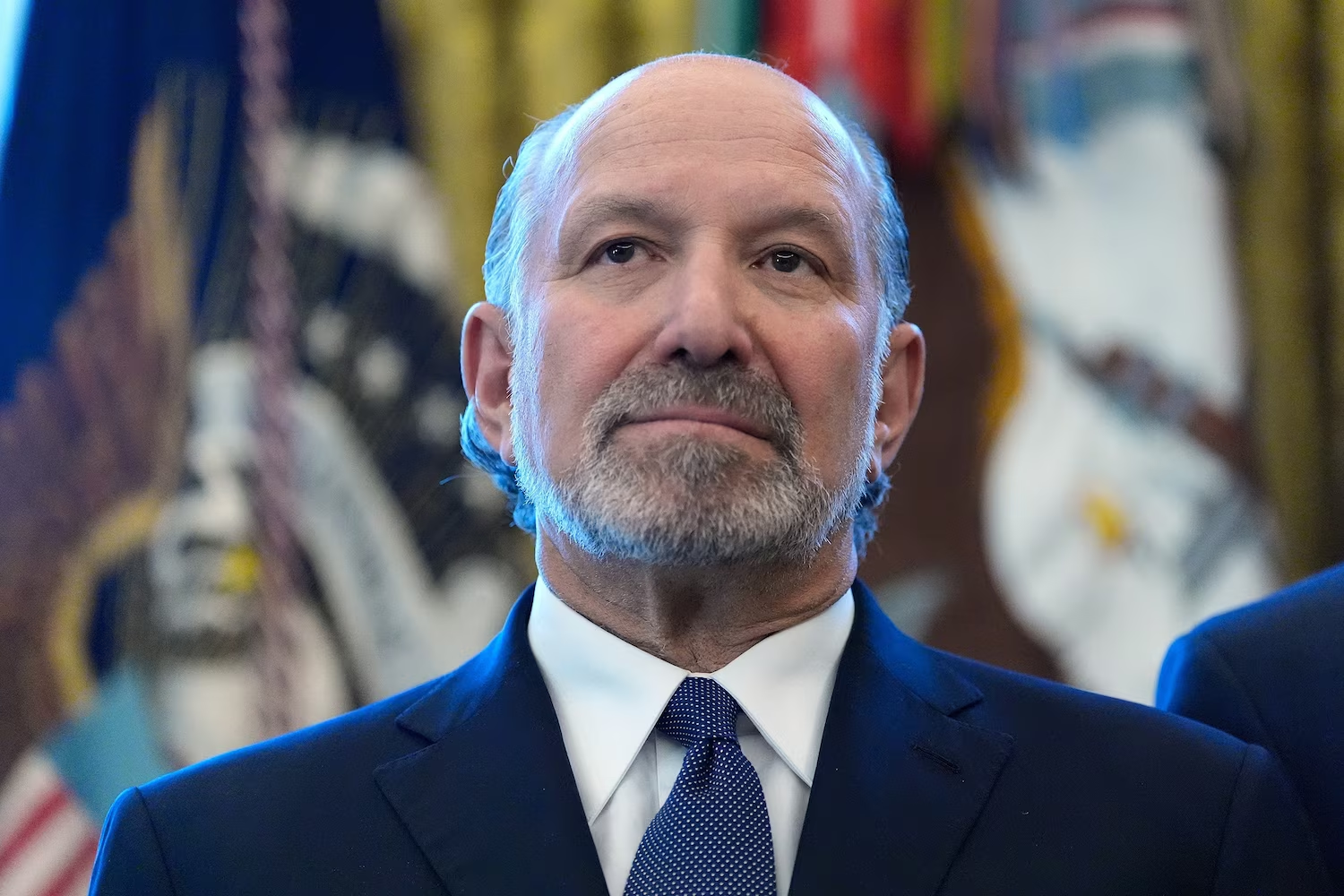
Once Lutnick’s name entered the public discussion, calls for accountability intensified. Rep. Massie said on CNN that the situation places unnecessary strain on the president and suggested that resignation would be the most straightforward way to address the controversy. “He’s got a lot to answer for,” Massie said, adding that stepping aside could prevent the issue from becoming a prolonged distraction.
Democratic Rep. Robert Garcia, the ranking member on the House Oversight Committee, went further, accusing Lutnick of misleading the public about the extent of his relationship with Epstein. In a post on social media, Garcia argued that prior claims of no meaningful interaction after the mid-2000s no longer align with what the documents show. He called for either resignation or removal and demanded sworn testimony before Congress.
The documents themselves include references to meetings, shared investments, and travel plans involving Lutnick and Epstein well into the 2010s. One calendar entry from 2011 reportedly notes a planned social engagement, while records from late 2012 suggest that Lutnick and his family had considered visiting Epstein’s private island. That same period also included overlapping business investments, according to legal filings now under review.
These details contrast sharply with Lutnick’s earlier public remarks. In past interviews and podcast appearances, he described Epstein as someone he distanced himself from years earlier, portraying any initial contact as brief and insignificant. He characterized Epstein as someone he deliberately avoided once concerns became apparent, saying he wanted no association with him socially, professionally, or philanthropically.
A spokesperson for the Department of Commerce responded to the renewed scrutiny by emphasizing that Lutnick’s interactions with Epstein were limited and infrequent over a span of many years. The statement maintained that the relationship never involved criminal conduct and that the secretary had no knowledge of Epstein’s continued abuses. Still, critics argue that the explanation does little to resolve discrepancies between past statements and the documentary record.
The White House, for its part, has publicly stood by Lutnick. In a statement, an administration spokesperson praised the Cabinet as one of the most effective in modern history and said the president remains focused on delivering results for the American people. The statement did not directly address the specific allegations but framed the controversy as a distraction from broader policy goals.
Meanwhile, the House Oversight Committee is pressing ahead with its broader investigation into Epstein and those connected to him. Chairman James Comer has already issued subpoenas to several high-profile figures and indicated that the committee is open to speaking with anyone who may help uncover the full scope of Epstein’s network. While Lutnick has not yet been subpoenaed, Comer said the panel is weighing its options carefully to avoid jeopardizing ongoing testimony.
Democratic members of the committee have made clear that they would support calling Lutnick to testify, though they note that subpoenas require majority approval. Rep. Melanie Stansbury of New Mexico said the seriousness of the allegations warrants immediate action and expressed her personal view that Lutnick should step down.
The controversy unfolds against a broader backdrop of renewed attention to Epstein’s enablers and associates, following the Justice Department’s long-delayed document release. For survivors and advocates, the focus remains on accountability and transparency, rather than partisan advantage. Several lawmakers have emphasized that the investigation’s ultimate goal is justice for victims, not political theater.
Still, the political implications are unavoidable. A Cabinet official facing bipartisan calls to resign over Epstein ties places the administration in a difficult position, particularly as lawmakers and the public digest the sheer volume of newly available information. Whether Lutnick ultimately testifies, resigns, or weathers the storm remains uncertain.
What is clear is that the Epstein files have reopened wounds that many believed were long buried. As Congress continues its review, the situation underscores how past associations can resurface years later, reshaping careers and challenging institutions. For now, the controversy surrounding the Commerce Secretary stands as one of the most consequential tests of accountability to emerge from the latest chapter of the Epstein saga.