


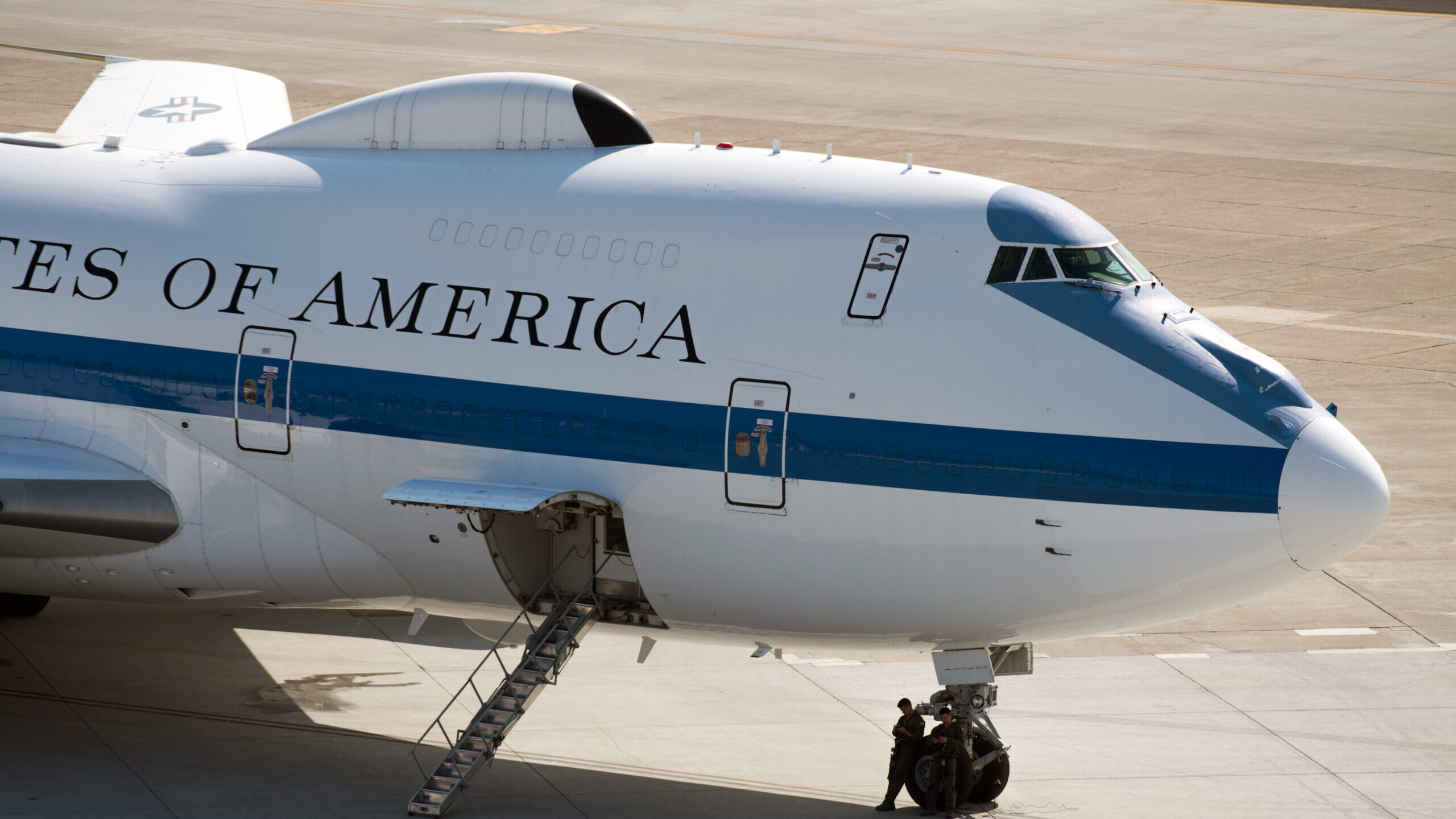
A rare and highly scrutinized flight by the U.S. Air Force’s “doomsday plane” has fueled intense speculation, especially as geopolitical tensions rise in the Middle East. The aircraft in question, the Boeing E-4B “Nightwatch,” is specifically designed to serve as a mobile military command center in the event of a nuclear attack or national emergency.
On Monday evening, one of the U.S. military’s four E-4B aircraft departed from Barksdale Air Force Base in Bossier City, Louisiana, at approximately 5:56 p.m. ET. After an unusual flight pattern, the plane landed safely at Joint Base Andrews in Maryland around 10:01 p.m. ET. While these aircraft do fly occasionally for training and maintenance, the timing and lack of official explanation have raised eyebrows.
Often referred to as the “doomsday plane,” the E-4B is fortified to withstand nuclear blasts and electromagnetic pulses. It provides a secure and virtually indestructible communication hub for U.S. leadership in worst-case scenarios. Historically, it gained notoriety for being airborne during the 9/11 terrorist attacks, serving as a vital link in national defense.
The U.S. Air Force describes the Nightwatch as “a highly survivable command, control and communications center” intended to be used if ground-based control systems are ever destroyed. It allows military leaders, and potentially the president, to coordinate U.S. forces and respond decisively during crises—including full-scale warfare or national disasters.
Speculation has swirled further due to the current state of global affairs. The plane’s sudden activity coincides with rising conflict between Iran and Israel. On June 13, Israeli forces launched airstrikes near Tehran. In response, Iran fired back, with some of its missiles reportedly breaching Israel’s famed Iron Dome defense system. Though the United States has not taken a direct military role in the conflict, the situation remains volatile.
Former President Donald Trump, who would use the E-4B in the event of an emergency if he were in office, has also issued warnings regarding the state of global security. His comments, combined with the E-4B’s unannounced flight, have only heightened public anxiety about what may be unfolding behind closed doors.
While the U.S. military has not confirmed the purpose of the flight, officials insist that routine operations for such aircraft are not uncommon. However, given the international climate and the symbolic weight the “doomsday plane” carries, even a standard flight can send a powerful message.
For now, observers are left wondering: Was this just a drill—or a signal that something bigger is brewing?

James Jenkins is a celebrated Pulitzer Prize-winning author whose work has reshaped the way readers think about social justice and human rights in America. Raised in Atlanta, Georgia, James grew up in a community that instilled in him both resilience and a strong sense of responsibility toward others. After studying political science and creative writing at Howard University, he worked as a journalist covering civil rights issues before dedicating himself fully to fiction. His novels are known for their sharp, empathetic portraits of marginalized communities and for weaving personal stories with broader political realities. Jenkins’s breakout novel, Shadows of Freedom, won national acclaim for its unflinching look at systemic inequality, while his more recent works explore themes of identity, resilience, and the fight for dignity in the face of oppression. Beyond his novels, James is an active public speaker, lecturing at universities and participating in nonprofit initiatives that support literacy and community empowerment. He believes that storytelling is a way to preserve history and inspire change. When not writing, James enjoys jazz music, mentoring young writers, and traveling with his family to explore cultures and stories around the world.