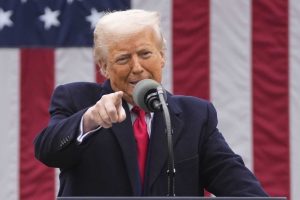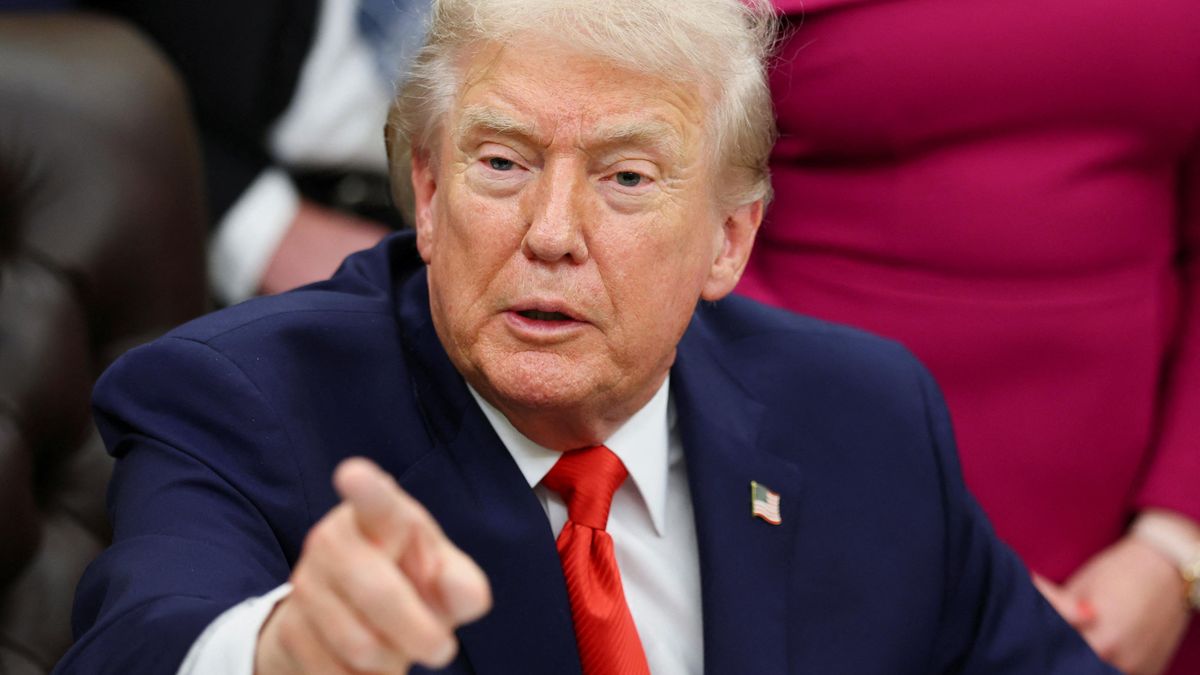
President Donald Trump has renewed debate over one of the most controversial and widely discussed consumer finance issues in the United States: credit card interest rates. In a social media post issued early Friday, Trump announced that he is calling for a one-year nationwide cap on credit card interest rates, setting the maximum rate at 10 percent beginning later this month.
The proposal, which Trump has mentioned before during his 2024 campaign, immediately drew strong reactions from lawmakers, banking groups, and consumer advocates. While many Americans struggle with historically high borrowing costs, experts say the president’s plan faces significant legal, economic, and political hurdles.
Trump offered few details about how such a cap would be enforced or what authority would be used to implement it.
“Effective January 20, 2026, I, as President of the United States, am calling for a one year cap on Credit Card Interest Rates of 10%,” Trump wrote on Truth Social. “We will no longer let the American public be ripped off by credit card companies.”
The White House later reiterated the message but did not clarify whether Trump intends to pursue executive action, legislation, or regulatory rulemaking to achieve the goal.
A Popular Idea With Complex Reality
Credit card interest rates have climbed steadily in recent years, with average annual percentage rates (APRs) now exceeding 20 percent for many consumers. For borrowers carrying balances, these rates can quickly turn manageable debt into long-term financial strain.
Because of this, Trump’s proposal has found support across party lines in principle, even as questions remain about feasibility.
Lawmakers from both parties have previously acknowledged that high credit card interest rates are a growing burden on working families, particularly as inflation and living costs remain elevated. However, no administration has successfully imposed a nationwide rate cap through executive authority.
Legal scholars note that regulating interest rates at the federal level typically requires congressional action, as financial institutions operate under a mix of federal and state regulatory frameworks.
During the 2024 campaign, Trump made similar promises, but analysts at the time dismissed the idea as politically attractive yet legally difficult.
Bipartisan Legislative Efforts
Despite the obstacles, there is existing momentum in Congress. Senators Bernie Sanders (I-Vt.) and Josh Hawley (R-Mo.) previously introduced bipartisan legislation proposing a five-year cap on credit card interest rates at 10 percent. Their bill framed the cap as consumer relief in response to rising household debt.
In the House, Representatives Alexandria Ocasio-Cortez (D-N.Y.) and Anna Paulina Luna (R-Fla.) introduced companion legislation reflecting similar goals.
Those bills have not yet advanced to final passage, but their existence highlights growing bipartisan frustration with current interest rate structures.
Republicans currently hold narrow majorities in both chambers of Congress, meaning any such proposal would require careful negotiation across party lines.
Trump did not explicitly endorse any of the existing bills in his announcement, leaving unclear whether he plans to push Congress to act or attempt to impose limits through regulatory agencies.
Banking Industry Pushback
Major banking institutions and credit card issuers have largely remained silent on Trump’s statement, declining to comment publicly in the hours following the announcement.
However, leading banking advocacy groups quickly issued a joint statement criticizing the proposal.
The Consumer Bankers Association, Bank Policy Institute, American Bankers Association, Financial Services Forum, and Independent Community Bankers of America warned that a strict rate cap could have unintended consequences.
They argued that limiting interest rates would reduce access to credit, particularly for borrowers with weaker credit histories, and could push consumers toward unregulated or higher-risk lending alternatives.
“These policies would not eliminate consumer demand for credit,” the groups said. “They would only make it harder and more expensive to obtain safely.”
Banking groups also emphasized that credit card interest rates reflect risk assessments, operational costs, and default probabilities, arguing that a flat national cap oversimplifies a complex system.
Political Contradictions
Trump’s announcement also reopened criticism from Democrats who argue that he has not delivered on past consumer protection promises.
Last year, the Trump administration successfully moved to overturn a Biden-era rule that capped credit card late fees at $8. Business groups had challenged that regulation, arguing it violated federal law. A federal judge ultimately struck the rule down.
Critics now point to that action as evidence that Trump’s current proposal contradicts his earlier support for banking industry positions.
Supporters counter that Trump is now responding to public frustration over high borrowing costs and attempting to balance consumer protection with financial system stability.
Why Credit Card Rates Matter
Credit cards are among the most widely used financial tools in the United States. Roughly 191 million Americans hold at least one credit card, and more than half carry balances month to month.
At current average interest rates, a $5,000 balance can take years to pay off, even with consistent monthly payments. For families already managing rent, groceries, healthcare, and transportation costs, interest can quietly become one of the largest expenses in their budgets.
Consumer advocates argue that a temporary cap could provide meaningful relief and allow households to reduce debt more quickly.
However, economists caution that lenders may respond by tightening approval standards, reducing rewards programs, or introducing new fees to compensate for lost revenue.
The Legal Question
The central challenge remains authority. Most legal experts agree that the president alone cannot impose a nationwide interest rate cap without congressional approval.
Some suggest that Trump could attempt to pressure regulatory agencies or encourage voluntary compliance, but such measures would likely face court challenges.
If Congress were to pass legislation, it would require bipartisan support and careful drafting to avoid conflicts with existing banking laws.
So far, Trump has not indicated whether he plans to submit a formal legislative proposal.
Public Reaction
Online reaction to Trump’s statement has been sharply divided.
Supporters praised the move as a long-overdue stand against what they view as predatory lending practices. Others accused Trump of making promises he knows cannot be implemented easily.
Financial analysts noted that markets reacted cautiously, with no immediate shifts among major financial stocks, suggesting investors are waiting for clarity.
What Happens Next
For now, Trump’s announcement remains a political declaration rather than a policy change.
Whether it becomes law will depend on several factors:
-
Congressional willingness to act
-
Legal authority to impose a cap
-
Banking industry negotiations
-
Economic impact assessments
Trump has framed the proposal as part of a broader effort to reduce household financial pressure and demonstrate that his administration is focused on everyday economic concerns.
Yet until a bill is introduced or a regulatory pathway is clarified, the proposal remains symbolic rather than operational.
The Broader Message
Beyond the technical details, Trump’s announcement sends a clear political signal: credit card debt is becoming a central issue in American economic life.
As millions of families struggle with rising interest costs, both parties are being forced to confront whether current financial structures still serve the public fairly.
Whether Trump’s proposal becomes law or not, it has already shifted the conversation — and placed new pressure on Congress to address one of the most common financial burdens facing American households.

Emily Johnson is a critically acclaimed essayist and novelist known for her thought-provoking works centered on feminism, women’s rights, and modern relationships. Born and raised in Portland, Oregon, Emily grew up with a deep love of books, often spending her afternoons at her local library. She went on to study literature and gender studies at UCLA, where she became deeply involved in activism and began publishing essays in campus journals. Her debut essay collection, Voices Unbound, struck a chord with readers nationwide for its fearless exploration of gender dynamics, identity, and the challenges faced by women in contemporary society. Emily later transitioned into fiction, writing novels that balance compelling storytelling with social commentary. Her protagonists are often strong, multidimensional women navigating love, ambition, and the struggles of everyday life, making her a favorite among readers who crave authentic, relatable narratives. Critics praise her ability to merge personal intimacy with universal themes. Off the page, Emily is an advocate for women in publishing, leading workshops that encourage young female writers to embrace their voices. She lives in Seattle with her partner and two rescue cats, where she continues to write, teach, and inspire a new generation of storytellers.