President Donald Trump issued a stark warning to Venezuela’s interim leadership on Sunday, saying the United States is prepared to launch a second military strike if the country’s leaders fail to cooperate following the dramatic capture of Venezuelan leader Nicolás Maduro earlier this week.
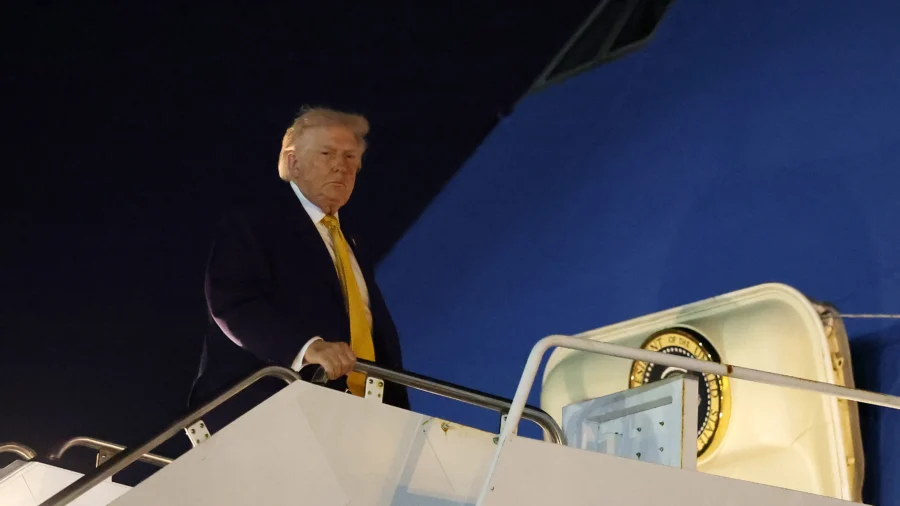
Speaking to reporters aboard Air Force One, Trump made clear that the operation that removed Maduro from power was not necessarily the end of U.S. involvement in the South American nation.
“We’re prepared to do a second strike, if we need it. We’re totally prepared,” Trump said. “If they don’t behave, we will do a second strike.”
The comments mark a sharp escalation in rhetoric just days after U.S. forces carried out a rapid early-morning raid in Caracas that resulted in the capture of Maduro and his wife, Cilia Flores, and their transfer to the United States.
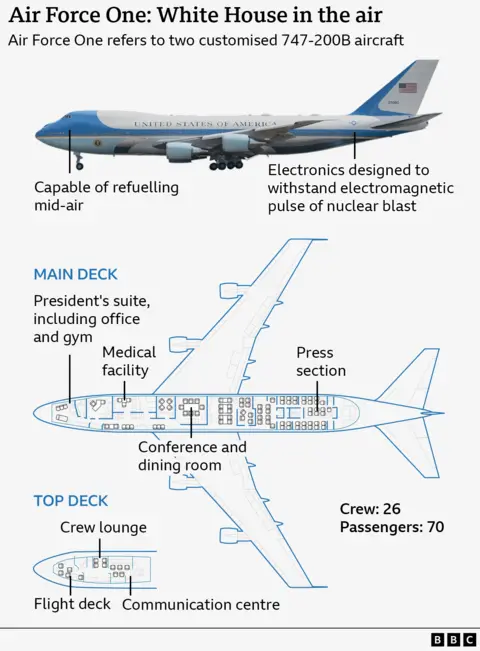

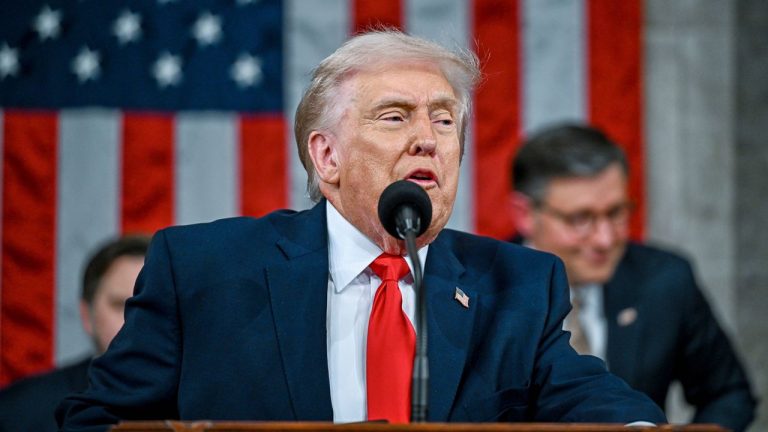
President Donald Trump speaks to reporters aboard Air Force One.
A Lightning Operation in Caracas
The operation that captured Maduro unfolded around 2 a.m. local time on Jan. 3 and lasted less than 30 minutes, according to U.S. officials. The mission included a series of targeted airstrikes on strategic infrastructure in and around Caracas, including ports, communications nodes, and other key assets.
Trump described the raid as an “in-and-out” operation that achieved its objectives without U.S. casualties.
“They went in fast, they went out fast,” Trump said, praising the speed and precision of U.S. forces.
The president said the strikes were designed to neutralize resistance and ensure the safe extraction of Maduro and his wife, whom U.S. authorities accuse of running a criminal enterprise tied to international drug trafficking.
Maduro Now in U.S. Custody
Maduro is currently being held at the Metropolitan Detention Center in Brooklyn and faces a sweeping set of federal charges, including narco-terrorism conspiracy, cocaine importation conspiracy, and weapons-related offenses involving machine guns and destructive devices.
U.S. officials say Maduro is expected to face arraignment in New York City this week, setting the stage for one of the most consequential criminal cases ever brought against a foreign head of state.
Trump has repeatedly framed Maduro not as a legitimate leader but as the head of a criminal organization that used Venezuela as a hub for narcotics trafficking into the United States.
“He’s killed a lot of people,” Trump said. “He’s destroyed a country.”
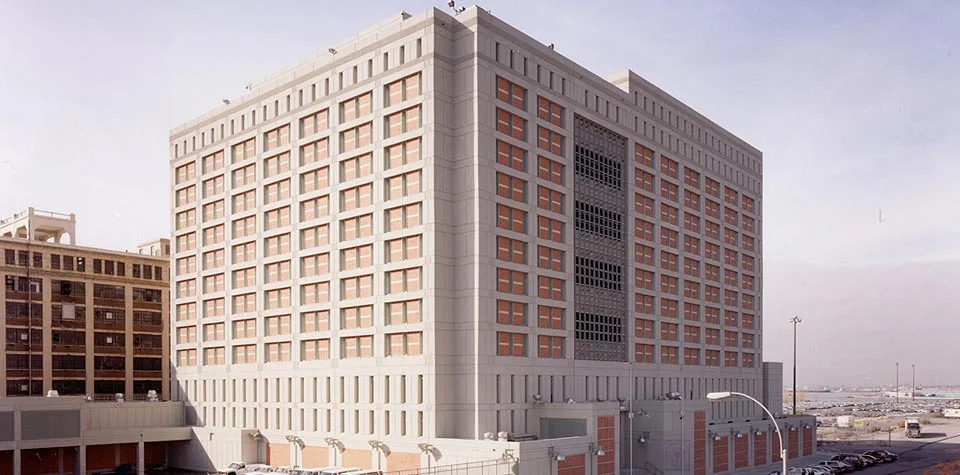
The Metropolitan Detention Center in Brooklyn, where Maduro is being held.
‘We Are in Charge’ of Venezuela, Trump Says
In his remarks, Trump doubled down on earlier statements that the United States is now overseeing Venezuela’s transition, saying bluntly: “We are in charge.”
The president said the immediate priority is stabilizing the country and rebuilding its shattered economy, with a particular focus on Venezuela’s vast oil reserves and deteriorated infrastructure.
“Venezuela right now is a dead country,” Trump said. “We have to bring it back.”
Trump said major U.S. oil companies are ready to invest billions of dollars to repair energy infrastructure and restart production, arguing that such investment would ultimately benefit the Venezuelan people.
“They’re ready to go. They’re gonna go in. They’re gonna rebuild the infrastructure,” he said.
Elections Deferred ‘Until the Right Time’
Trump also made clear that elections in Venezuela will not be held immediately, saying the country must first be stabilized.
“We’ll have elections at the right time,” he said. “The main thing you have to fix. It’s a broken country. There’s no money.”
The comments are likely to fuel international debate over sovereignty and the legality of U.S. involvement, but Trump has shown little concern for criticism, insisting that decisive action is necessary.
Acting Leader Under Pressure
In the wake of Maduro’s capture, Venezuela’s interim leadership has fallen to former vice president Delcy Rodríguez, who has publicly condemned the U.S. operation and called for Maduro’s immediate release.
Rodríguez initially denounced the raid as illegal and accused Washington of violating Venezuela’s sovereignty. However, her tone has since shifted, with recent statements signaling openness to dialogue and cooperation.
“We invite the U.S. government to collaborate with us on an agenda of cooperation oriented towards shared development,” Rodríguez wrote in a social media post, calling for peaceful coexistence.
Despite that outreach, Trump made it clear that cooperation is not optional.
“She could pay a very big price if she doesn’t do what’s right,” Trump warned.

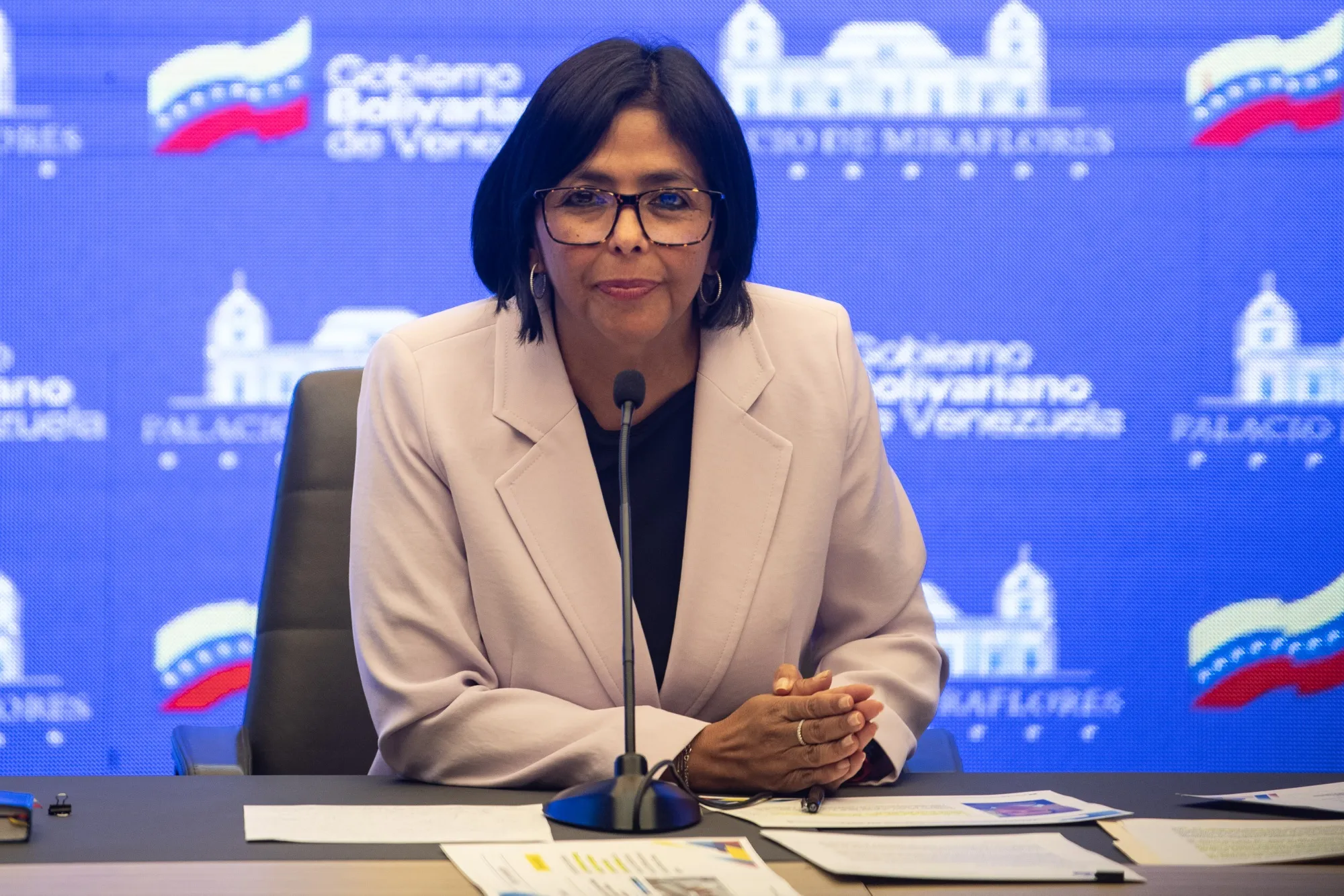
Venezuela’s interim leadership faces mounting pressure following Maduro’s capture.
‘Depends What Happens’ on Ground Forces
Asked whether U.S. troops could be deployed on the ground in Venezuela, Trump declined to rule it out.
“That depends on what happens,” he said.
The ambiguity has heightened concerns among foreign governments and lawmakers about the potential for deeper U.S. military involvement in the region. Trump, however, has framed flexibility as essential to maintaining leverage.
A Message to the Region—and the World
Trump said the operation should serve as a warning not only to Venezuela’s interim leaders but to any regime he believes threatens American interests.
“This should serve as a warning to anyone who would threaten American sovereignty or endanger American lives,” he said earlier this week.
Supporters argue the move demonstrates strength and restores deterrence, while critics warn it risks destabilizing Latin America and undermining international norms.
What Comes Next
With Maduro in U.S. custody, Venezuela under interim leadership, and Trump openly threatening further military action, the situation remains volatile.
Much will depend on whether Rodríguez and other Venezuelan officials choose cooperation over confrontation—and whether Trump decides that their response is sufficient.
For now, the president has made his position unmistakably clear: the United States is prepared to act again, and the consequences for defiance could be severe.

Emily Johnson is a critically acclaimed essayist and novelist known for her thought-provoking works centered on feminism, women’s rights, and modern relationships. Born and raised in Portland, Oregon, Emily grew up with a deep love of books, often spending her afternoons at her local library. She went on to study literature and gender studies at UCLA, where she became deeply involved in activism and began publishing essays in campus journals. Her debut essay collection, Voices Unbound, struck a chord with readers nationwide for its fearless exploration of gender dynamics, identity, and the challenges faced by women in contemporary society. Emily later transitioned into fiction, writing novels that balance compelling storytelling with social commentary. Her protagonists are often strong, multidimensional women navigating love, ambition, and the struggles of everyday life, making her a favorite among readers who crave authentic, relatable narratives. Critics praise her ability to merge personal intimacy with universal themes. Off the page, Emily is an advocate for women in publishing, leading workshops that encourage young female writers to embrace their voices. She lives in Seattle with her partner and two rescue cats, where she continues to write, teach, and inspire a new generation of storytellers.