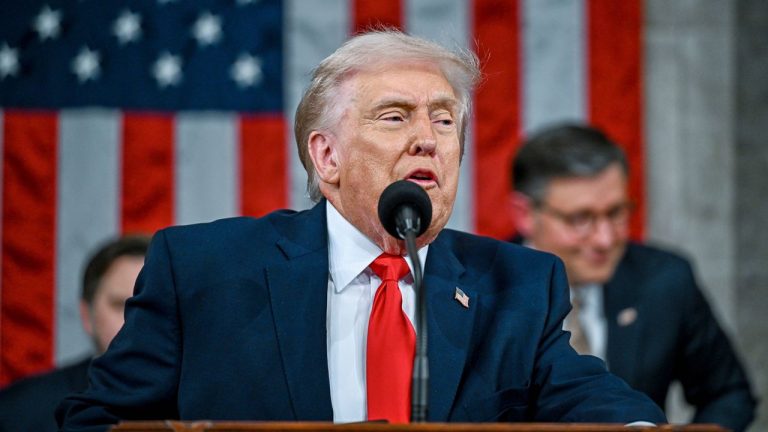



In a blunt message to fellow Republicans this week, the leader of the United States issued a stark warning: unless his party retains control of the U.S. House of Representatives in the upcoming midterm elections, efforts to remove him from office could resurface with renewed vigor.
Speaking to lawmakers at a political retreat in Washington, the president framed the 2026 midterm elections as a pivotal moment for both his party’s legislative agenda and his own political survival. The remarks, delivered with characteristic intensity, underscored the heightened stakes facing Republicans as they prepare for a fiercely contested election year.
A Charged Political Climate
The warning came during a retreat for Republican members of the House of Representatives. In a crowded event space at the Kennedy Center, recently renamed in part with the president’s moniker by a board aligned with his administration, the president conveyed a simple yet dramatic message to lawmakers: “win or face impeachment.”
“You got to win the midterms,” he said in an address aimed at energizing the party’s base and urging lawmakers to unify around common goals. “They’ll find a reason to impeach me. I’ll get impeached.”
The president’s comments reflected both historical political realities and his own contentious standing in national politics.
The Reality of House Control
Control of the House of Representatives matters because impeachment proceedings must originate in that chamber. A simple majority of House members can vote to impeach a sitting president, though conviction and removal require a much larger threshold in the Senate. Currently, Republicans hold a narrow majority in the House, making every seat crucial as the 2026 midterms approach.
The political landscape shifted recently with unexpected developments—including the sudden passing of a California Republican congressman and the departure of another Republican member—which further narrowed the GOP’s margin in the chamber.
With control hanging by a slender thread, the president’s message was clear: victory in November is not just about advancing policy, but also about safeguarding his position.
A History of Impeachment
The notion of impeachment is not abstract in this presidency. The president has already been impeached twice during his political career. The first, in 2019, involved charges related to alleged misconduct in dealings with a foreign leader. The second came in the aftermath of the violent breach of the U.S. Capitol on Jan. 6, 2021. In both instances, he was acquitted by the Senate.
Despite those experiences, the president maintains that both processes were politically motivated and unfair, frequently dismissing them as baseless attempts by his opponents to undermine him.
Why Now?
The timing of the president’s warning comes amid broader political tensions. Republicans are gearing up for a challenging midterm campaign, with all 435 House seats and roughly a third of the Senate up for election. Midterm elections are traditionally difficult for the party in power, and historical trends suggest incumbent presidents’ parties often lose ground in these cycles.
The president used the retreat not only to warn of impeachment but also to urge Republicans to unite around key policy issues. He emphasized topics such as healthcare reform, economic messaging, and election integrity—areas he believes could resonate with voters and help secure victory in November.
Rallying the Base
During his remarks, the president also pointed to his administration’s achievements and criticized Democratic policies, arguing that his agenda addresses pressing issues like lowering drug prices, bolstering national security, and tackling inflation. He sought to reframe the midterms as a choice between distinct visions for the country’s future.
“You have so much ammunition,” he said, urging lawmakers to promote Republican accomplishments and distinguish them from Democratic proposals
The Republican Party’s leadership has echoed similar concerns. Earlier remarks from top party officials warned that losing control of the House could invite renewed impeachment efforts by Democrats, who have already floated articles of impeachment in previous sessions of Congress.
Democratic Response
Democratic lawmakers have not been silent. Some have been vocal in their criticism of the president and suggest that oversight and accountability measures would intensify if they regained a majority in the House. While not all Democrats explicitly call for impeachment at this stage, several have reiterated their intention to scrutinize the president’s actions more aggressively should they secure legislative control.
The president’s warning has added fuel to the political discourse, turning the impeachment issue into a campaign talking point for both parties as they frame the midterms in terms of broader national stakes.
Impeachment as a Strategic Narrative
For the president’s supporters, warning about impeachment serves a dual purpose. It reinforces party unity by portraying the political contest as a defense against what they characterize as partisan attacks. It also aims to motivate the Republican base by framing election outcomes as existential for the party’s legislative agenda and for the presidency itself.
Critics, however, argue that equating bipartisan electoral competition with the threat of impeachment blurs the line between political strategy and the constitutional process designed to check presidential misconduct.
The Road to November
As November’s midterm elections draw closer, both parties are preparing for a grueling cycle of campaigning, fundraising, and voter outreach. Control of the House could determine not only the trajectory of legislative priorities but also the intensity and focus of oversight powers.
The president’s remarks at the retreat reflected his broader strategy: energize Republican lawmakers and voters, frame the opposition as driven by political animosity, and underscore the importance of unity and discipline within his party.
Whether Republicans can hold the House majority remains to be seen. But as the president acknowledged repeatedly, the stakes could not be higher—not just for policy outcomes, but for the political fate of the commander in chief himself.

Emily Johnson is a critically acclaimed essayist and novelist known for her thought-provoking works centered on feminism, women’s rights, and modern relationships. Born and raised in Portland, Oregon, Emily grew up with a deep love of books, often spending her afternoons at her local library. She went on to study literature and gender studies at UCLA, where she became deeply involved in activism and began publishing essays in campus journals. Her debut essay collection, Voices Unbound, struck a chord with readers nationwide for its fearless exploration of gender dynamics, identity, and the challenges faced by women in contemporary society. Emily later transitioned into fiction, writing novels that balance compelling storytelling with social commentary. Her protagonists are often strong, multidimensional women navigating love, ambition, and the struggles of everyday life, making her a favorite among readers who crave authentic, relatable narratives. Critics praise her ability to merge personal intimacy with universal themes. Off the page, Emily is an advocate for women in publishing, leading workshops that encourage young female writers to embrace their voices. She lives in Seattle with her partner and two rescue cats, where she continues to write, teach, and inspire a new generation of storytellers.