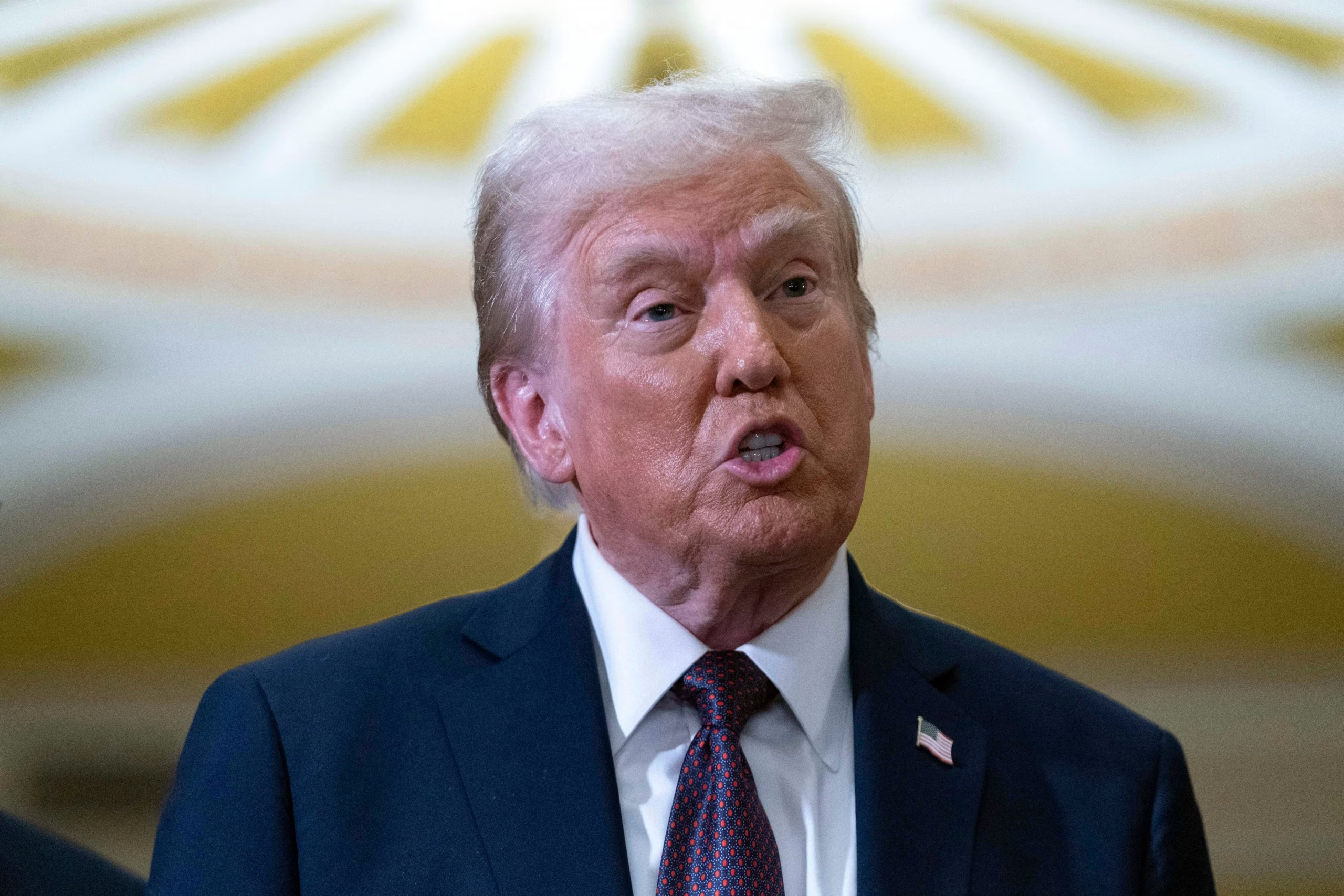
President Donald Trump has announced plans to end Temporary Protected Status (TPS) for thousands of Somali nationals living in the United States, marking a significant shift in immigration policy. The decision has raised concerns about the fate of Somali communities across the country and the potential social and economic impacts of the change.
Understanding Temporary Protected Status
Temporary Protected Status is a humanitarian program designed to provide relief to individuals from countries experiencing extraordinary conditions that make returning home unsafe. These conditions often include civil wars, widespread violence, natural disasters, or other extreme circumstances that threaten the safety of residents.
Under TPS, migrants are granted temporary legal status, which allows them to live and work in the United States while the conditions in their home countries are assessed. The program does not offer permanent residency but serves as a safety net for vulnerable populations, giving them a legal framework to remain in the country temporarily without fear of deportation.
TPS has historically been applied to a range of countries, from Central American nations affected by hurricanes to African countries facing ongoing conflicts. The program is administered by U.S. Citizenship and Immigration Services (USCIS) and is periodically reviewed by the federal government.
The Trump Administration’s Announcement
On Tuesday, White House press secretary Karoline Leavitt confirmed on X that Somali migrants with TPS will be required to leave the United States by March 17. This directive affects thousands of individuals who have lived in the U.S. under the program for many years.
“Somali migrants with TPS will be required to leave the country by March 17,” Leavitt wrote, emphasizing the administration’s commitment to ending what it views as temporary protections that have become prolonged. USCIS echoed this timeline, reinforcing that the program’s temporary nature is a core principle.
“Temporary means TEMPORARY,” the agency stated on X, signaling that extensions or continued leniency would not be granted under the new policy.
National Security and Fraud Concerns
One of the factors cited by the administration in ending TPS for Somalis is a broader crackdown on fraud within certain immigrant communities. Investigations in Minnesota have uncovered a $9 billion fraud scheme involving members of the Somali community, prompting the Department of Homeland Security to deploy additional investigators to ensure compliance and accountability.
While officials argue that the move is a necessary enforcement measure, advocates caution that ending TPS could have unintended consequences for individuals who have established deep ties in the United States, including families, businesses, and community organizations.
Historical Context of Somali TPS
Somali nationals were first designated for TPS due to the prolonged civil war in Somalia, which left millions unable to return safely to their home country. Since then, TPS has allowed Somali immigrants to live and work legally in the United States while their homeland remained unstable.
For many Somali families, TPS has provided a lifeline, offering access to employment, healthcare, and education. The program has also allowed communities in states like Minnesota, Ohio, and Washington to grow and integrate into local economies. Ending the program could disrupt these communities, forcing families to consider relocation, return to unsafe environments, or risk living in the U.S. illegally.
Legal and Political Implications
The announcement to end TPS for Somalis comes amid ongoing debates over presidential authority and immigration law. While the president has the power to designate or terminate TPS for individual countries, the decision is subject to scrutiny by courts and Congress, especially when large populations are affected.
In recent years, TPS decisions have been challenged in court, with questions raised about whether the administration must consider humanitarian factors, long-term U.S. residency, or potential harm to children and families. The Somali case may similarly face legal challenges, particularly if advocacy groups argue that termination violates principles of fairness or due process.
Impact on the Somali Community
For Somali immigrants living in the United States, the announcement brings uncertainty and fear. Families who have lived in the country for decades now face the prospect of leaving homes, jobs, and schools behind. Children who have grown up in the U.S. may be forced to return to a country they barely know, posing social and emotional challenges.
Community leaders have also raised concerns about economic disruptions. Somali-owned businesses, which contribute significantly to local economies in cities like Minneapolis and Columbus, could be destabilized if employees are required to leave. Nonprofit organizations and cultural institutions that rely on Somali residents may also face strain as community members depart.
Government Response and Timeline
USCIS has confirmed the March 17 deadline, giving Somali TPS holders roughly two months to make arrangements. While the agency has not detailed specific enforcement mechanisms, the implication is clear: those who do not comply may face deportation proceedings.
The administration has framed this move as part of a broader effort to enforce immigration laws consistently and ensure that temporary programs remain temporary. Officials argue that long-term residency under TPS undermines the program’s intent and that termination is a legally supported action to restore program integrity.
Public and International Reaction
The decision has drawn attention both domestically and abroad. Advocacy groups and human rights organizations warn that ending TPS could put vulnerable individuals at risk, particularly given ongoing instability in Somalia. Some lawmakers have expressed concern that the policy could have humanitarian consequences, especially for children and families who have spent most of their lives in the United States.
International observers note that U.S. immigration policy sets precedents for how other countries handle humanitarian protections. Ending TPS for Somalis could influence global discussions about migrant rights, refugee protections, and the responsibilities of nations hosting displaced populations.
Looking Ahead
As the March 17 deadline approaches, Somali TPS holders, their families, and community organizations will need to navigate a challenging period of uncertainty. Legal battles may emerge, and advocacy groups are expected to push for extensions or alternative protections to prevent forced departures.
For the broader public, the move serves as a reminder of the tension between immigration enforcement and humanitarian obligations. Policymakers, community leaders, and citizens will likely continue debating the balance between upholding law and supporting vulnerable populations.
The Trump administration’s decision to end TPS for Somalis underscores the enduring complexities of U.S. immigration policy, the impact of presidential authority, and the human consequences of regulatory change. How the country navigates these challenges will have significant implications for the Somali community and for the nation’s approach to immigration in the years to come.

Emily Johnson is a critically acclaimed essayist and novelist known for her thought-provoking works centered on feminism, women’s rights, and modern relationships. Born and raised in Portland, Oregon, Emily grew up with a deep love of books, often spending her afternoons at her local library. She went on to study literature and gender studies at UCLA, where she became deeply involved in activism and began publishing essays in campus journals. Her debut essay collection, Voices Unbound, struck a chord with readers nationwide for its fearless exploration of gender dynamics, identity, and the challenges faced by women in contemporary society. Emily later transitioned into fiction, writing novels that balance compelling storytelling with social commentary. Her protagonists are often strong, multidimensional women navigating love, ambition, and the struggles of everyday life, making her a favorite among readers who crave authentic, relatable narratives. Critics praise her ability to merge personal intimacy with universal themes. Off the page, Emily is an advocate for women in publishing, leading workshops that encourage young female writers to embrace their voices. She lives in Seattle with her partner and two rescue cats, where she continues to write, teach, and inspire a new generation of storytellers.