In a major update to one of the most controversial foreign policy episodes of his presidency, President Donald Trump announced early Friday that he has called off a “previously expected” second round of military strikes on Venezuela, citing cooperation from authorities in the South American nation as the key reason behind the decision. The announcement marks a surprising shift in tone following what had been a sharply escalatory sequence of events involving U.S. military action against the Venezuelan government.
The move comes just days after a daring U.S. military operation that led to the capture of Venezuelan leader Nicolás Maduro and his wife, Cilia Flores, in the Venezuelan capital of Caracas. That mission, ordered by Trump, drew intense international scrutiny and concern from lawmakers and foreign governments alike.
While the initial strikes and Maduro’s removal dominated headlines and ignited fierce debate over presidential war powers and foreign intervention, the cancellation of a second wave of attacks signals a new phase in the developing U.S.–Venezuela relationship — one that hinges on cooperation rather than continued force.
Trump’s Announcement
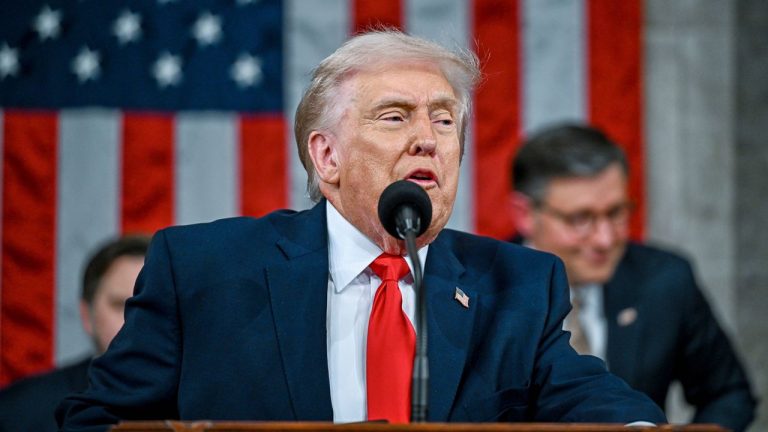
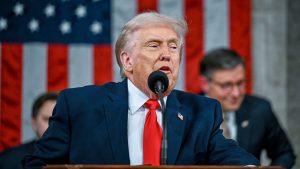
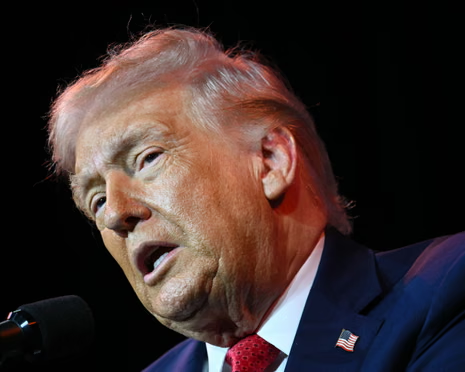
In a post on his social media platform Truth Social, Trump wrote that he had “cancelled the previously expected second Wave of Attacks,” explaining that the Venezuelan government had begun to work with the United States on multiple fronts, enough that further strikes were no longer necessary. He also made it clear that while the follow-up strikes were called off, U.S. military ships would remain positioned in the region “for safety and security purposes.”
Trump specifically noted that Venezuelan authorities had begun releasing large numbers of political detainees, which his administration viewed as a sign of constructive engagement and a move toward peace. Some of these newly freed prisoners reportedly include high-profile opposition figures.
From Force to Cooperation?
The shift from planning additional military actions to celebrating releases and cooperation is stark. Just earlier in the week, Trump had warned that if Venezuela did not “behave” after the initial operation, the U.S. was prepared to launch a much larger follow-up strike. That stance had raised alarms both domestically and internationally, especially among allies concerned about the legal and geopolitical implications of U.S. strikes without clear authorization from Congress.
Now, in what supporters are calling a diplomatic pivot, the administration is emphasizing restored cooperation with Venezuelan authorities. U.S. officials argue that this cooperation shows the effectiveness of the initial operation and opens the door for a broader political and economic engagement.
Releasing Detainees and Signals of Peace
According to U.S. officials and Venezuelan interim government statements, the release of political prisoners was part of what Caracas described as a “peace effort.” These detainees include opposition figures and activists previously held by the Maduro regime. Their release has been framed as an olive branch toward reconciliation and constructive engagement with Washington.
Trump lauded the move as evidence that Venezuela was signaling a willingness to work with the United States. “Because of this cooperation,” Trump wrote, “I have cancelled the previously expected second Wave of Attacks, which looks like it will not be needed.”
Continued U.S. Presence and Future Engagement
Despite canceling additional strikes, Trump emphasized that U.S. military forces will remain in place in the region for the foreseeable future. This continued presence is being described as a “security posture” to ensure stability and oversee coordination with Venezuelan authorities on various matters, including reconstruction and political reform.
Trump also noted his administration’s intention to meet with executives from major oil companies to discuss the future of Venezuela’s vast oil industry — a sector long plagued by underinvestment and mismanagement. In his Truth Social post, Trump claimed that “BIG OIL” would commit at least $100 billion in investments toward rebuilding Venezuela’s oil and gas infrastructure, although details of these commitments remain vague.
The Aftermath of Maduro’s Capture
The broader operation that brought about this sudden shift began with a U.S. special forces mission in Caracas, dubbed Operation Absolute Resolve, that successfully captured Maduro and his wife. They were transported to the United States to face federal charges, including drug trafficking and weapons offenses, a move that further escalated tensions with several nations and drew condemnation from entities including Russia and China.
Following Maduro’s capture, the U.S. initially signaled that it would exert significant influence over Venezuela’s short-term governance. Trump told reporters that the United States would “run” the nation for a period even after Maduro’s removal.
However, as the diplomatic dynamics have evolved, the administration has increasingly focused public messaging on cooperation and rebuilding rather than control and further military action.
Reactions at Home and Abroad
News of the canceled strikes has elicited mixed responses. Supporters of the administration argue that avoiding additional shootings or conflict reduces risk to both U.S. forces and civilians and signals responsiveness to changing circumstances. They describe the release of detainees and economic engagement as more productive than continued military pressure.
Critics, however, have raised concerns about legality, transparency, and precedent. Some lawmakers questioned whether Congress was adequately consulted before the initial military operation, while others argued that canceling the second wave does not resolve deeper issues related to U.S. foreign policy and respect for sovereignty.
Internationally, the responses have also been varied. Nations and leaders wary of unilateral military interventions have cautiously welcomed any shift away from strikes, while others remain skeptical about the long-term intentions of U.S. engagement in Venezuela.
What Comes Next
With the second wave of attacks off the table, attention now turns to what will follow: follow-up diplomacy, economic reconstruction, and the evolving balance of power in Venezuela. Higher-level meetings between American officials and Venezuelan counterparts, including discussions involving multinational investment in oil and energy sectors, are expected to shape the next chapter.
Trump’s approach, which mixes hard military action with compensated cooperation, leaves open many questions. Will the release of political prisoners lead to broader political reforms? Can U.S. oil companies realistically commit to billion-dollar investments in a country long battered by economic collapse? And what role will Congress play in shaping the future direction of U.S.–Venezuela relations?
For now, Trump’s announcement marks a notable de-escalation of planned military violence, but it also underscores a complex, evolving relationship between the United States and a nation at the center of one of the most contentious geopolitical flashpoints of the year.

Emily Johnson is a critically acclaimed essayist and novelist known for her thought-provoking works centered on feminism, women’s rights, and modern relationships. Born and raised in Portland, Oregon, Emily grew up with a deep love of books, often spending her afternoons at her local library. She went on to study literature and gender studies at UCLA, where she became deeply involved in activism and began publishing essays in campus journals. Her debut essay collection, Voices Unbound, struck a chord with readers nationwide for its fearless exploration of gender dynamics, identity, and the challenges faced by women in contemporary society. Emily later transitioned into fiction, writing novels that balance compelling storytelling with social commentary. Her protagonists are often strong, multidimensional women navigating love, ambition, and the struggles of everyday life, making her a favorite among readers who crave authentic, relatable narratives. Critics praise her ability to merge personal intimacy with universal themes. Off the page, Emily is an advocate for women in publishing, leading workshops that encourage young female writers to embrace their voices. She lives in Seattle with her partner and two rescue cats, where she continues to write, teach, and inspire a new generation of storytellers.