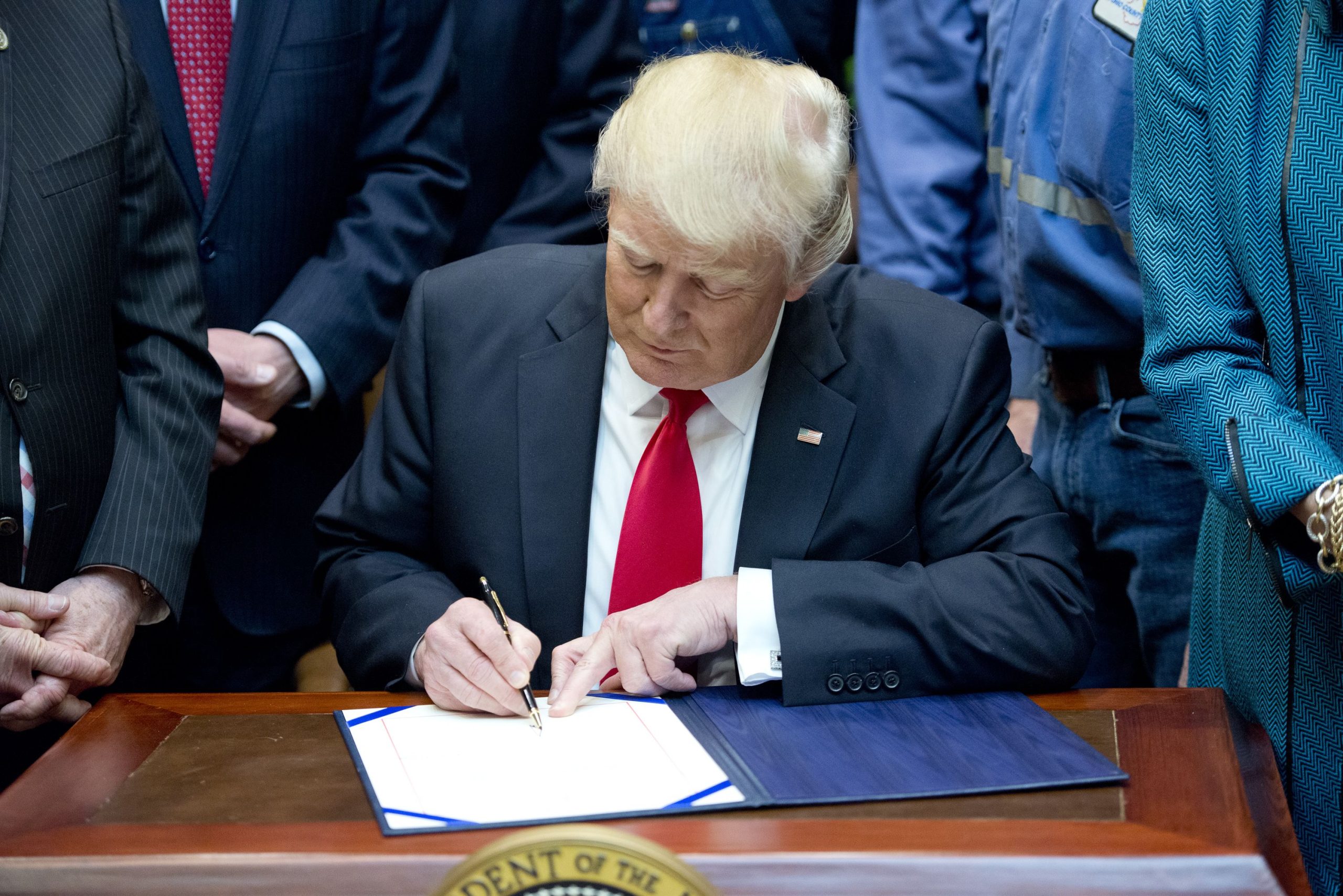
President Donald Trump signed an executive order on Friday authorizing a major IndyCar street race to take place in Washington, D.C., this summer as part of the country’s 250th anniversary celebrations. The event, which has been officially titled “Greatness with American Motor Racing,” is set to run along the streets surrounding the National Mall from August 21 to 23. According to White House officials, the race is intended to highlight American engineering, competition, and innovation, bringing one of the country’s premier motorsport series into the heart of the nation’s capital for the first time.
Speaking at the signing ceremony, President Trump framed the race as a centerpiece of the semiquincentennial celebrations, emphasizing both the spectacle of the event and its patriotic significance. “It’s really having to do with our great 250th birthday, where we’re having so many wonderful things,” Trump said. “This is going to have a lot of people. I won’t even say how many people because I think it could set a record for racing.” The president’s remarks underscored the administration’s desire to make the race a highly visible national event, drawing attention to both the anniversary and the sport itself.
The signing ceremony brought together a mix of administration officials and sports industry leaders. Transportation Secretary Sean Duffy, Interior Secretary Doug Burgum, and White House Staff Secretary Will Scharf joined Trump at the event, along with prominent figures from the motorsports world. IndyCar owner and former professional racecar driver Roger Penske was present, alongside Fox Sports CEO Eric Shanks. Fox Sports holds the television rights to the IndyCar series, and Shanks highlighted the importance of national broadcast coverage for the anniversary event. “This project was kind of on life support until you stepped in recently and got us here today,” Shanks said. “To be able to celebrate America’s birthday on Fox is an absolutely incredible honor.”
IndyCar, a premier open-wheel racing series in the United States, has traditionally competed on permanent race tracks and select street circuits in cities such as Long Beach, Detroit, and St. Petersburg. Bringing the series to Washington, D.C., presents unique logistical challenges. The National Mall, home to many of the nation’s most iconic landmarks, including the Capitol, the Washington Monument, and the Lincoln Memorial, has rarely hosted large-scale motorsport events. Officials have emphasized that safety, security, and the preservation of public spaces will be paramount as planning moves forward, although details about the exact course layout remain under review.
Roger Penske, whose Penske Corporation owns IndyCar, emphasized collaboration with local leaders as an essential component of the project. Bud Denker, president of Penske Corporation, called Washington, D.C., Mayor Muriel Bowser “a great partner” in coordinating city and federal interests. Ensuring the safety of spectators and the integrity of federal buildings will require close coordination with multiple agencies, including the National Park Service and the Department of Homeland Security. Early reports suggest the race will involve extensive security measures and temporary modifications to roadways in and around the Mall to accommodate the cars, support vehicles, and spectator areas.
The D.C. IndyCar race is part of a broader slate of high-profile events the Trump administration is promoting as part of the nation’s 250th anniversary. Officials have described the anniversary as an opportunity to showcase American culture, sports, and global influence. Other major events include the FIFA World Cup matches being hosted in the United States and a UFC fight scheduled to take place in front of the White House in June. Together, these events are intended to create a yearlong celebration of American achievement and spectacle.
Supporters of the IndyCar race argue that it will boost tourism, generate economic activity, and place Washington, D.C., at the center of global attention during the semiquincentennial year. They also emphasize the symbolic significance of bringing one of America’s most technologically advanced sports to the nation’s capital. The cars, designed for extreme speed and precision, showcase American engineering and the highly competitive spirit of professional racing. Proponents suggest that a successful event could establish the D.C. street race as a recurring attraction for fans of motorsport and national pageantry.
However, critics have raised concerns about the costs, logistics, and appropriateness of hosting a high-speed race near historic landmarks. Urban planners, preservation advocates, and some members of the public have expressed concern about potential damage to public spaces, the impact on city infrastructure, and disruptions to residents and tourists. While the National Park Service has experience coordinating large events on the Mall, an IndyCar race presents unique challenges, from road surface requirements to spectator safety zones and emergency response planning.
Administration officials have sought to address these concerns by emphasizing the collaborative approach between federal and city agencies. They assert that the race will be carefully managed to minimize disruption while ensuring public safety. Security, emergency services, and transportation logistics will all be coordinated in advance, though specific budgets and funding sources for the event have not been disclosed. Some observers have speculated that private sponsors and event organizers, including Penske Corporation and Fox Sports, will shoulder significant portions of the financial and operational responsibility.
For IndyCar, the Washington, D.C., event represents a rare opportunity to expand the sport’s national footprint and associate it with a historic moment in American history. For the Trump administration, it serves as a high-profile demonstration of its vision for the 250th anniversary, blending spectacle, patriotism, and entertainment in a way designed to appeal to broad audiences. Organizers have said they hope the event will draw fans both locally and nationally, creating a shared experience that celebrates American culture and innovation.
The announcement of the race has generated significant attention in both the sports world and the general public. Fans of IndyCar have expressed excitement about the prospect of a street race in Washington, D.C., while critics have questioned whether the urban setting is suitable for high-speed competition. Social media and news outlets have already begun to speculate about potential challenges, including traffic rerouting, pedestrian safety, and the management of large crowds in sensitive areas.
As planning continues in the coming months, attention will likely focus on the practical execution of the event. Questions about race infrastructure, public access, and broadcast coverage remain central to the project’s success. If executed effectively, the D.C. IndyCar race could become one of the most memorable and unconventional events in the history of American motorsport, combining the excitement of high-speed racing with the symbolic weight of the nation’s semiquincentennial celebrations.
In the broader context of 2026, the race also reflects the Trump administration’s emphasis on blending public spectacle with cultural and sporting milestones. By integrating motorsport, global sporting events like the World Cup, and live UFC performances into the anniversary calendar, the administration aims to create a yearlong narrative of American pride, energy, and achievement. Whether the D.C. IndyCar race will meet expectations remains to be seen, but it is certain to attract national attention and intense scrutiny.
In conclusion, the executive order signed by President Trump marks the official beginning of what promises to be an ambitious and high-profile celebration of American motor racing. The D.C. street race, scheduled for August 21–23, combines the thrill of professional motorsport with the symbolic significance of the nation’s 250th anniversary. With planning underway and coordination among multiple agencies, organizers face the challenge of balancing safety, spectacle, and national symbolism. Fans and critics alike will be watching closely to see whether the streets of Washington, D.C., can successfully host one of the most unique racing events in American history, and whether it will leave a lasting legacy as part of the semiquincentennial celebration.

Emily Johnson is a critically acclaimed essayist and novelist known for her thought-provoking works centered on feminism, women’s rights, and modern relationships. Born and raised in Portland, Oregon, Emily grew up with a deep love of books, often spending her afternoons at her local library. She went on to study literature and gender studies at UCLA, where she became deeply involved in activism and began publishing essays in campus journals. Her debut essay collection, Voices Unbound, struck a chord with readers nationwide for its fearless exploration of gender dynamics, identity, and the challenges faced by women in contemporary society. Emily later transitioned into fiction, writing novels that balance compelling storytelling with social commentary. Her protagonists are often strong, multidimensional women navigating love, ambition, and the struggles of everyday life, making her a favorite among readers who crave authentic, relatable narratives. Critics praise her ability to merge personal intimacy with universal themes. Off the page, Emily is an advocate for women in publishing, leading workshops that encourage young female writers to embrace their voices. She lives in Seattle with her partner and two rescue cats, where she continues to write, teach, and inspire a new generation of storytellers.