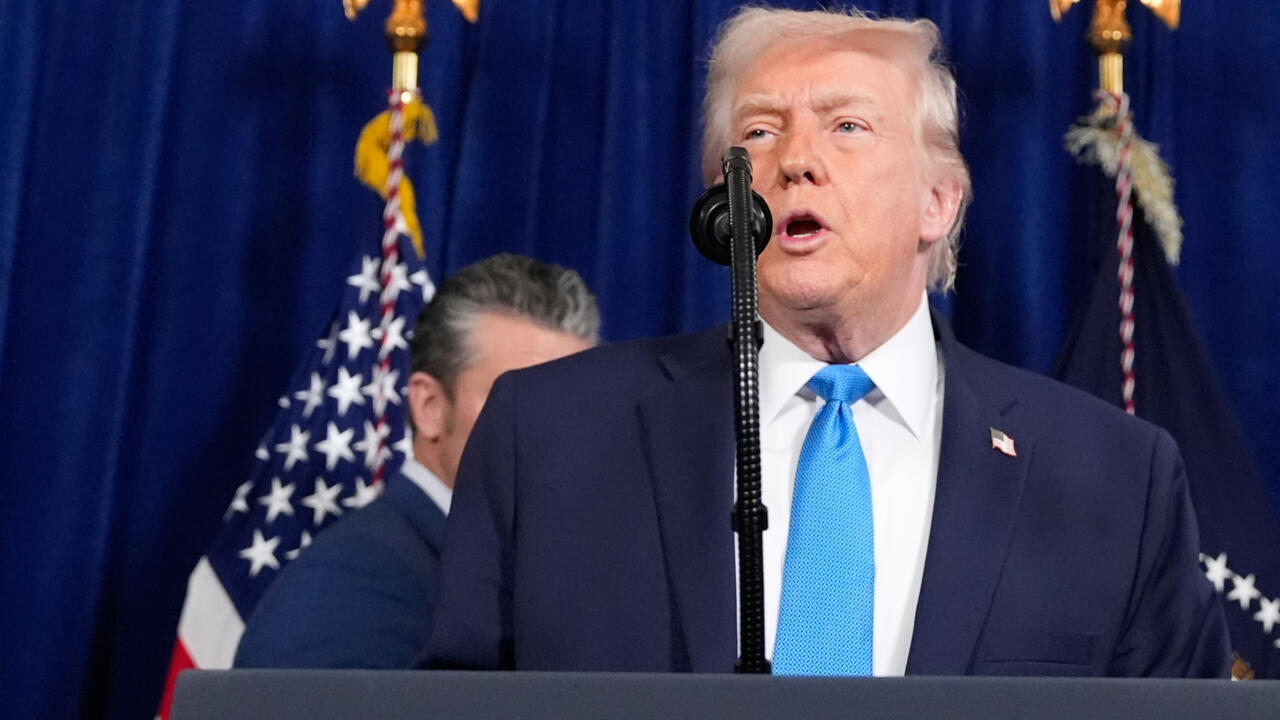
President Donald Trump signaled a sharp escalation in U.S. policy toward Latin America over the weekend, openly suggesting that Colombia and Mexico could face U.S. military action over drug trafficking, while predicting that Cuba’s communist government is nearing collapse.
Trump’s remarks came just days after U.S. forces carried out precision airstrikes in Venezuela and captured longtime leader Nicolás Maduro and his wife, an operation that has already reshaped political calculations across the hemisphere. Speaking to reporters aboard Air Force One on Jan. 4, Trump made clear that the Venezuela operation was not an isolated event, but part of a broader strategy aimed at dismantling what he described as a network of narco-states threatening American lives.
When asked directly whether Colombia could be targeted next, Trump offered a blunt response.
“It sounds good to me,” he said.
Colombia ‘Very Sick,’ Trump Says
Trump reserved some of his harshest language for Colombia, accusing its leadership of allowing cocaine production and trafficking to flourish.
“Colombia is very sick too, run by a sick man, who likes making cocaine and selling it to the United States,” Trump said, referring to Colombian President Gustavo Petro. “And he’s not going to be doing it very long, let me tell you.”
The remarks immediately sent shockwaves through diplomatic circles, as Colombia has long been considered one of Washington’s key partners in counter-narcotics operations, despite persistent challenges with armed groups and drug cartels.
Trump did not clarify what specific actions the United States might take against Colombia, but his comments suggested that traditional cooperation may no longer be enough in his view.
Mexico Warned to ‘Get Its Act Together’
Trump also warned that Mexico could face U.S. intervention if drug smuggling across the southern border continues at current levels. He accused Mexican authorities of failing to confront powerful cartels that traffic fentanyl and other narcotics into the United States.
“Mexico has to get their act together because they’re pouring through Mexico, and we’re going to have to do something,” Trump said. “We’d love Mexico to do it. They’re capable of doing it, but unfortunately, the cartels are very strong in Mexico.”
The president disclosed that he has repeatedly offered U.S. military assistance to Mexican President Claudia Sheinbaum during private conversations, but said she declined.
“She’s concerned,” Trump said, “but she’s just not willing. She’s a little afraid.”
The comments underscored Trump’s frustration with what he sees as inadequate enforcement by neighboring governments, and his willingness to consider unilateral action.
Cuba ‘Will Fall on Its Own’
While Trump hinted at possible action against Colombia and Mexico, he struck a different tone regarding Cuba. Asked whether the island nation could also face military pressure, Trump said intervention would likely be unnecessary.
“They got all of their income from Venezuela, from the Venezuelan oil,” Trump said. “They’re not getting any of it. I think it’s just going to fall. I don’t think we need any action.”
Trump’s prediction comes amid deepening economic hardship in Cuba, where fuel shortages, inflation, and emigration have intensified in recent years. The loss of subsidized Venezuelan oil, now cut off following Maduro’s capture, could further strain the Cuban economy.
Regional Backlash After Venezuela Operation
Trump’s remarks followed widespread condemnation of the U.S. military operation in Venezuela, which resulted in the capture of Maduro and his wife, Cilia Flores, from their residence in Caracas.
Colombia, Mexico, and Cuba all denounced the action, warning that it could destabilize the region and violate international norms.
Colombian President Gustavo Petro said his government opposes “any unilateral military action” that could escalate tensions and endanger civilians. In a statement on social media, Petro warned that Latin America should not be dragged into another conflict fueled by force.
Mexico’s Foreign Ministry echoed those concerns, calling for dialogue rather than military escalation.
“Latin America and the Caribbean is a zone of peace,” the ministry said. “Any military action seriously jeopardizes regional stability.”
Cuban President Miguel Díaz-Canel condemned the operation as a “criminal attack” and accused Washington of kidnapping Venezuela’s sitting president through military force. He demanded the immediate release of Maduro and Flores.
Power Shift in Venezuela
In the aftermath of Maduro’s capture, Venezuela’s Supreme Court appointed Vice President Delcy Rodríguez as interim president, a move backed by the country’s military leadership. Rodríguez has denounced the U.S. operation and insisted that Maduro remains Venezuela’s legitimate president.
At the same time, her rhetoric has evolved. While initially condemning the action as “imperialist aggression,” Rodríguez later struck a more conciliatory tone, signaling openness to dialogue with Washington and calling for “respectful relations.”
The mixed messaging has fueled speculation about internal divisions within Venezuela’s leadership and raised questions about how long the interim arrangement will last.
Trump Frames Drugs as a National Security Threat
Trump has consistently framed drug trafficking as a national security issue rather than a law enforcement problem. He has blamed foreign governments for failing to stop the flow of fentanyl and other narcotics into the United States, which he says has devastated American communities.
Following the Venezuela operation, Trump reiterated that his administration views cartels and their political protectors as legitimate military targets.
“This is about protecting American lives,” Trump said in earlier remarks. “When countries won’t stop it, we have to.”
Administration officials have not confirmed any imminent military plans involving Colombia or Mexico, but Trump’s comments suggest a willingness to expand the scope of U.S. action beyond Venezuela.
Congressional and International Reaction
Trump’s remarks have already prompted renewed debate in Congress over war powers and the limits of presidential authority. Some lawmakers have warned that further military action without congressional approval could trigger legal challenges.
Internationally, Trump’s comments have raised alarms among allies and adversaries alike. European leaders have urged restraint, while Russia and China have accused the United States of destabilizing the Western Hemisphere.
Latin American governments, many of which have painful memories of Cold War-era interventions, have expressed concern that the region could once again become a battleground for great-power politics.
A Turning Point for the Hemisphere
Supporters of Trump argue that his approach represents long-overdue resolve against narco-regimes that profit from poisoning American communities. Critics counter that military escalation risks unintended consequences and regional chaos.
What is clear is that Trump’s remarks mark a turning point in U.S.–Latin American relations. The capture of Maduro has already altered the balance of power in the region, and Trump has made clear that he is prepared to go further if necessary.
Whether Colombia, Mexico, or others ultimately face U.S. military pressure remains uncertain. But after Venezuela, few governments are dismissing Trump’s warnings as mere rhetoric.
As one senior regional diplomat put it privately, “The rules just changed.”
And for much of Latin America, the question now is not whether Washington is serious — but who might be next.