President Donald Trump has issued stark warnings to Cuba and Colombia, suggesting that both nations could face U.S.-driven regime change efforts following what his administration describes as the successful removal of Venezuelan leader Nicolás Maduro.
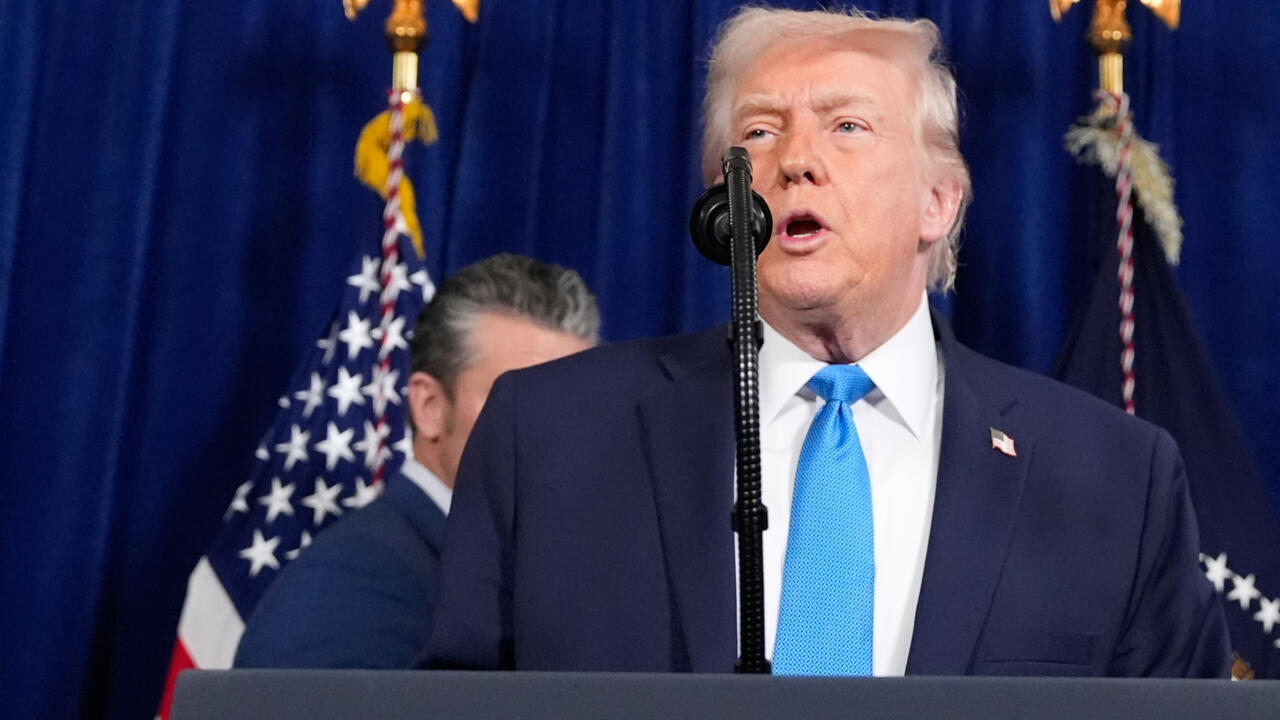
Speaking at a high-profile press conference after the alleged capture of Maduro, Trump framed the operation in Venezuela as both a decisive victory and a message to governments he accused of corruption, narco-trafficking, and systemic failure.
“I think Cuba is going to be something we’ll end up talking about,” Trump said when asked whether the Venezuelan operation signaled broader intentions. “Cuba is a failing nation right now—very badly failing—and we want to help the people. That system has not been a very good one for Cuba. The people there have suffered for many, many years.”
The remarks immediately sent shockwaves through diplomatic circles, raising fears of escalating U.S. intervention across Latin America.
Renewed Pressure on Havana
Relations between Washington and Havana have deteriorated sharply since Trump returned to office. After the Biden administration removed Cuba from the U.S. list of state sponsors of terrorism last year, Trump reinstated the designation within days of taking office and reimposed sweeping economic sanctions.
The long-standing U.S. embargo on Cuba remains firmly in place, severely restricting trade and access to goods for the island nation.
Secretary of State Marco Rubio, whose family fled Cuba during the communist revolution, reinforced Trump’s comments with unusually blunt language.
“Suffice it to say, Cuba is a disaster,” Rubio said. “It’s run by incompetent, senile men. If I lived in Havana and I was in the government, I’d be concerned—at least a little bit.”
Rubio’s comments appeared aimed directly at Cuban President Miguel Díaz-Canel and the country’s ruling Communist Party, further escalating already strained relations.
Colombia Also Put on Notice
Trump also turned his attention to Colombia, issuing a warning directed at President Gustavo Petro, a left-wing former guerrilla fighter who has clashed repeatedly with Washington over drug policy and security cooperation.
“He has cocaine mills,” Trump claimed, alleging that Colombia operates facilities producing narcotics destined for the United States. “He has factories where he makes cocaine. Because of that, he has to watch his a**.”
The accusation, which Colombia has strongly denied in the past, marks a significant escalation in rhetoric toward a long-standing U.S. partner in the region.
Geopolitical analysts reacted with alarm. Bruno Maçães, author of Geopolitics for the End Time, suggested Trump’s comments could trigger regional instability.
“Conclusion from today: Brazil had better get a nuclear program. Colombia may want to talk with Brazil about it,” Maçães wrote, arguing that Trump’s remarks imply a willingness to act militarily beyond Venezuela.
The Venezuela Operation
According to Trump and senior administration officials, the Venezuelan operation—dubbed Operation Absolute Resolve—was launched late Friday night and involved approximately 150 aircraft and hundreds of U.S. troops.
Trump said he authorized the mission around 10:45 p.m., after days of monitoring weather conditions and intelligence reports. Within hours, U.S. forces were allegedly operating inside Venezuelan airspace, striking key targets and moving to apprehend Maduro and his wife, Cilia Flores.
Administration officials claim the pair were captured alive following a firefight at a heavily fortified residence and flown by helicopter to the USS Iwo Jima, before being transferred to the United States.
Trump later posted an image on social media purporting to show a blindfolded and handcuffed Maduro in U.S. custody. The image has not been independently verified.
U.S. Attorney General Pam Bondi announced that Maduro has been indicted in the Southern District of New York on charges including narco-terrorism conspiracy, cocaine importation conspiracy, and firearms offenses involving machine guns and destructive devices. She did not specify charges against Flores.
Venezuelan officials have rejected the U.S. account, demanding immediate proof that Maduro and his wife are alive and accusing Washington of disinformation and illegal aggression.
Regional Backlash
In Havana, thousands reportedly gathered in spontaneous demonstrations, chanting “Down with imperialism” and expressing solidarity with Maduro. Cuban state media condemned the U.S. actions as a return to Cold War–era interventionism.
Venezuela’s Defense Minister Vladimir Padrino López described the reported operation as “the worst aggression in the nation’s history,” calling on citizens and the military to prepare for resistance. He claimed armed forces were acting under standing orders from Maduro, though the president’s status remains disputed.
Governing Venezuela
Trump went further than many expected, declaring that the United States would temporarily govern Venezuela until a new political order is established.
“We’re going to run the country until such time as we can do a safe, proper, and judicious transition,” Trump said. “We don’t want to be involved with having somebody else get in and we have the same situation we had for many years.”
He offered few specifics on how a country of roughly 30 million people would be administered but suggested Venezuela’s vast oil reserves would fund its reconstruction. Trump said Secretary of State Rubio and Defense Secretary Pete Hegseth would oversee the transition, with major U.S. oil companies potentially playing a role in rebuilding infrastructure.
Congress and Legal Questions
Trump acknowledged that Congress was not informed prior to the operation, arguing that secrecy was necessary.
“When I tell Congress things, they leak,” he said. “That could have cost American lives.”
Legal scholars have raised serious questions about the legality of capturing a foreign head of state, governing another nation without international authorization, and prosecuting a leader seized through military force.
A New Doctrine?
Trump has repeatedly warned that leaders involved in what he calls “narco-terrorism” should consider themselves potential targets. His remarks suggest a more aggressive foreign policy doctrine—one that blends military force, law enforcement, and economic control.
Whether the claims surrounding Maduro’s capture will be independently confirmed remains unclear. What is certain is that Trump’s statements have dramatically raised tensions across Latin America and signaled a willingness to redraw long-standing boundaries of U.S. intervention.
As governments across the region assess the implications, the world is watching to see whether Venezuela marks a singular event—or the opening move in a far broader campaign.

Emily Johnson is a critically acclaimed essayist and novelist known for her thought-provoking works centered on feminism, women’s rights, and modern relationships. Born and raised in Portland, Oregon, Emily grew up with a deep love of books, often spending her afternoons at her local library. She went on to study literature and gender studies at UCLA, where she became deeply involved in activism and began publishing essays in campus journals. Her debut essay collection, Voices Unbound, struck a chord with readers nationwide for its fearless exploration of gender dynamics, identity, and the challenges faced by women in contemporary society. Emily later transitioned into fiction, writing novels that balance compelling storytelling with social commentary. Her protagonists are often strong, multidimensional women navigating love, ambition, and the struggles of everyday life, making her a favorite among readers who crave authentic, relatable narratives. Critics praise her ability to merge personal intimacy with universal themes. Off the page, Emily is an advocate for women in publishing, leading workshops that encourage young female writers to embrace their voices. She lives in Seattle with her partner and two rescue cats, where she continues to write, teach, and inspire a new generation of storytellers.