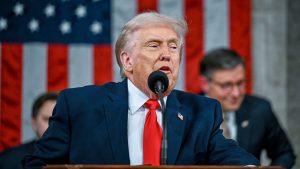
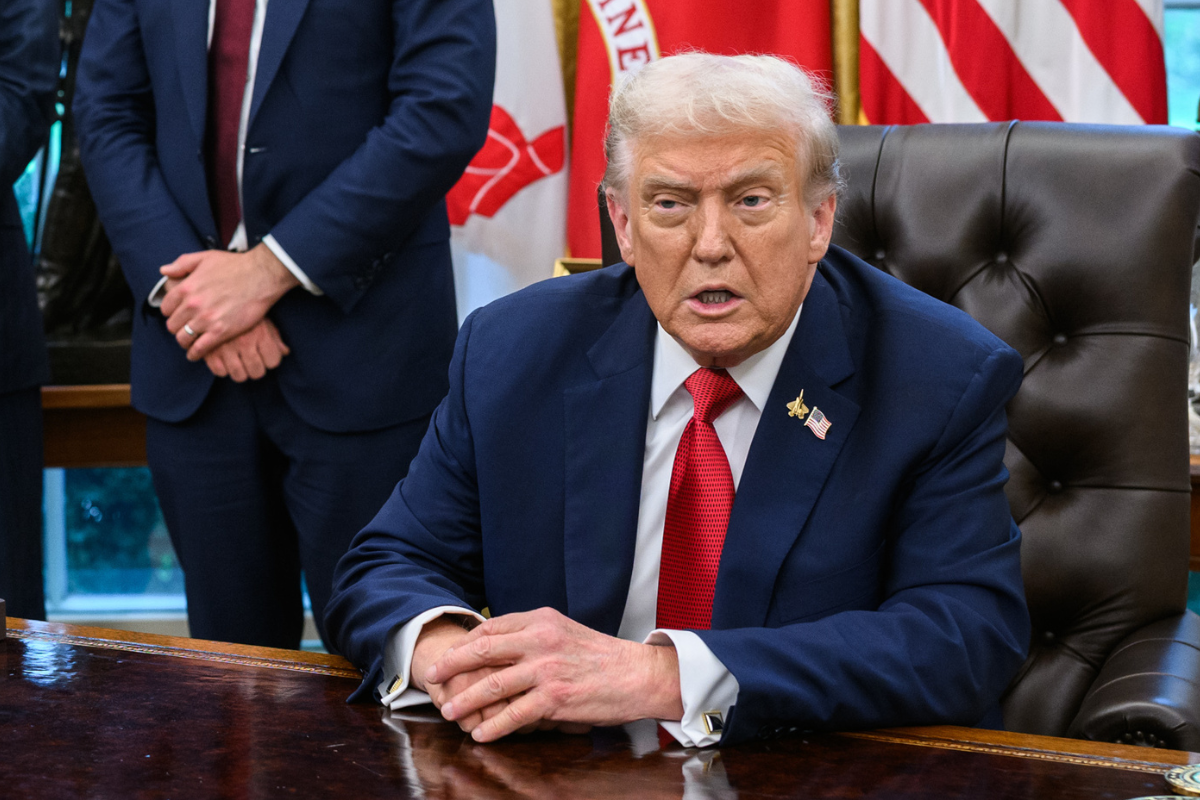
President Donald Trump ignited worldwide attention — and no shortage of online debate — after issuing a blunt public message about Venezuelan airspace that immediately sent shockwaves across diplomatic circles. The announcement, delivered in Trump’s characteristically direct social media style, came at a moment of mounting tension between Washington and the embattled South American nation.
For months, the United States and Venezuela have been locked in a steadily escalating standoff over alleged drug-trafficking routes operating in the Caribbean Sea. U.S. military activity in the region has surged as the administration sharpens its approach to transnational crime, with bomber flights, maritime patrols, and interdiction operations happening with unprecedented frequency.
Now, Trump has added a new layer to the confrontation: a declaration that the airspace over and around Venezuela should be considered “closed.” Predictably, the message set the internet ablaze, with many Americans reacting to the unusual phrasing — and the boldness of the order itself.
But beneath the humorous reactions lies a far more serious backdrop: international law disputes, United Nations criticism, and a humanitarian crisis that continues to deepen. Trump’s statement, while crafted in his signature rhetorical style, comes during one of the most combustible geopolitical clashes of his presidency.
A Caribbean Powder Keg Years in the Making
The U.S. has long accused Venezuela’s socialist regime of tolerating, enabling, or directly participating in narcotics trafficking. Recent intelligence reports — many declassified under Trump — have pointed to an uptick in drug-carrying vessels departing from Venezuelan and neighboring waters.
In response, the U.S. military dramatically expanded its presence in the Caribbean. Air Force B-52 bombers conducted visible “attack demonstrations,” while naval operations increased interceptions along suspected smuggling corridors. According to reports, some of those air operations have resulted in deadly strikes on drug-carrying boats, with dozens killed across multiple incidents.
The United Nations has condemned those strikes, calling them a breach of international law. Volker Türk, the UN High Commissioner for Human Rights, issued a sharp rebuke, arguing that the publicly available evidence did not demonstrate an “imminent threat to life,” the typical legal threshold for lethal action.
The situation has grown increasingly volatile — and Trump’s newest declaration only intensifies that reality.
Trump’s Social Media Bombshell
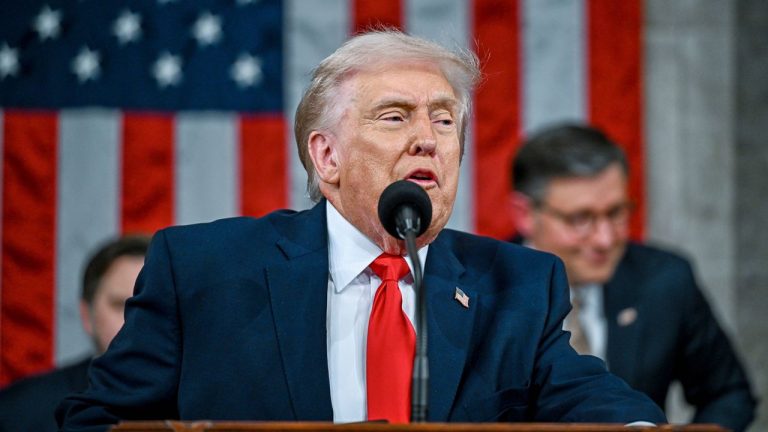
On November 29, Trump posted a message that instantly reverberated across the globe:
“To all Airlines, Pilots, Drug Dealers, and Human Traffickers, please consider THE AIRSPACE ABOVE AND SURROUNDING VENEZUELA TO BE CLOSED IN ITS ENTIRETY. Thank you for your attention to this matter! PRESIDENT DONALD J. TRUMP.”
It was the kind of announcement no other world leader would make in such plain, unfiltered language — grouping airlines, pilots, drug traffickers, and criminals in the same sentence — and social media imploded accordingly.
One user wrote:
“The way he addressed them together.”
Another added:
“Bro addressed airlines, pilots, and drug dealers in one sentence like they’re all subscribed to his newsletter.”
Others wondered whether the phrasing was deliberate, humorous, or simply Trump’s version of clarity.
But behind the jokes, many stopped to analyze what the statement actually meant — and whether it had the weight of law.
Does Trump Have Authority to Declare Venezuelan Airspace Closed?
In short: no. The United States cannot legally close foreign airspace — only Venezuela can do that.
However, Trump can strongly warn U.S. carriers and U.S.-registered aircraft to avoid certain zones for safety reasons. And, as it turns out, that’s exactly what had already been happening behind the scenes.
Just days before Trump’s announcement, U.S. aviation regulators issued a formal security advisory warning major airlines to avoid Venezuelan airspace due to:
-
Worsening security conditions
-
Elevated military activity
-
Escalating tensions between the U.S. and Venezuela
The FAA has the authority to issue such warnings, which can effectively shut down American commercial flights through a region if carriers deem the risk too high.
Trump’s statement, although unconventional in tone, aligned with the broader national security message.
A Diplomatic and Political Earthquake
For U.S. allies and global organizations, Trump’s announcement did more than spark online chatter — it raised concerns about stability in an already volatile region.
International analysts immediately flagged several implications:
1. Escalation with Venezuela
The Maduro regime is already on edge following sanctions, military presence, and accusations of harboring criminal networks. A U.S. President declaring its airspace “closed” is a symbolic escalation.
2. Potential Unrest Among Caribbean Nations
Countries throughout the Caribbean depend on shared air corridors. Any disruption in Venezuelan airspace affects commercial flights, tourism, and trade.
3. Pressure on International Carriers
Airlines flying between South America, Europe, and the U.S. routinely travel near or through Venezuelan airspace. Trump’s declaration forces carriers to reconsider those routes.
4. Reaffirmation of Trump’s tough-on-crime stance
The explicit call-out of traffickers and smugglers plays directly into Trump’s longstanding messaging: foreign criminals will not be tolerated, and U.S. security takes priority over diplomatic politeness.
U.N. Criticism Adds Fuel to the Fire
The United Nations’ earlier condemnation of U.S. strikes in the region sets an uncomfortable backdrop. Volker Türk’s warning that the lethal actions appeared unjustified under international law handed Venezuela new ammunition in its claim that the U.S. is pushing beyond legal boundaries.
Trump’s new declaration will likely amplify those criticisms — but also reinforces his administration’s posture that global bodies should not dictate American security policy.
The president has repeatedly dismissed UN rebukes as politically motivated, bureaucratically slow, or unfairly anti-American. His supporters applaud that stance. His critics call it destabilizing.
Either way, the pattern is clear: Trump isn’t backing down.
A Moment of Humor Hiding a Serious Message
The online reaction emphasized the odd pairing of commercial pilots and drug traffickers in Trump’s statement. Most found it humorous, even meme-worthy. But beneath the surface, the language underscores two key facts:
-
Trump is directly warning criminal networks that U.S. surveillance is expanding
-
He is signaling to airlines that the region is becoming increasingly dangerous
The bluntness may be bold, even jarring — but it reflects a national security strategy built around deterrence: make the rules clear and put adversaries on notice.
For criminal networks operating out of Venezuelan waters, the message was unmistakable.
An Uncertain Road Ahead
The U.S.–Venezuela relationship is one of the most strained diplomatic relationships in the Western Hemisphere, and the situation shows no signs of cooling. With sanctions tightening, military activity intensifying, and the UN raising alarms about potential overreach, the administration is navigating one of its most delicate foreign policy challenges.
Whether Trump’s “airspace is closed” message ultimately changes behavior is unclear. Venezuela may respond aggressively; it may escalate rhetoric; it may use the statement to rally domestic sympathy.
But one thing is certain: the announcement has already changed the geopolitical conversation, dragging global attention back to a crisis that is no longer confined to the Caribbean Sea.
For Americans watching from home — many of them veterans, seniors, and those who remember earlier eras of geopolitical tension — the message resonates in familiar terms: strength, clarity, and an unapologetically firm hand against foreign criminal networks.
The details of Venezuelan airspace might be technical. But the stakes — national security, international law, and regional stability — could not be higher.

James Jenkins is a celebrated Pulitzer Prize-winning author whose work has reshaped the way readers think about social justice and human rights in America. Raised in Atlanta, Georgia, James grew up in a community that instilled in him both resilience and a strong sense of responsibility toward others. After studying political science and creative writing at Howard University, he worked as a journalist covering civil rights issues before dedicating himself fully to fiction. His novels are known for their sharp, empathetic portraits of marginalized communities and for weaving personal stories with broader political realities. Jenkins’s breakout novel, Shadows of Freedom, won national acclaim for its unflinching look at systemic inequality, while his more recent works explore themes of identity, resilience, and the fight for dignity in the face of oppression. Beyond his novels, James is an active public speaker, lecturing at universities and participating in nonprofit initiatives that support literacy and community empowerment. He believes that storytelling is a way to preserve history and inspire change. When not writing, James enjoys jazz music, mentoring young writers, and traveling with his family to explore cultures and stories around the world.