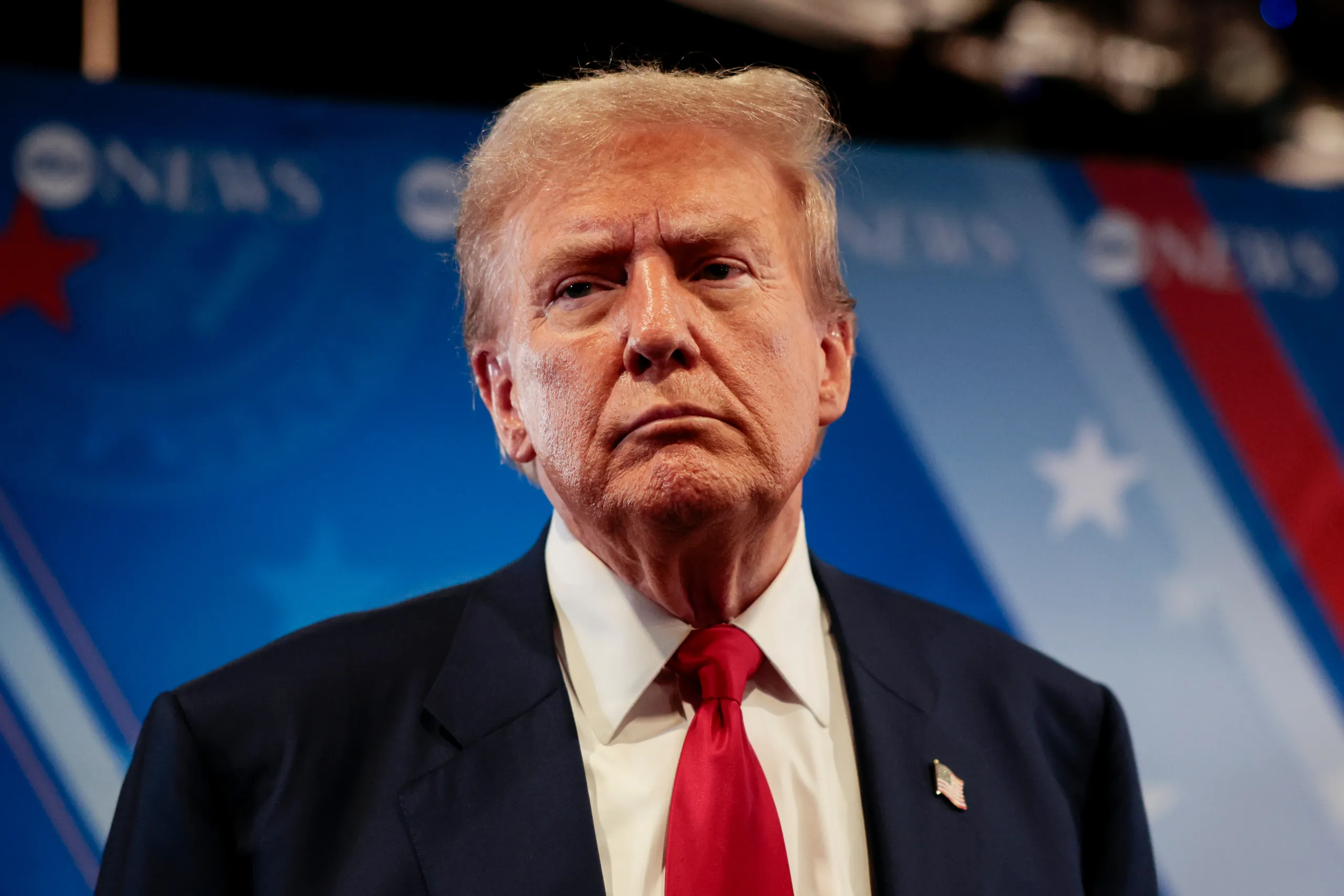
In an unusual and highly publicized fundraising appeal, President Donald Trump reached out to his supporters this week with an email warning of what he described as an existential threat to the country and his political movement. The message, widely circulated among his mailing lists, was notable not only for its urgent calls for donations but also for the dramatic and personal tone Trump employed, depicting himself as isolated and under siege amid growing challenges for the Republican Party in the lead-up to the midterm elections.
The email opens with Trump emphasizing his solitude, describing himself as “alone and in the dark” while working in what he called the “war room.” According to the message, his staff had departed hours earlier, leaving him with little more than a laptop and a ticking countdown clock toward what he described as a looming mid-month deadline. The president framed his personal circumstances as emblematic of the broader struggle facing the conservative movement, using the imagery to underscore urgency for his followers to contribute financially to sustain the campaign infrastructure.
Throughout the message, Trump framed the threat in starkly partisan terms. He repeatedly referred to the “radical left,” implicitly targeting Democrats, whom he claimed were poised to take control of both the House and the Senate. He warned that such an outcome would result in sweeping changes, including loosening border protections, restricting gun ownership, and undermining parental influence in the education system. According to the email, Trump framed these policy shifts as direct threats not only to the country’s future but also to the personal interests of his base, particularly framing the stakes in terms of protecting children and traditional values.
The tone of the appeal was highly personal and dramatic, unusual even by the standards of Trump’s political communications. He positioned himself as the linchpin of the movement, declaring that the survival of the “MAGA Movement” depended on immediate action from supporters. He suggested that failure to meet his fundraising goals could result in catastrophic political consequences, including a repeat of what he characterized as a “fake impeachment” against himself.
To encourage prompt contributions, the email included a direct appeal for a specific donation amount: $47, accompanied by an incentive of a “limited-edition 2026 Trump Calendar” for those who acted within 30 minutes. Trump framed this request as a moral imperative, emphasizing that missing the goal would jeopardize the broader movement and, by extension, the future of the nation. The language in the email mirrors themes from his previous campaign appeals but amplifies urgency by portraying himself as physically and politically isolated while the country faces an existential threat.
Observers noted that the email’s content reflects broader concerns among Republican strategists about the midterm elections. Polling over recent weeks has suggested a decline in support for Trump outside of his core base, with independents and younger voters increasingly skeptical of his leadership. Several surveys indicate that many Americans perceive Trump’s attention as focused on symbolic or personal priorities, such as redecorating official spaces or seeking personal recognition, rather than pressing economic and social issues affecting the electorate. This context may help explain the heightened urgency and alarmist framing in his fundraising appeal.
Political analysts have pointed out that Trump’s messaging strategy has long relied on creating a sense of crisis to motivate supporters to take immediate action, whether through rallies, social media engagement, or financial contributions. By framing the midterm elections as a dire threat orchestrated by the opposition, Trump’s email taps into a long-standing narrative of political persecution, positioning his supporters as defenders of the nation and his movement. The personalization of the message, describing his isolation and the pressures he faces, is a departure from more traditional campaign fundraising language and underscores his reliance on emotional appeals to galvanize his base.
While some critics have characterized the email as exaggerated or alarmist, supporters praised it as a candid and urgent call to action. The framing of the threat in both personal and political terms aligns with Trump’s broader communications strategy, which emphasizes a narrative of opposition from entrenched political forces and the need for immediate grassroots mobilization. By combining a personal depiction of vulnerability with stark warnings about potential policy consequences, the email seeks to reinforce the connection between the president and his most devoted followers while simultaneously leveraging fear of political loss to drive donations.
The email also included references to contemporary political debates and cultural conflicts, employing language commonly associated with far-right critiques of progressive politics. Trump warned of what he described as the “woke mind virus,” suggesting that ideological influence was spreading rapidly and undermining traditional American values. The messaging sought to create a sense of moral urgency, linking financial support to the protection of cultural and political ideals, and presenting participation in the fundraising effort as a form of civic responsibility.
Experts in political communication noted that the combination of personal narrative and policy warnings can be highly effective in generating engagement among a highly motivated segment of voters. The sense of immediacy and the framing of personal danger for Trump himself amplify the perceived stakes of the upcoming midterms, potentially prompting supporters to contribute to maintain momentum for the movement. Fundraising appeals that depict leaders as embattled yet resilient figures have historically succeeded in mobilizing loyal supporters, even amid declining broader public approval.
In addition to fundraising, the email underscores the broader challenges facing Trump and his allies in the current political environment. Recent polls suggest declining approval ratings among independents, younger voters, and minority communities, reflecting concerns about both policy priorities and leadership style. Analysts have highlighted that the email’s dramatic tone may be a direct response to these trends, aiming to shore up enthusiasm and financial support from core constituencies before the midterms. By portraying both personal and national stakes, the message serves as a call to action for supporters to counteract perceived threats to the movement and the country.
Despite the alarmist tone, Trump’s email also emphasizes continuity in messaging and branding. By framing the appeal around the survival of the “MAGA Movement,” he links immediate fundraising efforts to the broader political narrative that has defined his career and presidency. The use of direct language, urgent deadlines, and symbolic incentives such as calendars reflects a carefully calibrated strategy designed to translate emotional resonance into tangible contributions. This approach mirrors tactics employed in prior campaigns, reinforcing the connection between supporters’ financial engagement and the movement’s perceived vitality.
Observers have also noted the contrast between Trump’s public persona in fundraising communications and his formal public appearances. The email depicts a vulnerable, solitary figure, highlighting personal struggle and perseverance, whereas official events typically emphasize authority, control, and spectacle. This dual approach allows Trump to simultaneously convey strength to the general public while appealing to personal loyalty and empathy among supporters who receive direct communications.
Ultimately, the email illustrates the strategic importance of fundraising for Trump’s ongoing political operations. With the midterm elections approaching, resources will be critical for campaign infrastructure, advertising, and ground-level mobilization efforts. By emphasizing urgency, personal stakes, and the moral imperative to act, the email seeks to maximize both the financial and emotional investment of his supporters. The unusual tone and language signal both the intensity of the perceived political challenge and the continued reliance on direct-to-supporter communications as a key component of Trump’s strategy.
The context for this fundraising appeal is further shaped by recent political controversies, including ICE operations in Minneapolis, national debates over immigration and public safety, and ongoing scrutiny of Trump’s first year back in office. The combination of national political turbulence and Trump’s personalized framing of the threat reinforces the dramatic and urgent tone of the email, highlighting both the stakes of the midterms and the centrality of his personal leadership in the movement’s narrative.
By the middle of the week, the email had drawn attention from multiple media outlets and political observers, sparking discussion not only about its content but also about the broader strategy it reflects. Analysts have suggested that while the dramatic personal tone may energize Trump’s most devoted supporters, it may further alienate moderates and independents, underscoring the polarized nature of contemporary American politics. Regardless, the fundraising appeal exemplifies Trump’s enduring ability to shape political narratives, mobilize supporters, and frame complex national issues in terms that resonate directly with his base.
In the midst of these developments, Trump continues to leverage his direct-to-supporter communications to sustain momentum and secure resources for upcoming political battles. The combination of personal narrative, urgency, and symbolic incentives reflects a calculated effort to convert emotional resonance into tangible support. Whether this approach will prove effective in countering declining approval ratings and preparing for the midterms remains a central question for political observers and campaign strategists alike.

Emily Johnson is a critically acclaimed essayist and novelist known for her thought-provoking works centered on feminism, women’s rights, and modern relationships. Born and raised in Portland, Oregon, Emily grew up with a deep love of books, often spending her afternoons at her local library. She went on to study literature and gender studies at UCLA, where she became deeply involved in activism and began publishing essays in campus journals. Her debut essay collection, Voices Unbound, struck a chord with readers nationwide for its fearless exploration of gender dynamics, identity, and the challenges faced by women in contemporary society. Emily later transitioned into fiction, writing novels that balance compelling storytelling with social commentary. Her protagonists are often strong, multidimensional women navigating love, ambition, and the struggles of everyday life, making her a favorite among readers who crave authentic, relatable narratives. Critics praise her ability to merge personal intimacy with universal themes. Off the page, Emily is an advocate for women in publishing, leading workshops that encourage young female writers to embrace their voices. She lives in Seattle with her partner and two rescue cats, where she continues to write, teach, and inspire a new generation of storytellers.