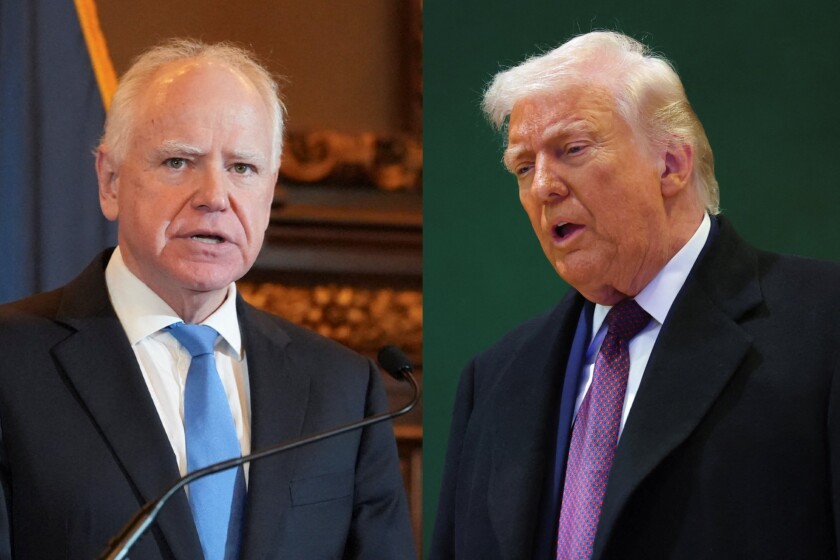
President Donald Trump said Monday that he has reached an agreement with Minnesota Governor Tim Walz to cooperate on federal immigration enforcement efforts in the Twin Cities, signaling a notable shift after weeks of public tension between the White House and state officials over the administration’s aggressive immigration crackdown.
The announcement came after what Trump described as a “very good” phone call with the Democratic governor, during which the two leaders discussed coordination between federal authorities and state officials amid a surge of Immigration and Customs Enforcement operations in Minneapolis and surrounding areas.
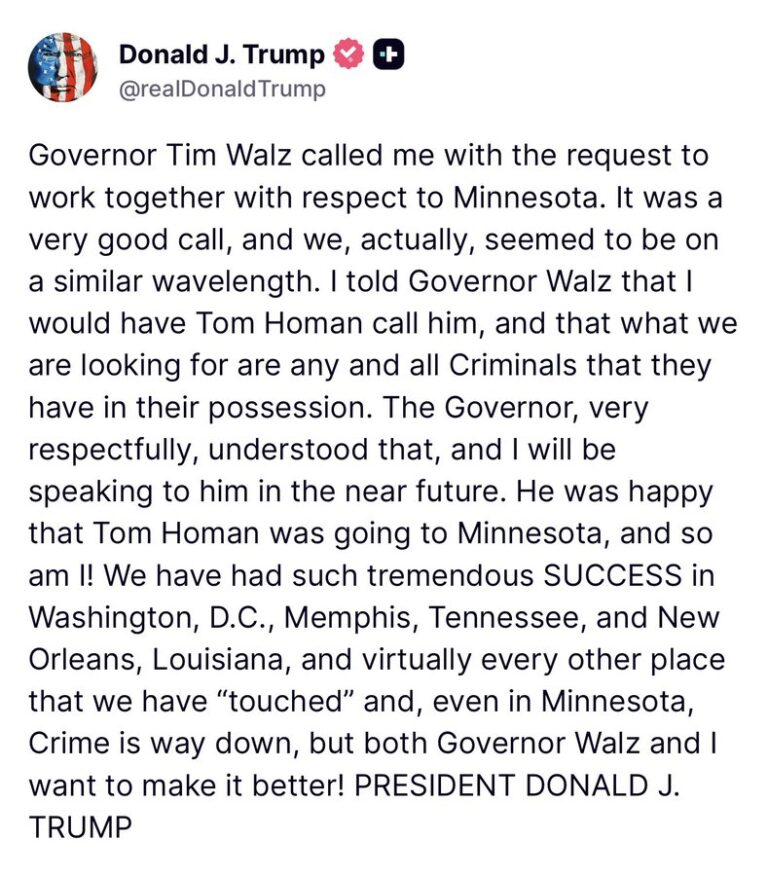
In a social media post, Trump said Walz initiated the call and requested cooperation on immigration enforcement in Minnesota, a move that appears to contrast sharply with the governor’s earlier criticism of federal action in the state.
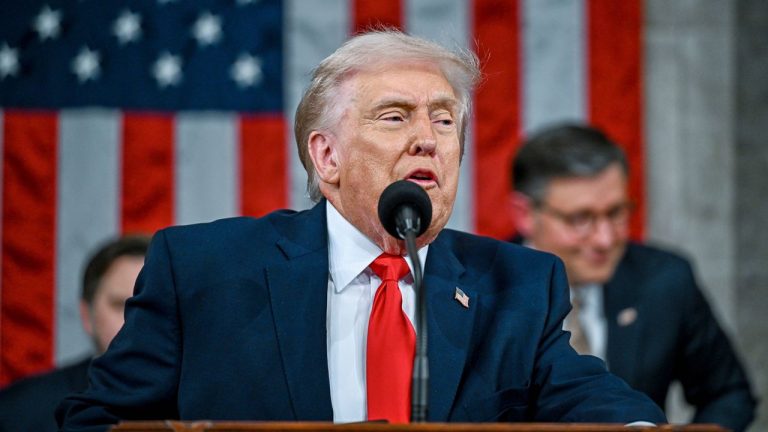
“Governor Tim Walz called me with the request to work together with respect to Minnesota,” Trump wrote. “It was a very good call, and we, actually, seemed to be on a similar wavelength.”
According to the president, the conversation focused on aligning state and federal efforts to address crime tied to undocumented immigrants with criminal records. Trump said he informed Walz that Tom Homan, the administration’s federal “border czar,” would be dispatched to Minnesota to oversee enforcement operations and coordinate with local authorities.
“I told Governor Walz that I would have Tom Homan call him, and that what we are looking for are any and all criminals that they have in their possession,” Trump wrote. “The Governor, very respectfully, understood that.”
Trump added that Walz welcomed Homan’s involvement and said the two leaders plan to speak again in the near future. The president framed the cooperation as part of a broader national strategy that he claims has already delivered results in other major cities.
“We have had such tremendous success in Washington, D.C., Memphis, Tennessee, and New Orleans, Louisiana,” Trump said, adding that crime has declined in “virtually every other place that we have touched.”
Even so, Trump acknowledged that Minnesota had already seen reductions in crime, but emphasized that both he and the governor wanted to go further. “Even in Minnesota, crime is way down, but both Governor Walz and I want to make it better,” he wrote.
Walz’s office did not immediately release a detailed account of the phone call, nor did it confirm the governor’s full position on the scope of cooperation with federal authorities. The lack of an official transcript has left some questions unanswered about what, specifically, Minnesota officials have agreed to support.
The apparent thaw follows weeks of friction between the administration and state leaders after the launch of “Operation Metro Surge,” a federal initiative that sent thousands of immigration agents and law enforcement personnel into the Minneapolis metropolitan area. The operation was designed to target undocumented immigrants with criminal records while providing backup to local police departments.
The surge quickly became controversial, drawing protests from immigration advocates and criticism from Democratic officials who argued the federal presence was excessive, disruptive, and legally questionable. Minnesota Attorney General Keith Ellison has led efforts to challenge aspects of the operation in court, arguing that federal authorities overstepped their authority and undermined state and local control.
Ellison was back in court Monday morning seeking to limit the continuation of federal enforcement actions, even as Trump announced the new coordination with Walz. That legal push underscores the ongoing divisions within Minnesota’s leadership, despite the governor’s reported willingness to work with the White House.
Republicans have defended the surge as a necessary response to violent crime and illegal immigration, pointing to early data showing reductions in certain categories of crime following the deployment of federal task forces. Administration officials argue that federal agents are focusing narrowly on individuals with serious criminal histories, not broad immigration sweeps.
Critics, however, dispute those claims, arguing that the presence of heavily armed federal agents has heightened fear in immigrant communities and strained relations between residents and local law enforcement. Civil rights groups have warned that aggressive enforcement could discourage crime reporting and lead to unintended consequences.
The debate has been further inflamed by a deadly incident connected to the operation. On January 24, 37-year-old Alex Pretti was fatally shot by a U.S. Border Patrol agent in south Minneapolis during a confrontation tied to immigration enforcement activity. The shooting has drawn national attention, with sharply conflicting accounts of what led to the use of lethal force.
Federal authorities have said the agent acted in self-defense during a volatile encounter, while community advocates and some local officials have called for greater transparency and an independent investigation. The incident sparked protests and renewed scrutiny of the administration’s tactics in Minnesota’s largest city.
Pretti’s death has become a focal point for opponents of the surge, who argue it illustrates the risks of deploying federal agents unfamiliar with local conditions into densely populated urban areas. Supporters of the operation counter that such incidents, while tragic, should not overshadow broader efforts to address violent crime.
Trump’s decision to send Homan to Minnesota appears aimed at reinforcing federal control over the operation while projecting a message of cooperation rather than confrontation. Homan, a longtime immigration hardliner, has been a central figure in shaping the administration’s enforcement strategy and has repeatedly defended the use of federal resources in sanctuary-leaning jurisdictions.
The move may also reflect political calculations as immigration remains a defining issue of Trump’s second term. By highlighting cooperation with a Democratic governor, the White House can point to bipartisan engagement while continuing to push its enforcement agenda.
Whether the apparent alignment between Trump and Walz will hold remains uncertain. Legal challenges are ongoing, public opposition remains strong in parts of the state, and the outcome of federal investigations into recent violence could further complicate the situation.
For now, the administration is framing the phone call as evidence that its strategy is working and that even critics are beginning to come around. State officials, meanwhile, are walking a careful line between cooperation and resistance, balancing public safety concerns with political and legal pressures.
As federal agents continue operating in Minnesota, all eyes will be on whether the promised cooperation translates into meaningful coordination—or whether old tensions quickly resurface amid an already volatile debate.

Emily Johnson is a critically acclaimed essayist and novelist known for her thought-provoking works centered on feminism, women’s rights, and modern relationships. Born and raised in Portland, Oregon, Emily grew up with a deep love of books, often spending her afternoons at her local library. She went on to study literature and gender studies at UCLA, where she became deeply involved in activism and began publishing essays in campus journals. Her debut essay collection, Voices Unbound, struck a chord with readers nationwide for its fearless exploration of gender dynamics, identity, and the challenges faced by women in contemporary society. Emily later transitioned into fiction, writing novels that balance compelling storytelling with social commentary. Her protagonists are often strong, multidimensional women navigating love, ambition, and the struggles of everyday life, making her a favorite among readers who crave authentic, relatable narratives. Critics praise her ability to merge personal intimacy with universal themes. Off the page, Emily is an advocate for women in publishing, leading workshops that encourage young female writers to embrace their voices. She lives in Seattle with her partner and two rescue cats, where she continues to write, teach, and inspire a new generation of storytellers.