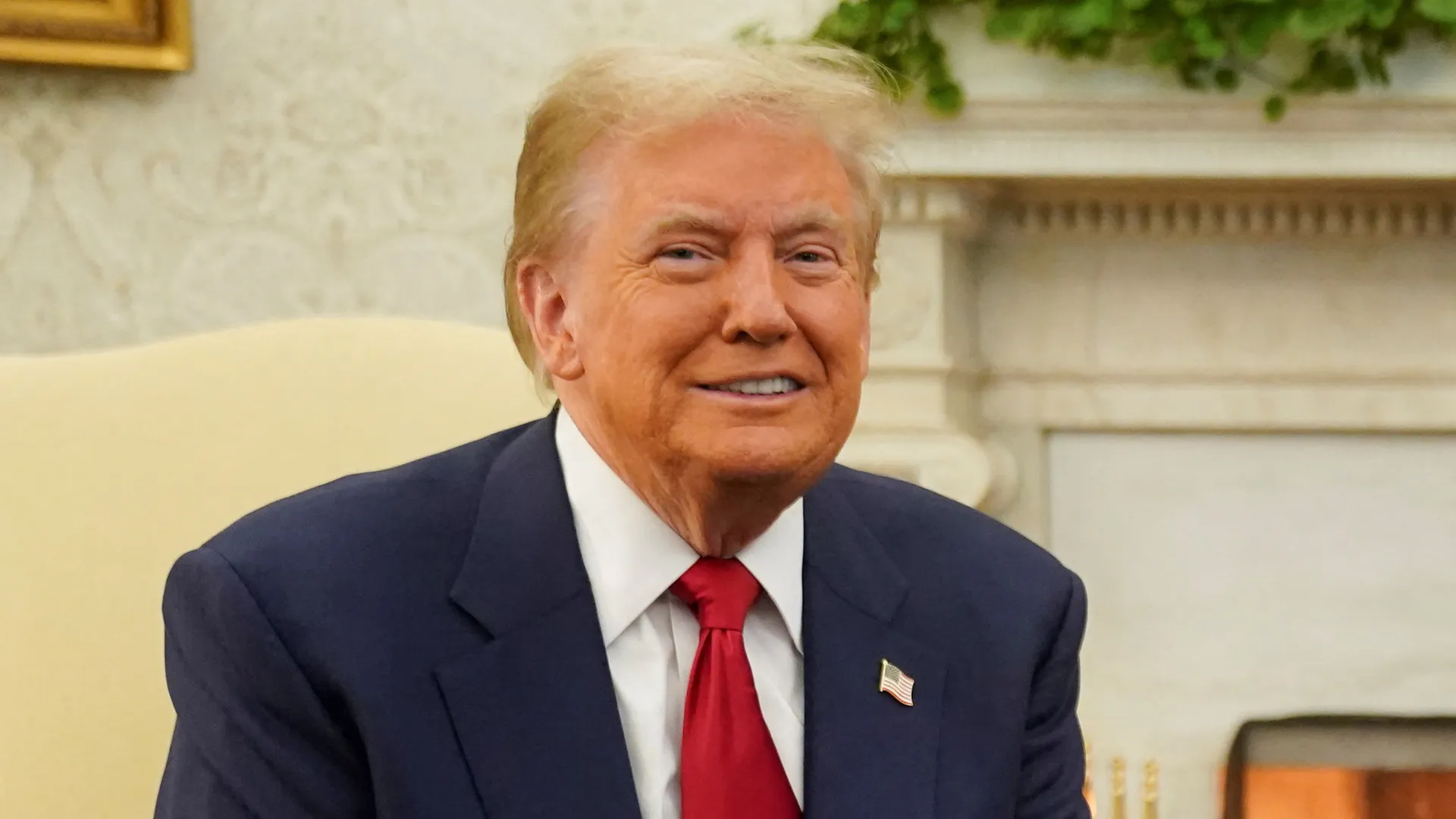
President Donald Trump has introduced a sweeping new immigration initiative that would create an unprecedented, high-priced avenue for wealthy individuals and corporations seeking permanent residency or long-term presence in the United States. Announced during a televised policy roundtable at the White House on December 10, the proposal marks one of the most significant restructurings of the legal immigration process since the mid-20th century—and one of the most controversial.
The initiative revolves around a newly created immigration category known as the “gold card.” This designation would offer qualifying applicants—primarily millionaires and billionaires—a means of obtaining legal status tied directly to substantial financial contributions to the federal government. The administration has framed the policy as a way to attract economic investment, strengthen American competitiveness, and give U.S. employers more flexibility when hiring foreign talent.
Under existing U.S. immigration policy, permanent residency is most commonly pursued through a green card, governed by a multilayered system involving family connections, employer sponsorship, asylum claims, or special categories such as extraordinary ability visas. Processing times vary dramatically depending on the applicant’s country of origin and visa type, often stretching into years due to numerical caps and administrative backlogs. Those complexities have contributed to long-standing frustration among applicants, immigration attorneys, and major corporations that rely on international expertise and advanced-degree graduates.
Trump’s new program proposes a fundamentally different structure—one in which financial investment serves as the qualifying threshold. The gold card would require a minimum payment of $1 million from individual applicants. For corporations wishing to sponsor foreign employees under the same designation, the required contribution would begin at $2 million. According to the White House, all funds generated by the program would go directly to the federal government rather than through private intermediaries or investment funds, a distinction that administration officials emphasized as proof of the program’s transparency and national benefit.
Speaking from the Roosevelt Room during the policy announcement, President Trump said the initiative could generate “a tremendous amount of money,” suggesting that revenue from the program could bolster federal budgets while reducing corporate uncertainty about hiring global talent. He described the program as a corrective measure to what he views as an outdated immigration system that fails to support American economic growth.
However, financial contributions are only one component of the proposed gold card requirements. Applicants must also pass a comprehensive background check and pay an additional $15,000 administrative filing fee, a cost designed to cover processing, security clearances, and compliance monitoring. Corporate applicants would face further financial obligations, including an annual 1 percent maintenance fee—with a required minimum of $20,000—and a 5 percent transfer fee (minimum $100,000) anytime a company shifts a sponsored visa from one employee to another.
In addition to the gold card, the administration previewed a forthcoming “platinum card” program expected to launch within weeks. This category, priced at $5 million, would allow qualifying individuals to reside in the United States for up to 270 days per year while exempting them from U.S. taxation on foreign-source income. Analysts immediately noted that the policy resembles high-net-worth residency programs in nations like Monaco, the UAE, and certain Caribbean states—programs designed to attract global investors seeking favorable tax environments.
The new proposals stand in stark contrast to Trump’s broader immigration policies, which over the past year have emphasized mass deportations, tightened asylum standards, and increased funding for border enforcement. Critics of the administration were quick to point out the ideological inconsistency of expanding deportation operations on one hand while offering preferential pathways to wealthy foreigners on the other. Supporters, however, argue that the move strengthens the U.S. economy without affecting national security or humanitarian obligations.
Immediately following the announcement, the White House began accepting preliminary online applications, directing interested parties to a government-run portal outlining eligibility requirements, compliance expectations, and financial terms. Administration officials said the program would help American companies secure skilled workers who currently face uncertainty under existing visa categories, especially international students completing advanced degrees in the U.S.
This point resonated strongly with leaders in the technology sector. Apple CEO Tim Cook, who has repeatedly criticized the unpredictability of current immigration rules, has noted that companies are often reluctant to hire highly qualified foreign graduates because sponsorship does not guarantee the ability to remain in the United States. Trump referenced those concerns directly during the announcement, saying: “You’ll be able to buy a card and keep that person in the United States,” framing the policy as a tool for retaining global talent.
Still, immigration experts voiced immediate concerns. Analysts argued that the proposal represents a clear shift toward a transactional model in which wealth rather than skill or family unity determines access to legal residency. Human rights advocates warned that such a system risks creating a two-tiered immigration hierarchy—one for the affluent and another for ordinary applicants who wait years for adjudication. Economists also questioned whether the program’s revenue projections account for potential losses in domestic taxation due to the platinum card’s income exemptions.
Additionally, corporate compliance specialists noted that the required transfer fee for companies could influence hiring decisions or discourage mobility within multinational firms, potentially making the program less attractive than it appears.
Despite criticisms, the administration appears committed to advancing the initiative quickly. Supporters within Trump’s economic team argue that the program could generate billions in federal revenue, attract global capital, and encourage multinational firms to expand their operations in the United States. They contend that in an increasingly competitive global economy, wealthy investors and high-skill workers are assets that the United States should aggressively recruit rather than lose to competing nations.
The gold card program is expected to face legal scrutiny and potential legislative challenges, as major changes to immigration categories traditionally require Congressional approval. Legal scholars are divided on whether the administration can implement the program using existing executive authorities concerning paroling, visa classification adjustments, and regulatory discretion.
For now, the policy has opened a new front in America’s long-running debate over immigration—one where questions of economics, fairness, national identity, and global competition converge. Whether the initiative becomes a transformative opportunity or a flashpoint of controversy will depend on how it is implemented, how many applicants participate, and whether federal oversight systems can maintain transparency and security in a program defined by extraordinary financial stakes.

Emily Johnson is a critically acclaimed essayist and novelist known for her thought-provoking works centered on feminism, women’s rights, and modern relationships. Born and raised in Portland, Oregon, Emily grew up with a deep love of books, often spending her afternoons at her local library. She went on to study literature and gender studies at UCLA, where she became deeply involved in activism and began publishing essays in campus journals. Her debut essay collection, Voices Unbound, struck a chord with readers nationwide for its fearless exploration of gender dynamics, identity, and the challenges faced by women in contemporary society. Emily later transitioned into fiction, writing novels that balance compelling storytelling with social commentary. Her protagonists are often strong, multidimensional women navigating love, ambition, and the struggles of everyday life, making her a favorite among readers who crave authentic, relatable narratives. Critics praise her ability to merge personal intimacy with universal themes. Off the page, Emily is an advocate for women in publishing, leading workshops that encourage young female writers to embrace their voices. She lives in Seattle with her partner and two rescue cats, where she continues to write, teach, and inspire a new generation of storytellers.