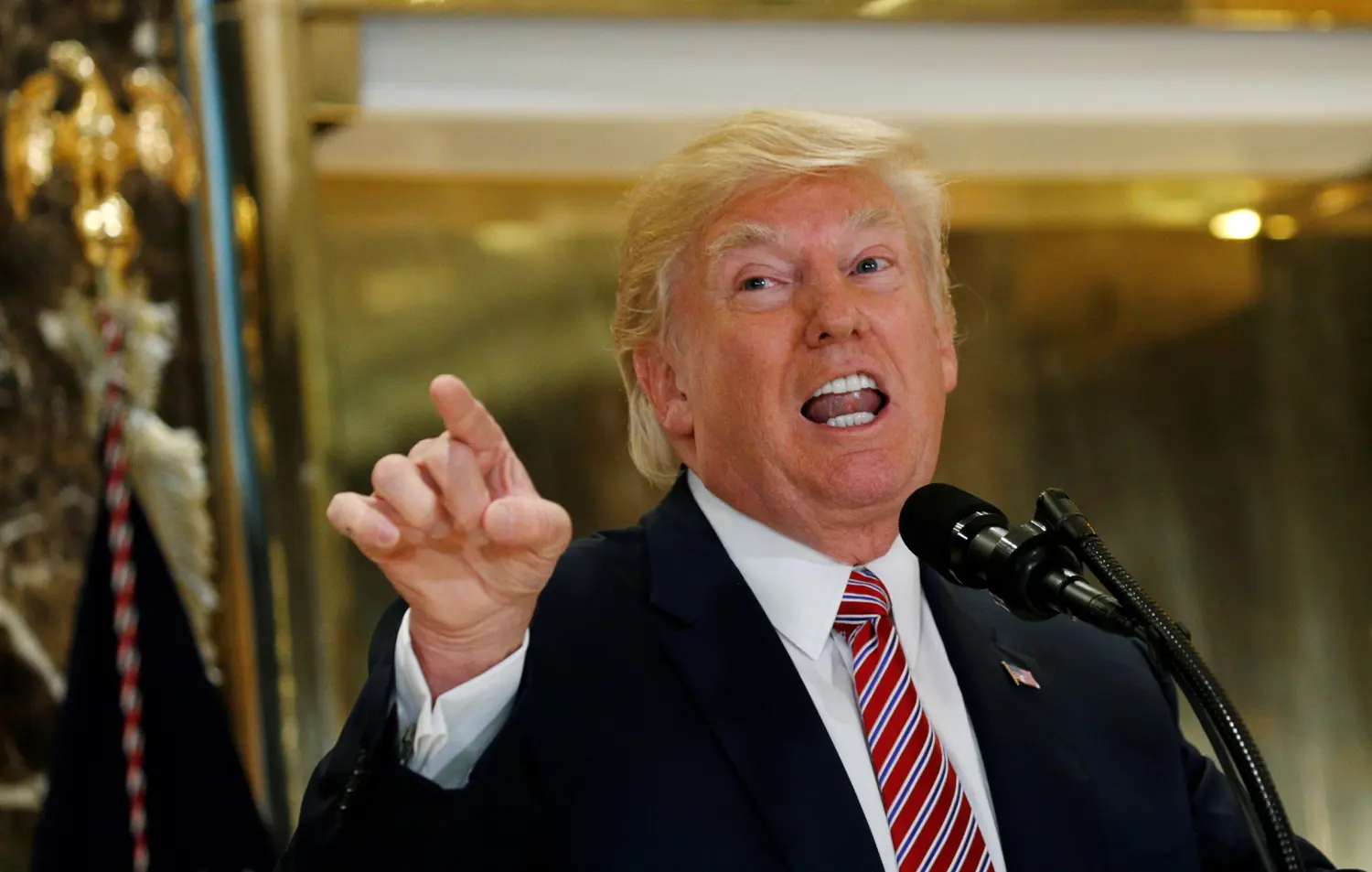
In a heated exchange at the White House on Monday, President Donald J. Trump erupted at an ABC News reporter over questions regarding one of his previous promises about the release of military strike footage. The confrontation, which has already captured national attention, marks yet another tense interaction between the 79-year-old president and members of the press.
The incident unfolded during a press briefing when ABC reporter Rachel Scott pressed Trump for clarity on when the video showing a second strike against an alleged drug-trafficking vessel would be released. The strike, which took place off the coast of Venezuela on September 2, was part of a broader campaign by the Trump administration to target unmarked boats purportedly trafficking narcotics into the United States.
Scott reminded the president that he had previously assured reporters that the footage would be made public. “You said he would have no problem with releasing the full video of that strike on September 2 off the coast of Venezuela,” she said, referencing his remarks from five days prior.
Instead of answering the question, Trump interjected, denying the assertion. “I didn’t say that, you said that, I didn’t say that, this is ABC fake news,” he insisted, sharply dismissing the reporter’s question.
The exchange highlights a pattern of contentious interactions between Trump and journalists during his second term, which began in January 2025. Earlier this month, Trump directed a dismissive comment toward a different White House correspondent, calling them “quiet piggy” when pressed about the ongoing investigation into the release of Jeffrey Epstein files. Critics have argued that Trump’s confrontational approach toward the press reflects a broader strategy to deflect accountability while framing media scrutiny as biased or unfair.
However, a transcript from ABC News confirms that the president did, in fact, acknowledge the possibility of releasing the footage during a previous briefing. On December 3, Scott’s colleague Selina Wang asked whether the video would be shared so the American public could see it. Trump responded, “I don’t know what they have, but whatever they have we’d certainly release, no problem.”
Five days later, the president appeared to have no recollection of this promise, prompting Scott to follow up with a question about whether Secretary of War Pete Hegseth would be tasked with releasing the video. Trump deflected responsibility, stating that he was leaving the decision to Hegseth.
Trump then shifted focus to a defense of his administration’s military operations. He asserted that the strikes on unmarked narcotics vessels, which he refers to as “kinetic strikes,” have prevented 94 percent of drugs from entering the United States via sea routes. He also claimed that each destroyed boat “saves thousands of lives,” insisting that “every boat we sink, we save 25,000 American lives.” While the numbers he cited have not been independently verified, the administration maintains that these operations are a crucial element of its anti-drug enforcement strategy.
As Trump began to ramble about the broader implications of the strikes, Scott attempted to steer the conversation back to the release of the footage. Her persistence, however, appeared to irritate the president further. At one point, he lashed out directly at her, saying, “You are the most obnoxious reporter in the whole place, let me just tell you, you are an obnoxious, actually, a terrible reporter.”
The verbal assault drew immediate attention across social media, news outlets, and online discussion forums. Some viewers expressed sympathy for Scott, arguing that her role as a journalist required her to hold the president accountable. “At this point, him calling a reporter terrible is a sign they are doing their job,” one Reddit user commented. Another remarked sarcastically, “He is an obnoxious President. Actually, a terrible President.”
This incident is emblematic of the increasingly combative relationship between Trump and the press. Throughout his second term, he has repeatedly labeled unfavorable coverage as “fake news,” attacked reporters personally, and avoided answering direct questions on topics ranging from military operations to domestic policy. Critics argue that this approach undermines transparency and the role of the free press, while supporters contend that the president is simply pushing back against what they perceive as biased or misleading reporting.
Analysts note that the focus on military strikes, particularly those against narcotics trafficking, has become a key talking point for Trump. The president has repeatedly framed these operations as lifesaving measures that protect American citizens, emphasizing the humanitarian aspect of preventing drugs from reaching domestic communities. Yet independent fact-checkers have raised questions about the accuracy of some of the claims, including the precise number of lives allegedly saved and the overall effectiveness of the strikes in stemming the flow of narcotics.
Legal and policy experts have also weighed in on the White House confrontation, noting that transparency regarding military operations is a critical component of accountability. In previous administrations, promises to release footage of military operations would often be honored with some level of public disclosure, either through congressional briefings or vetted media access. Trump’s refusal to confirm whether the footage will be made available to the public has fueled debate about executive authority, transparency, and the balance between national security and public oversight.
The president’s defensive posture is not unique to this particular briefing. Throughout his second term, Trump has frequently characterized journalists’ questions as personal attacks or politically motivated. Observers note that this rhetoric has both supporters and detractors: his base often views these confrontations as evidence of the president’s willingness to challenge a hostile media landscape, while critics argue that such behavior erodes trust in governmental institutions and the press.
In addition to Scott’s questioning, other reporters pressed the president about related matters, including the protocols for reviewing the videos, the involvement of Congress, and whether additional strikes are planned. While Trump reiterated that the strikes were effective and necessary, he repeatedly avoided providing concrete answers regarding the release of evidence, deflecting to aides and other administration officials.
The situation has sparked a broader conversation about the role of the press in holding the executive branch accountable. Journalists across the country have cited the White House exchange as a reminder of the challenges they face when reporting on complex and sensitive national security matters. The tension between ensuring public access to information and protecting classified operational details is an ongoing debate that will likely continue as Trump’s term progresses.
Observers have also noted that Trump’s use of social media platforms to criticize journalists has amplified confrontations like this. By labeling reporters and outlets as “obnoxious,” “terrible,” or “fake news,” the president can shape the narrative outside traditional press briefings, influencing public perception and potentially discouraging scrutiny. Media experts warn that such tactics can have long-term implications for both journalism and democratic accountability.
The confrontation on Monday comes amid a series of high-profile policy initiatives and controversies surrounding the Trump administration. From ongoing debates over economic policy and immigration enforcement to diplomatic efforts in Venezuela and other regions, the president’s second term has been marked by intense scrutiny and polarizing rhetoric. Incidents like the ABC News exchange further underscore the challenges journalists face when questioning the administration on sensitive or contentious issues.
In the days following the briefing, social media and opinion columns have amplified reactions to Trump’s remarks. Some commentators framed the president’s attack on the reporter as evidence of frustration at being challenged, while others praised Scott’s persistence as emblematic of responsible journalism. The exchange has prompted discussions about the norms of presidential conduct, press freedom, and the public’s right to access information regarding military operations.
Political analysts suggest that the White House confrontation may have implications beyond the immediate briefing. Public perceptions of transparency and accountability can influence broader political dynamics, including congressional oversight, media coverage, and voter sentiment. The release—or continued withholding—of the strike footage could shape how both supporters and critics evaluate the administration’s claims about the effectiveness of its anti-narcotics initiatives.
Experts also point out that the clash illustrates the evolving relationship between government officials and the media in the digital age. With real-time coverage, social media amplification, and instant fact-checking, public officials are increasingly held accountable not only for policy decisions but also for their interactions with the press. Trump’s handling of questions about the strike video demonstrates the high stakes of such interactions and the potential consequences for public perception.
Despite the tension, some media observers note that exchanges like this serve an important function in a democracy: they reinforce the role of journalists as watchdogs, tasked with ensuring that promises made by elected officials are followed through. By pressing Trump on the video release, Scott exemplified the investigative rigor expected in national reporting, even in the face of personal attacks from powerful figures.
As the situation continues to develop, attention has turned to the ABC News network and other media outlets for follow-up coverage. Lawmakers, commentators, and advocacy groups have called for transparency regarding the strike video and accountability for statements made by the president. The briefing has sparked broader debates about how governments should communicate sensitive operational information to the public while maintaining national security.
In summary, Monday’s White House confrontation highlights the increasingly adversarial relationship between President Trump and the press, particularly regarding sensitive topics like military operations and transparency. Trump’s denial of a prior statement about releasing a video, coupled with his personal attack on ABC reporter Rachel Scott, underscores the challenges journalists face in holding elected officials accountable. At the same time, the incident has prompted a national conversation about press freedom, executive responsibility, and the public’s right to information.
As the Trump administration continues its second term, such confrontations are likely to persist. The interplay between media scrutiny and presidential rhetoric will remain a focal point for public discourse, shaping both the perception of government transparency and the evolving role of journalists in a democratic society.
Monday’s exchange serves as a stark reminder of the complex dynamics between power, accountability, and the press—one that will likely influence reporting on the administration for months to come. In an era where information is instantaneously disseminated and analyzed, interactions like this are emblematic of the challenges inherent in balancing national security, political strategy, and the public’s right to know.

Emily Johnson is a critically acclaimed essayist and novelist known for her thought-provoking works centered on feminism, women’s rights, and modern relationships. Born and raised in Portland, Oregon, Emily grew up with a deep love of books, often spending her afternoons at her local library. She went on to study literature and gender studies at UCLA, where she became deeply involved in activism and began publishing essays in campus journals. Her debut essay collection, Voices Unbound, struck a chord with readers nationwide for its fearless exploration of gender dynamics, identity, and the challenges faced by women in contemporary society. Emily later transitioned into fiction, writing novels that balance compelling storytelling with social commentary. Her protagonists are often strong, multidimensional women navigating love, ambition, and the struggles of everyday life, making her a favorite among readers who crave authentic, relatable narratives. Critics praise her ability to merge personal intimacy with universal themes. Off the page, Emily is an advocate for women in publishing, leading workshops that encourage young female writers to embrace their voices. She lives in Seattle with her partner and two rescue cats, where she continues to write, teach, and inspire a new generation of storytellers.