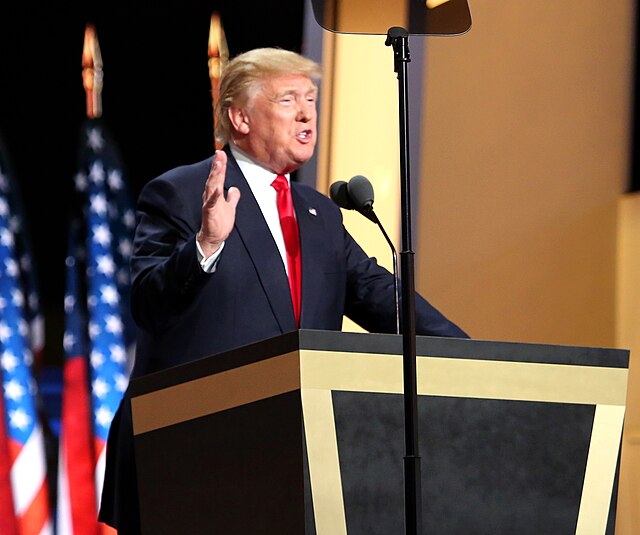
President Donald Trump is set to deliver on a major campaign promise Monday, as the White House confirms he will sign an executive order effectively ending cashless bail nationwide by threatening to strip federal funding from states and cities that continue to implement the controversial policy.
The move marks the most aggressive federal action yet against bail reform laws that have been widely criticized for fueling violent crime in cities across the country.
What Is Cashless Bail—and Why Is Trump Targeting It?
Cashless bail, also known as zero bail, is a policy that allows defendants to be released from jail without paying money upfront. Supporters say it prevents the criminal justice system from punishing poor defendants. Critics argue it puts dangerous offenders back on the streets, leading to repeat crimes and higher risks for law-abiding citizens.
According to a White House memo, the new executive order will condition federal funding on compliance, citing cashless bail as “an obvious threat to public safety.”
“Cashless bail policies allow dangerous individuals to immediately return to the streets and further endanger law-abiding, hard-working Americans because they know our laws will not be enforced,” the memo states.
The memo also highlighted multiple incidents in which individuals released without bail were quickly rearrested for new crimes.
https://twitter.com/nicksortor/status/1959966314111402276?
Pam Bondi Leading the Charge
Attorney General Pam Bondi is spearheading the effort, preparing a list of jurisdictions that will be impacted by the funding cuts. States like New York, Illinois, New Jersey, and New Mexico, as well as cities like Washington, D.C., are expected to face immediate scrutiny.
The executive order aims to reverse what Trump has called a “criminals’ free pass.”
High-Profile Failures of Bail Reform
Recent cases have intensified public backlash against cashless bail:
-
In New York, two convicted killers arrested on drug charges were released without posting bail.
-
A suspected Tren de Aragua gang member, charged with attempted homicide, was freed under bail reform and later arrested in a major drug bust.
-
A notorious Manhattan pickpocket amassed 45 arrests by early 2024—and kept walking free under the policy.
The White House also cited a Yolo County, California study that found crime rose 163% after zero-bail policies were enacted.
https://www.youtube.com/watch?v=sgYGPXRJM8A
Trump: ‘Every Place You Have No-Cash Bail Is a Disaster’
Speaking earlier this month during a crime briefing in Washington, D.C., Trump said:
“Every place in the country where you have no-cash bail is a disaster.”
The executive order builds on his earlier call to Congress to outlaw cashless bail nationwide—a move that could become a key 2026 midterm election issue.
Opposition and Support
While progressives argue that cash bail disproportionately harms the poor, even Democratic leaders like New York Governor Kathy Hochul and Mayor Eric Adams have admitted bail reform has created public safety challenges.
Meanwhile, Illinois became the first state to completely abolish cash bail, followed by New Jersey and New Mexico—policies Trump now vows to dismantle using federal leverage.
The Bigger Picture
The administration is already signaling its priorities by redirecting Department of Justice resources. In April, the DOJ canceled more than 360 federal grants worth hundreds of millions of dollars, citing misuse for “political projects” rather than public safety.
According to Trump allies, the executive order is just the beginning of a sweeping law-and-order agenda that includes deploying the National Guard in crime-plagued cities, cracking down on drug trafficking, and implementing stricter penalties for repeat offenders.
With midterms looming, expect cashless bail—and Trump’s crackdown—to become a defining issue in America’s crime debate.

James Jenkins is a celebrated Pulitzer Prize-winning author whose work has reshaped the way readers think about social justice and human rights in America. Raised in Atlanta, Georgia, James grew up in a community that instilled in him both resilience and a strong sense of responsibility toward others. After studying political science and creative writing at Howard University, he worked as a journalist covering civil rights issues before dedicating himself fully to fiction. His novels are known for their sharp, empathetic portraits of marginalized communities and for weaving personal stories with broader political realities. Jenkins’s breakout novel, Shadows of Freedom, won national acclaim for its unflinching look at systemic inequality, while his more recent works explore themes of identity, resilience, and the fight for dignity in the face of oppression. Beyond his novels, James is an active public speaker, lecturing at universities and participating in nonprofit initiatives that support literacy and community empowerment. He believes that storytelling is a way to preserve history and inspire change. When not writing, James enjoys jazz music, mentoring young writers, and traveling with his family to explore cultures and stories around the world.