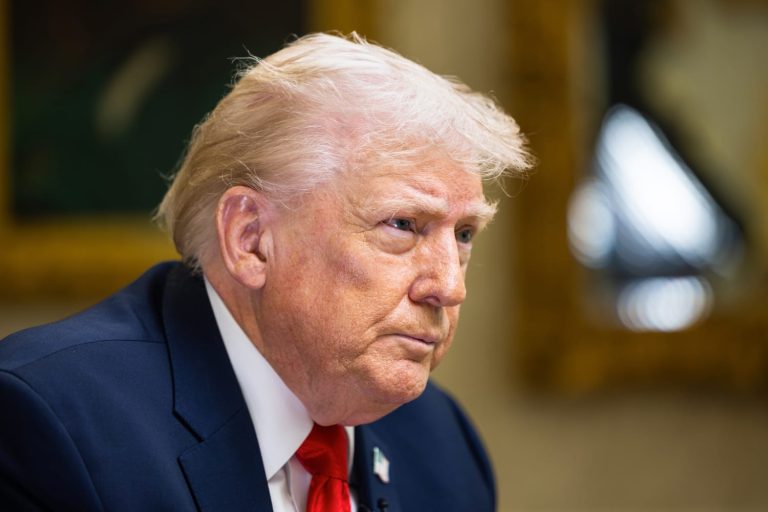

The president has appeared to soften his rhetoric regarding two fatal encounters involving Immigration and Customs Enforcement officers in Minneapolis, saying he is “not happy” with how the incidents unfolded and acknowledging that the agency itself is deeply troubled by the outcome.
The comments mark a notable shift from earlier statements in which the administration placed responsibility for the violence on the individuals who were killed.
The two deaths occurred in separate incidents last month and sparked widespread controversy. One involved a woman who was shot while attempting to flee federal officers during immigration enforcement activity. The other concerned a protester who died after being restrained by agents during a demonstration against ICE operations. A medical examiner later ruled the latter death a homicide.
Speaking in a recent interview with NBC News, the president described both cases as “very sad” and stressed that neither situation should have ended in loss of life.
“I’m not happy with what happened there,” he said. “Nobody could be happy, and ICE wasn’t happy either.”
A More Measured Response
While reiterating criticism of the behavior of those involved, the president adopted a more sympathetic tone than in previous remarks.
“[One] was not an angel and [the other] was not an angel,” he said, referencing video footage reviewed after the incidents. “You look at some tapes from back, but still — I’m not happy with what happened.”
He added that the emotional toll has been felt most acutely by federal officers involved in the operations.
“And you know who feels worse about it than anybody?” he said. “The people of ICE.”
Earlier Statements Drew Backlash
The revised messaging contrasts sharply with comments made shortly after the shootings, which drew criticism from civil rights advocates and local officials.
In the first case, a 37-year-old woman was fatally shot while driving away from ICE officers conducting enforcement activity in her neighborhood. Authorities said the incident unfolded rapidly and involved a vehicle accelerating as officers approached. In a public post shared the following day, the president characterized the woman as “very disorderly” and described her actions as violent resistance, asserting that the officer involved acted in self-defense.
He also alleged that individuals at the scene were “professional agitators” and warned of what he described as a broader pattern of violence directed at law enforcement.
“We need to stand by and protect our Law Enforcement Officers from this Radical Left Movement of Violence and Hate,” he wrote at the time.
Claims Later Disputed in Second Case
The second death occurred during a protest against ICE activity several weeks later. The individual, an ICU nurse, was tackled to the ground by officers during a confrontation and later died from gunshot wounds. Witnesses disputed initial claims that he was armed, and no firearm was recovered at the scene.
Despite that, the president initially asserted online that the man had been brandishing a loaded weapon and criticized local officials for allegedly preventing police from assisting ICE agents.
“This is the gunman’s gun, loaded and ready to go,” he wrote, questioning why local law enforcement was not allowed to intervene. In subsequent remarks, he labeled the protester an “agitator” and suggested he may have been an “insurrectionist.”
Footage later circulated showing the man engaged in a heated confrontation with officers days before his death, including shouting and kicking a government vehicle. The president cited that video as evidence of aggressive behavior, saying it reflected poorly on the victim’s actions.
Acknowledging the Tragedy
In his latest comments, however, the president emphasized regret over both deaths and acknowledged that the situations should not have escalated as they did.
“It should not have happened,” he said. “It was very sad to me. Very sad incidents. I think they were both sad.”
While he did not retract his earlier assertions regarding the conduct of those involved, his remarks suggest a recognition of the gravity of the outcomes and the strain placed on federal officers tasked with enforcement operations amid growing public tension.
The incidents remain under investigation, with civil rights groups calling for greater transparency and accountability, while federal officials continue to defend the actions of ICE personnel involved.
As public debate continues, the president’s remarks appear aimed at striking a balance between defending law enforcement and acknowledging the human cost of enforcement actions that end in tragedy.

Emily Johnson is a critically acclaimed essayist and novelist known for her thought-provoking works centered on feminism, women’s rights, and modern relationships. Born and raised in Portland, Oregon, Emily grew up with a deep love of books, often spending her afternoons at her local library. She went on to study literature and gender studies at UCLA, where she became deeply involved in activism and began publishing essays in campus journals. Her debut essay collection, Voices Unbound, struck a chord with readers nationwide for its fearless exploration of gender dynamics, identity, and the challenges faced by women in contemporary society. Emily later transitioned into fiction, writing novels that balance compelling storytelling with social commentary. Her protagonists are often strong, multidimensional women navigating love, ambition, and the struggles of everyday life, making her a favorite among readers who crave authentic, relatable narratives. Critics praise her ability to merge personal intimacy with universal themes. Off the page, Emily is an advocate for women in publishing, leading workshops that encourage young female writers to embrace their voices. She lives in Seattle with her partner and two rescue cats, where she continues to write, teach, and inspire a new generation of storytellers.