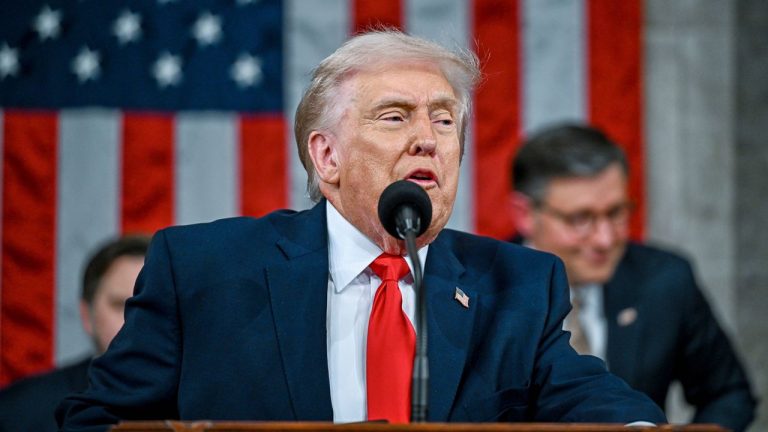
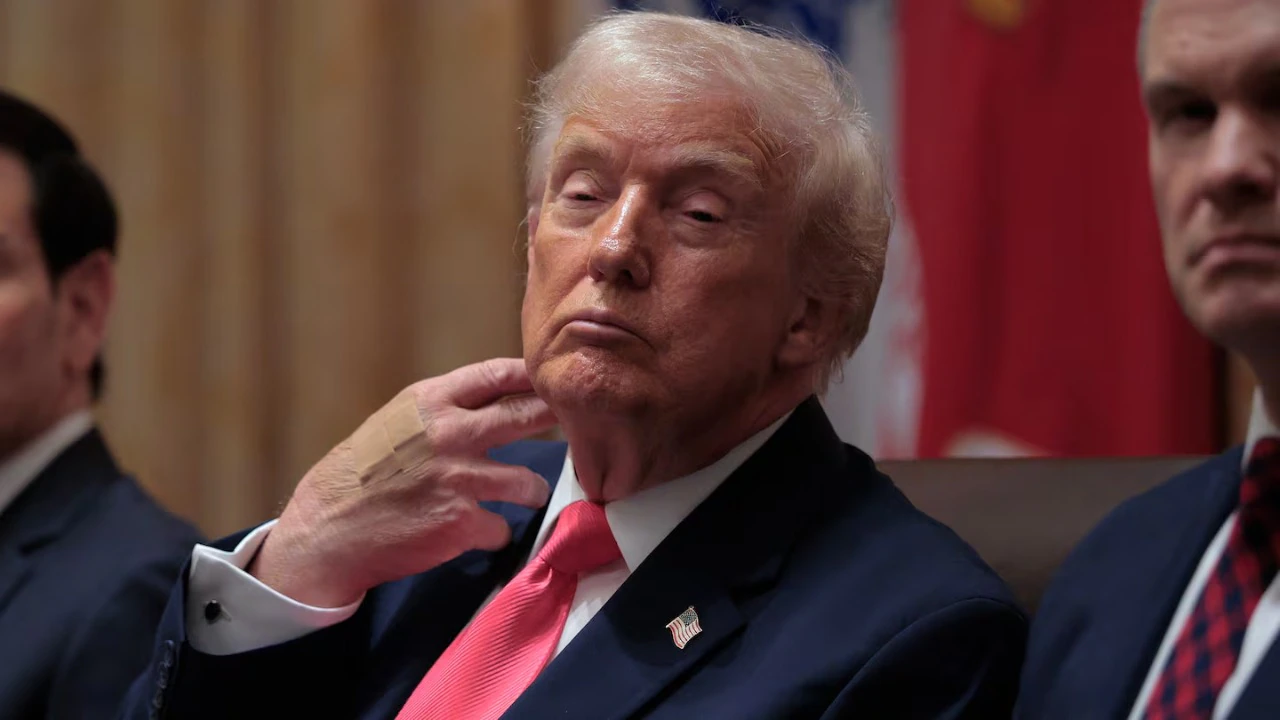
President Donald Trump has acknowledged that Republicans face a steep uphill battle in next year’s midterm elections, conceding that he is not confident the GOP will be able to maintain control of the U.S. House of Representatives as historical trends and political headwinds loom large.
In a candid interview with The Wall Street Journal, Trump said the outcome of the 2026 midterms is far from assured, even as he expressed hope that Republicans could defy expectations.
“We’ll see what happens. We should win,” Trump said. “But, you know, statistically, it’s very tough to win. Yeah, it doesn’t make sense.”
“All we’re going to do is, we’re going to try our best to win,” the president added.
History Working Against the White House
Trump’s remarks reflect a well-established political reality: the party occupying the White House almost always loses seats in the House during midterm elections. Since World War II, there have been only two instances in which the president’s party actually gained House seats in a midterm cycle.
With Republicans currently holding one of the slimmest House majorities in modern U.S. history, even modest Democratic gains could be enough to flip control of the chamber. Political analysts broadly agree that Democrats enter the cycle with structural advantages, barring a significant shift in public sentiment.
The president’s comments mark a notable moment of realism from a leader known for projecting confidence, even in adverse political circumstances.
A Razor-Thin Majority
House Speaker Mike Johnson is presiding over a chamber where Republicans’ margin for error is vanishingly small. The GOP majority has already been strained by internal divisions, contentious votes, and the challenge of governing with only a handful of seats separating the parties.
That fragile balance means retirements, special elections, or minor swings in competitive districts could have outsized consequences.
Democratic leaders, meanwhile, have made clear they view the House as their most realistic path back to power next year, focusing resources on suburban districts and swing areas where economic anxiety and voter fatigue may work against incumbents.
Trump’s Redistricting Push
In an effort to counteract historical headwinds, Trump has launched a pressure campaign urging Republican-controlled states to pursue rare mid-decade redistricting, a controversial tactic designed to redraw congressional maps in ways that could benefit the GOP.
Trump has privately and publicly encouraged red-state legislatures to revisit district boundaries, arguing that Democrats have long used redistricting to their advantage.
So far, the results have been mixed. While some states have explored the idea, many analysts say the overall redistricting battle has amounted to little more than a wash, with limited net benefit for either party.
Nevertheless, Trump continues to push states such as Indiana to consider new maps, viewing redistricting as one of the few levers available to offset the natural midterm disadvantage faced by the party in power.
Supreme Court Decision Could Reshape the Map
Another major wildcard hanging over the midterms is an impending U.S. Supreme Court decision involving Section 2 of the Voting Rights Act. The case challenges the use of race-based redistricting, particularly in Southern states.
If the court significantly weakens or overturns Section 2, it could open the door for Republicans to redraw districts in ways that favor the GOP, potentially altering the electoral landscape in several key states.
Such a ruling would likely spark immediate legal battles and political backlash, but it could also provide Republicans with a meaningful structural advantage heading into the election.
Betting on the Economy
Trump has made clear that his central hope for holding the House rests on economic improvement over the coming months. He told the Journal that he expects better economic news next year, which he believes could improve voter sentiment toward Republicans.
The president pointed to hundreds of billions of dollars in private-sector investments he says his administration has attracted, suggesting that the economic impact of those commitments will begin to be felt by the second quarter of next year.
“We’re bringing prices way down,” Trump said recently, reiterating his claim that inflation concerns are overblown and largely the result of policies enacted before his return to office.
He has also criticized the Federal Reserve, signaling that he intends to avoid appointing officials who would aggressively raise interest rates in response to positive economic data.
“I won’t have anybody on the Federal Reserve that, when you have good news, that means you automatically raise interest rates through the roof in order to kill inflation,” Trump said.
Polling Shows Erosion on the Economy
Despite Trump’s confidence, recent polling suggests his standing on the economy—long one of his strongest issues—has weakened during his second term.
Unemployment has ticked slightly higher, job growth has slowed, and anxiety over tariffs and trade policy has increased among both consumers and businesses. Surveys show voters remain uneasy about the cost of living, even as headline inflation numbers fluctuate.
According to the RealClearPolitics polling average, Trump’s overall approval rating currently sits at minus 9.3 percentage points, a figure that reflects growing skepticism among independents and swing voters.
That erosion poses a challenge for Republicans hoping to run on economic stewardship as their central message in competitive districts.
Trump Remains Optimistic
Despite the troubling data, Trump struck an optimistic tone, arguing that voters will eventually recognize what he describes as the long-term benefits of his policies.
“I think by the time we have to talk about the election, which is in another few months, I think our prices are in good shape,” he said.
“I’ve created the greatest economy in history,” Trump continued. “But it may take people a while to figure all these things out.”
The president emphasized that large-scale investments currently underway—ranging from automotive manufacturing to artificial intelligence infrastructure—will eventually translate into tangible economic gains for American workers.
“All this money that’s pouring into our country is building things right now — car plants, AI, lots of stuff,” Trump said. “I cannot tell you how that’s going to equate to the voter. All I can do is do my job.”
Heavy Campaign Role Planned
Trump and his advisers have made it clear that he plans to play a central role in next year’s midterm campaigns, traveling extensively to rally Republican voters and support vulnerable incumbents.
The White House believes Trump’s ability to energize the GOP base could help offset losses among independents, particularly in rural and working-class districts where his appeal remains strong.
However, strategists caution that heavy presidential involvement can be a double-edged sword, especially in swing districts where Trump remains a polarizing figure.
No Regrets, According to Trump
When asked whether he would have done anything differently during his second term so far, Trump dismissed the idea that major changes were necessary.
“Overall, no,” he said.
He pointed to record stock market highs, increased foreign investment, and aggressive immigration enforcement as evidence of success.
“More money is invested in the United States than any country in history,” Trump said. “Stock markets hit all-time highs. I closed the border.”
An Uncertain Road Ahead
Trump’s admission that he cannot predict whether Republicans will hold the House underscores the high-stakes uncertainty surrounding the 2026 midterms. With historical trends, narrow margins, economic concerns, and legal battles all in play, the fight for control of Congress is shaping up to be one of the most consequential political contests of his second term.

Emily Johnson is a critically acclaimed essayist and novelist known for her thought-provoking works centered on feminism, women’s rights, and modern relationships. Born and raised in Portland, Oregon, Emily grew up with a deep love of books, often spending her afternoons at her local library. She went on to study literature and gender studies at UCLA, where she became deeply involved in activism and began publishing essays in campus journals. Her debut essay collection, Voices Unbound, struck a chord with readers nationwide for its fearless exploration of gender dynamics, identity, and the challenges faced by women in contemporary society. Emily later transitioned into fiction, writing novels that balance compelling storytelling with social commentary. Her protagonists are often strong, multidimensional women navigating love, ambition, and the struggles of everyday life, making her a favorite among readers who crave authentic, relatable narratives. Critics praise her ability to merge personal intimacy with universal themes. Off the page, Emily is an advocate for women in publishing, leading workshops that encourage young female writers to embrace their voices. She lives in Seattle with her partner and two rescue cats, where she continues to write, teach, and inspire a new generation of storytellers.