President Donald Trump on Friday defended his fitness for office, saying he is in “perfect health” after once again passing a cognitive examination, marking the third time he has taken and completed the test while in public life.
Trump’s comments came a day after The Wall Street Journal published an interview with the president in which he brushed off questions about his health and age, dismissing speculation as media-driven and unfounded.
“The White House Doctors have just reported that I am in ‘PERFECT HEALTH,’ and that I ‘ACED’—meaning I was correct on 100 percent of the questions asked—for the third straight time, my Cognitive Examination,” Trump wrote in a post on Truth Social.
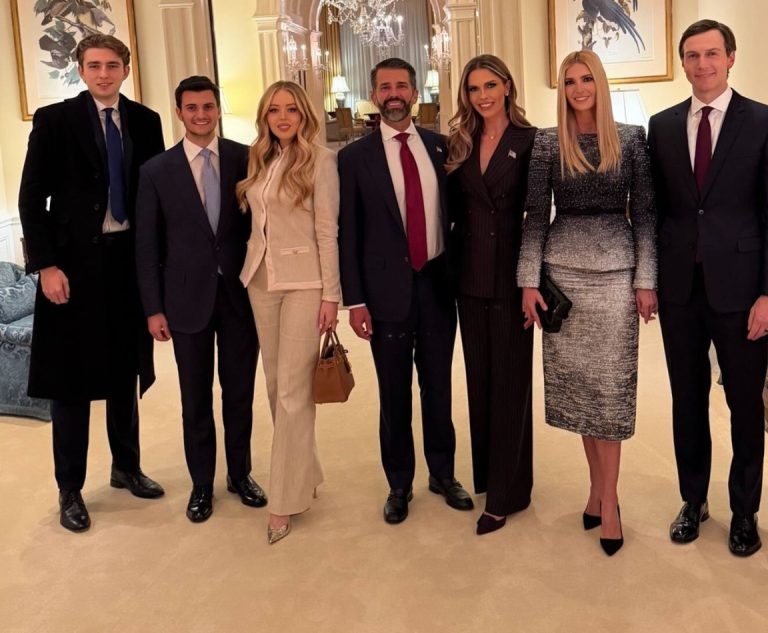
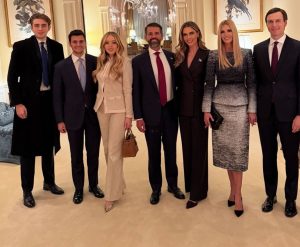
President Donald Trump arrives at a New Year’s Eve event at Mar-a-Lago in Palm Beach, Florida
Pushing Back on Health Concerns
Now 79, Trump has repeatedly addressed questions about his health during his second term, often contrasting his transparency with that of political rivals. In his Truth Social post, he said no other president or vice president had been willing to take the same type of cognitive exam.
Trump has long argued that cognitive testing should be mandatory for candidates seeking the nation’s highest offices. On Friday, he renewed that call in forceful terms.
“I strongly believe that anyone running for President, or Vice President, should be mandatorily forced to take a strong, meaningful, and proven Cognitive Examination,” he wrote. “Our great country cannot be run by incompetent people.”
Context From the Wall Street Journal Interview
Trump’s remarks followed a wide-ranging interview with The Wall Street Journal published Thursday, in which he dismissed concerns raised by critics about his mental sharpness and physical condition.
In the interview, Trump addressed reporting about a medical scan he underwent in October 2025. He clarified that the test was a CT scan rather than an MRI, revising an earlier description.
“In retrospect, it’s too bad I took it,” Trump said. “It gave them a little ammunition. The fact that I took it made people say, ‘Oh gee, is something wrong?’ Well, nothing’s wrong.”
The president suggested that the media’s coverage of the scan fueled unnecessary speculation.
Comparisons to Past Presidents
Trump also contrasted his situation with that of former President Joe Biden, who dropped out of the 2024 presidential race following a debate performance that intensified scrutiny of his age and cognitive abilities.
Trump has frequently cited that episode as evidence that cognitive testing should be standardized for national candidates, arguing that voters deserve objective assurances about a leader’s mental fitness.
At 79, Trump became the oldest person to take the presidential oath of office when he was sworn in for his second term last year. He will turn 80 in June.
Addressing Appearances and Public Scrutiny
During the Journal interview, Trump also responded to claims that he appeared to fall asleep during public meetings. He denied dozing off, saying he sometimes closes his eyes to relax.
“I don’t fall asleep,” he said. “I close my eyes. The media will take a picture of me blinking and catch me with the blink.”
The president suggested that brief moments caught on camera are often misrepresented and amplified.
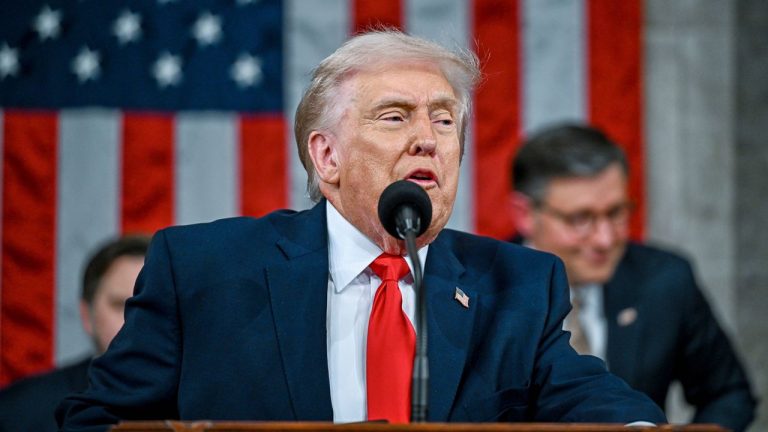
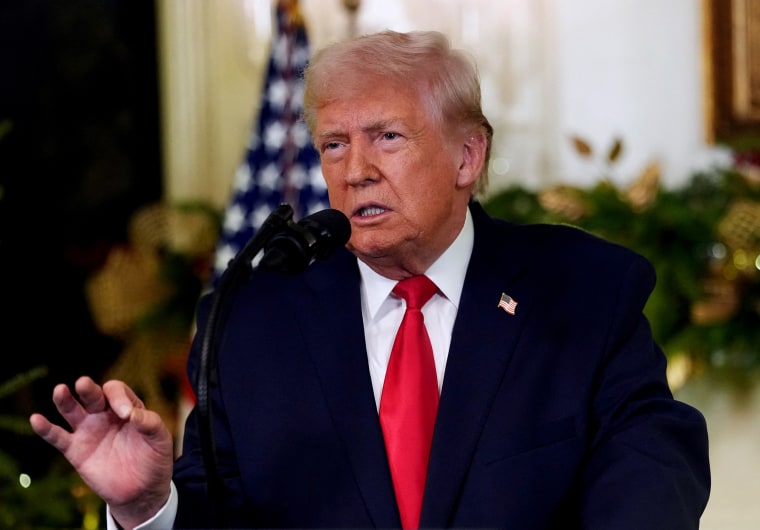
Trump speaks to reporters during a public event amid renewed focus on his health
Chronic Condition Previously Disclosed
The White House has previously disclosed that Trump was diagnosed with chronic venous insufficiency, a common condition among older adults in which veins in the legs struggle to return blood to the heart efficiently. The condition can cause swelling and discomfort but is generally considered manageable.
Trump said during the interview that he tried wearing compression socks to help alleviate swelling but did not like them.
“I didn’t like them,” he said, offering no indication that the condition has limited his activities or schedule.
Bruising, Aspirin, and Medical Choices
Trump also addressed visible bruising on his hands that has appeared in recent months. White House officials have previously attributed the bruising to frequent handshaking and aspirin use.
The president acknowledged that he takes more aspirin than his doctors recommend.
“They say aspirin is good for thinning out the blood,” Trump said. “I don’t want thick blood pouring through my heart. I want nice, thin blood pouring through my heart.”
Medical experts generally caution against excessive aspirin use without supervision, but Trump indicated he felt comfortable with his routine.
Hearing and Energy Levels
The president also dismissed any concerns about his hearing, saying he only struggles when multiple people are speaking at once. He described the issue as situational rather than medical.
Trump added that despite not sleeping much, he maintains high energy levels, crediting what he called his “great genes.”
“I don’t get a lot of sleep,” he said. “But I have a lot of energy.”
Transparency as a Political Theme
Throughout his comments, Trump emphasized transparency, arguing that he has been more open about his health than previous leaders. He framed his repeated cognitive testing as evidence of confidence rather than defensiveness.
Supporters have echoed that view, saying the president’s willingness to discuss medical details stands in contrast to past administrations. Critics, meanwhile, argue that the tests themselves do not provide a complete picture of cognitive health.
Cognitive Testing and Public Debate
Cognitive exams used for public figures typically assess memory, attention, language, and basic problem-solving skills. While passing such tests can rule out significant impairment, experts note they are not designed to measure leadership ability or complex decision-making.
Still, the issue has taken on political significance as age becomes a central topic in national elections. Calls for mandatory testing have gained traction among some voters, while others see them as unnecessary or potentially politicized.
Looking Ahead
As Trump approaches his 80th birthday, questions about age and health are unlikely to fade. The president has signaled that he intends to continue addressing those concerns directly, often with characteristic defiance.
For now, Trump says his doctors’ assessment is clear.
“I’m in perfect health,” he wrote.
Whether that assurance satisfies critics or fuels further debate, it ensures that the president’s health will remain a focal point of political discussion in the months ahead.

Emily Johnson is a critically acclaimed essayist and novelist known for her thought-provoking works centered on feminism, women’s rights, and modern relationships. Born and raised in Portland, Oregon, Emily grew up with a deep love of books, often spending her afternoons at her local library. She went on to study literature and gender studies at UCLA, where she became deeply involved in activism and began publishing essays in campus journals. Her debut essay collection, Voices Unbound, struck a chord with readers nationwide for its fearless exploration of gender dynamics, identity, and the challenges faced by women in contemporary society. Emily later transitioned into fiction, writing novels that balance compelling storytelling with social commentary. Her protagonists are often strong, multidimensional women navigating love, ambition, and the struggles of everyday life, making her a favorite among readers who crave authentic, relatable narratives. Critics praise her ability to merge personal intimacy with universal themes. Off the page, Emily is an advocate for women in publishing, leading workshops that encourage young female writers to embrace their voices. She lives in Seattle with her partner and two rescue cats, where she continues to write, teach, and inspire a new generation of storytellers.