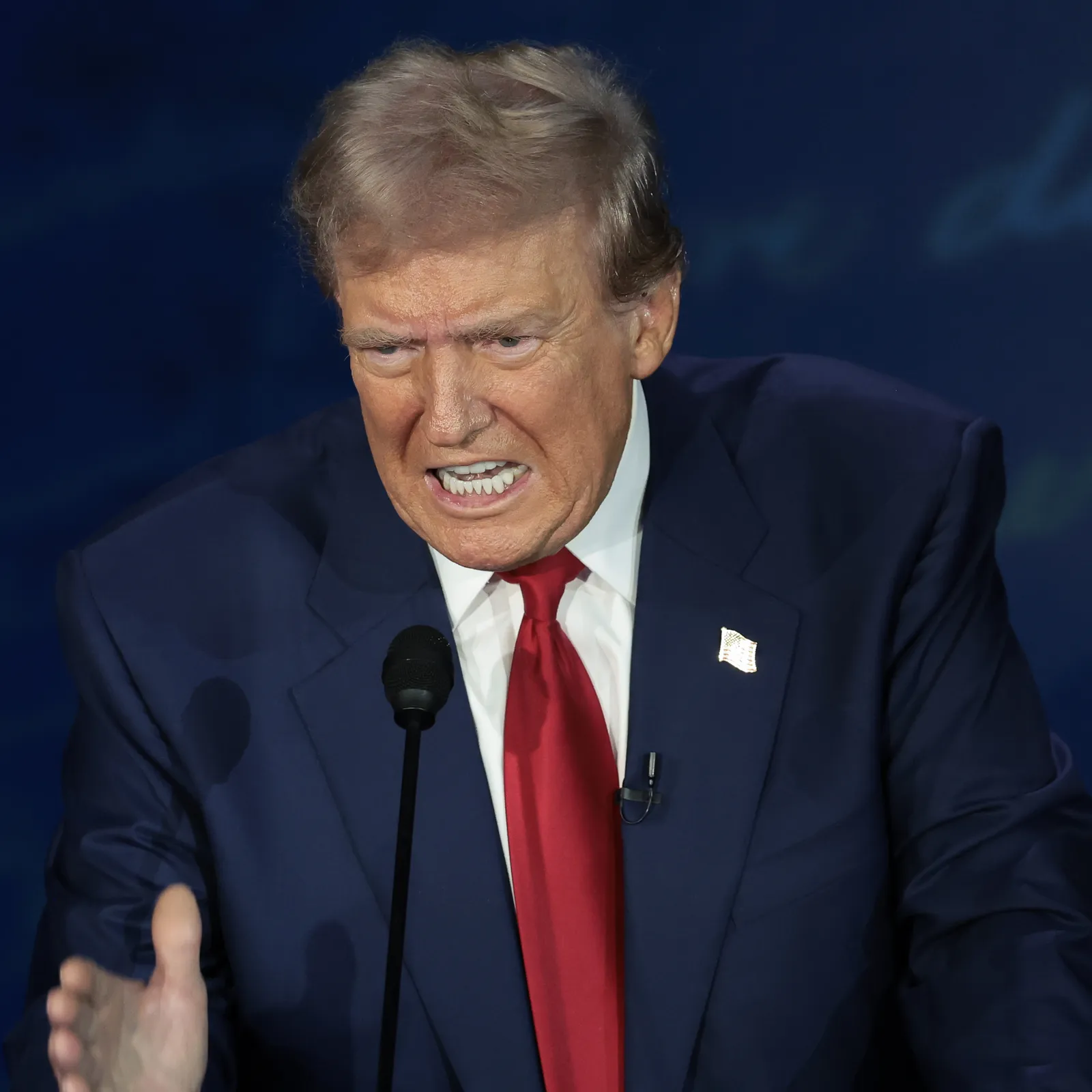
In a move that has alarmed allies and drawn international scrutiny, the Trump administration has signaled that the United States is actively considering taking control of Greenland, citing the Arctic territory as a “national security priority.” On Tuesday, the White House released a statement detailing plans under discussion by President Donald Trump and his top advisers, which include both diplomatic and military options for acquiring the Danish territory.
According to senior officials, U.S. options range from purchasing the land from Denmark to granting Greenlandic autonomy while assuming responsibility for its defense. The statement underscores that “utilizing the U.S. military is always an option” and that the issue “is not going away,” suggesting that Washington is serious about asserting strategic influence in the Arctic.
The announcement comes amid a broader context of heightened U.S. assertiveness abroad, following the controversial capture of Venezuelan President Nicolas Maduro by U.S.-backed forces in late December 2025. Trump’s approach reflects a willingness to pursue high-stakes foreign policy objectives unilaterally, even when such moves threaten to strain alliances or international norms.
White House Statement
In response to queries from Reuters, a senior White House official emphasized the strategic rationale behind the proposal.
“President Trump has made it well known that acquiring Greenland is a national security priority of the United States, and it’s vital to deter our adversaries in the Arctic region. The president and his team are discussing a range of options to pursue this important foreign policy goal, and of course, utilizing the U.S. military is always an option at the commander-in-chief’s disposal.”
The statement suggests that the administration is not merely engaging in speculative planning but has elevated the issue to the highest levels of strategic consideration. While no immediate operational decisions have been announced, the declaration alone has sparked alarm among both European allies and U.S. defense experts.
International Reaction
Trump’s announcement has drawn a swift and unified response from Denmark and NATO partners. Danish Prime Minister Mette Frederiksen warned that any attempt by the United States to take over Greenland by force would effectively signal the end of NATO. “Greenland’s territorial integrity is non-negotiable,” Frederiksen said, emphasizing that the island is a fully recognized part of the Kingdom of Denmark and protected under international law.
Similarly, European leaders including British Prime Minister Sir Keir Starmer, French President Emmanuel Macron, and the heads of Germany, Italy, Poland, and Spain released a joint statement reaffirming their commitment to defending Greenland. The communiqué framed the territory as a key strategic asset in the Arctic and a critical part of allied security architecture.
Despite these warnings, White House deputy chief of staff Stephen Miller appeared to dismiss concerns about Denmark’s claims. In a recent CNN interview, Miller questioned the legitimacy of Denmark’s territorial authority over Greenland, while asserting that “nobody is going to fight the U.S. militarily over the future of Greenland.”
Miller’s comments highlight the administration’s underlying confidence — or, critics argue, hubris — in its ability to assert dominance in international disputes, even in regions where the United States does not have traditional sovereignty.
Strategic Importance of Greenland
Experts note that Greenland is more than a frozen expanse of ice; it is a geopolitical linchpin. The island occupies a critical position in the Arctic, with direct access to the North Atlantic and proximity to potential shipping routes emerging from melting ice. Control over Greenland would provide the United States with forward basing opportunities, expanded radar coverage, and greater influence in Arctic resource development, including rare earth minerals and energy reserves.
The Arctic has become a contested space in recent years, with Russia, China, and other global powers increasingly asserting influence in the region. From the perspective of U.S. national security planners, Greenland is viewed as a key buffer against potential adversaries who could exploit the Arctic’s strategic corridors.
Domestic Response
Within the United States, Trump’s Greenland proposal has sparked a mix of support, concern, and ridicule. Conservative supporters praise the president for thinking boldly and putting U.S. security interests first, framing the proposal as a demonstration of decisive leadership. Critics, however, question the legality, feasibility, and diplomatic ramifications of such a move.
Legal experts note that any unilateral action to seize Greenland would violate international law, including treaties protecting Danish sovereignty and norms governing the use of force. Congress would likely be involved in approving any military action, raising the potential for domestic political conflict as well.
Historical Context
Trump is not the first U.S. president to express interest in Greenland. In 1946, President Harry S. Truman offered to purchase the island from Denmark for $100 million in gold — an offer that was ultimately rejected. More recently, Greenland has periodically appeared in U.S. strategic planning due to its military and logistical value, including hosting U.S. Air Force bases during the Cold War.
Trump’s 2026 initiative, however, is unprecedented in its explicit framing of military action as a potential option for acquisition. It also marks a notable escalation from traditional diplomatic negotiations, signaling an administration willing to entertain extraordinary measures to achieve territorial objectives.
Implications for NATO and International Relations
The threat to Greenland carries potential consequences for the broader NATO alliance. Denmark is a long-standing member, and Greenland, as part of the Kingdom of Denmark, is considered under the alliance’s collective security umbrella. Any attempt by the United States to assert control without Danish consent could fundamentally undermine trust among NATO partners and destabilize the alliance at a critical moment, particularly as Russia and China expand their presence in the Arctic.
European leaders have been explicit in their warnings. The joint statement issued by the heads of the United Kingdom, France, Germany, Italy, Poland, and Spain underscored that an attack on Greenland would be considered a violation of international law and a challenge to allied security commitments. Analysts argue that, even if Trump were confident in U.S. military superiority, the political fallout could isolate the United States diplomatically and strain relationships vital for global security cooperation.
Potential Scenarios
According to senior administration officials, several approaches are under consideration:
-
Diplomatic Acquisition: Negotiating a purchase of Greenland from Denmark, reminiscent of the 1946 proposal, though the likelihood of Danish agreement remains low.
-
Autonomy with Defense Oversight: Granting Greenlandic independence while assuming responsibility for its military defense, effectively controlling the territory without formal annexation.
-
Military Action: Explicitly cited as “always an option” by the White House, allowing the president to consider forceful measures if other approaches fail or are rejected.
Each scenario carries its own risks, costs, and legal questions, and analysts warn that the consequences of attempting military action could be catastrophic, not only for U.S.-European relations but also for the credibility of the United States in global governance.
Geopolitical Considerations
Greenland’s strategic location, resource potential, and proximity to the Arctic make it highly attractive to the United States, but also a potential flashpoint for international conflict. Russian military expansion in the Arctic, coupled with China’s interest in Arctic shipping lanes, heightens the stakes for any unilateral U.S. action.
Acquiring Greenland could provide forward bases for missile defense, surveillance, and shipping control. However, forcibly taking a territory from an ally would also risk trade sanctions, diplomatic isolation, and retaliation from other global powers. Analysts note that even a show of military force without actual conflict could destabilize the region and prompt a realignment of Arctic alliances.
Domestic Political Impact
Domestically, Trump’s announcement may bolster his image among voters who favor strong, assertive leadership and a willingness to pursue bold national security strategies. Conservatives may interpret the plan as an extension of Trump’s America-first agenda, emphasizing U.S. strength and strategic initiative.
However, opponents are likely to highlight the plan’s recklessness, potential violations of international law, and risks to long-term alliances. Legal scholars and former military officials may publicly challenge the feasibility of such a mission, framing it as politically motivated and strategically dangerous.
Congressional oversight will also play a crucial role. Even if Trump orders preparatory planning, large-scale military operations require funding and authorization, meaning legislators could effectively block or constrain any attempt to seize Greenland.
Conclusion
President Trump’s Greenland proposal represents a significant escalation in U.S. foreign policy rhetoric, blending diplomacy, national security strategy, and the explicit threat of military action. By framing the acquisition of Greenland as a “national security priority,” the White House has signaled its willingness to consider unprecedented measures in pursuit of strategic advantage in the Arctic.
The reaction from Denmark, NATO allies, and global observers has been swift and critical, highlighting the international stakes of the announcement. Greenland is not merely a remote territory; it is a strategic linchpin with economic, military, and geopolitical significance.
As discussions unfold, the world will be watching to see whether Trump’s proposal remains rhetorical or develops into concrete policy. Regardless of the outcome, the statement alone underscores the administration’s aggressive approach to foreign policy and its readiness to consider extraordinary measures to achieve its objectives.
For NATO allies, European partners, and international observers, Greenland is now a flashpoint — a test of U.S. resolve, international law, and the balance of power in the Arctic region.

Emily Johnson is a critically acclaimed essayist and novelist known for her thought-provoking works centered on feminism, women’s rights, and modern relationships. Born and raised in Portland, Oregon, Emily grew up with a deep love of books, often spending her afternoons at her local library. She went on to study literature and gender studies at UCLA, where she became deeply involved in activism and began publishing essays in campus journals. Her debut essay collection, Voices Unbound, struck a chord with readers nationwide for its fearless exploration of gender dynamics, identity, and the challenges faced by women in contemporary society. Emily later transitioned into fiction, writing novels that balance compelling storytelling with social commentary. Her protagonists are often strong, multidimensional women navigating love, ambition, and the struggles of everyday life, making her a favorite among readers who crave authentic, relatable narratives. Critics praise her ability to merge personal intimacy with universal themes. Off the page, Emily is an advocate for women in publishing, leading workshops that encourage young female writers to embrace their voices. She lives in Seattle with her partner and two rescue cats, where she continues to write, teach, and inspire a new generation of storytellers.