NOTE: LIVESTREAM AT THE END OF THE ARTICLE
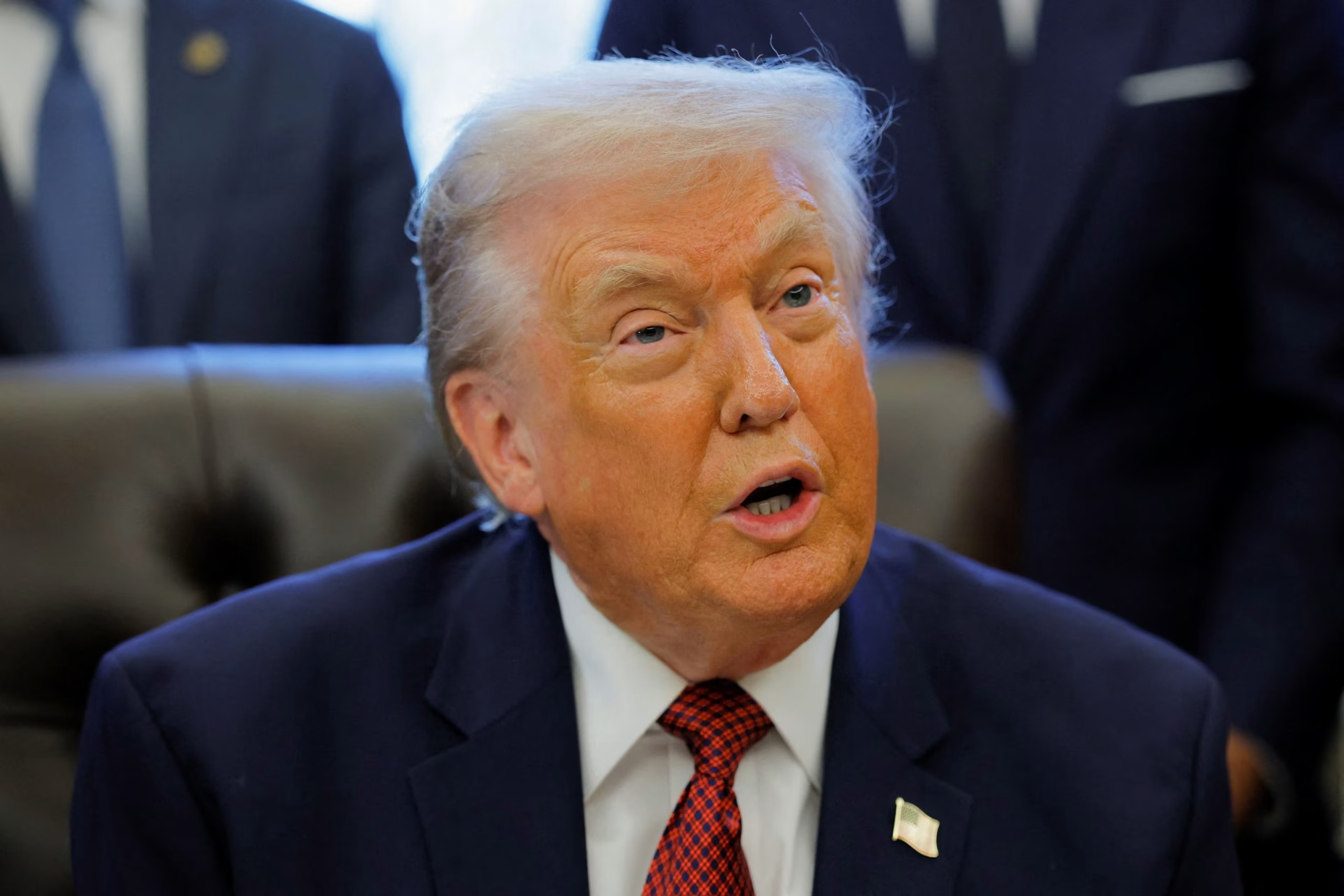
In a tense and dramatic live appearance, President Donald Trump delivered what many are already calling one of his most alarming and provocative statements of his presidency. Speaking with a forceful tone and sharpened rhetoric, Trump declared that the United States is prepared for “war” — not metaphorically, but in direct response to what he described as escalating threats facing the nation. The announcement immediately sent shockwaves through political circles, raising questions about what exactly the president intends and what the consequences could be.
Trump opened his speech by describing the country as being under “constant attack,” insisting that foreign adversaries and hostile networks have misread American restraint as weakness. He framed the moment as a turning point, claiming that the United States must be “ready to act with strength, decisiveness, and absolute clarity.” According to Trump, this is not just a matter of national defense but a matter of national survival.
Throughout the speech, Trump shifted between warning and certainty, making it clear that he views the current global environment as more dangerous than at any point in recent memory. He spoke of unnamed enemies preparing “acts of aggression,” and he criticized previous administrations for, in his view, failing to confront these dangers before they grew. Trump stated that his administration will no longer tolerate what he considers provocations, saying, “If they want conflict, they will get conflict — and it will be a kind they’ve never seen before.”
Although Trump did not specify which countries or groups he was referring to, the message itself was unmistakable: the U.S. is moving toward a far more aggressive and confrontational stance. His wording suggested that military action is no longer a last resort but a standing option, ready to be deployed at any sign of escalation. This shift in tone signals a dramatic departure from diplomatic patience and puts adversaries on notice that Washington may respond forcefully and without extended warning.
Reaction across political and military circles has been intense. Supporters of Trump argue that he is restoring American deterrence, saying that strong language and a readiness for conflict are essential to preventing actual war. They insist that adversaries only understand force, and Trump’s message sends exactly the signal needed to protect American interests.
Critics, however, fear the implications. They warn that such rhetoric could create self-fulfilling tensions, increasing the likelihood of miscalculation and rapid escalation. Some analysts argue that Trump’s broad and unspecified warnings risk dragging the country into open-ended conflict without clear objectives, defined enemies, or international support.
What made the announcement even more striking was Trump’s insistence that the nation must mentally and materially prepare for what may come next. He urged Americans to “stand strong,” to trust the government’s decisions, and to recognize the gravity of the moment. His tone was not that of routine political theater but of a leader preparing the public for potential confrontation.
As the world reacts to Trump’s chilling “war” announcement, one thing is clear: the speech marks a significant escalation in the administration’s posture. Whether it serves as deterrence or provocation may soon become one of the defining questions of the geopolitical landscape.

Emily Johnson is a critically acclaimed essayist and novelist known for her thought-provoking works centered on feminism, women’s rights, and modern relationships. Born and raised in Portland, Oregon, Emily grew up with a deep love of books, often spending her afternoons at her local library. She went on to study literature and gender studies at UCLA, where she became deeply involved in activism and began publishing essays in campus journals. Her debut essay collection, Voices Unbound, struck a chord with readers nationwide for its fearless exploration of gender dynamics, identity, and the challenges faced by women in contemporary society. Emily later transitioned into fiction, writing novels that balance compelling storytelling with social commentary. Her protagonists are often strong, multidimensional women navigating love, ambition, and the struggles of everyday life, making her a favorite among readers who crave authentic, relatable narratives. Critics praise her ability to merge personal intimacy with universal themes. Off the page, Emily is an advocate for women in publishing, leading workshops that encourage young female writers to embrace their voices. She lives in Seattle with her partner and two rescue cats, where she continues to write, teach, and inspire a new generation of storytellers.