
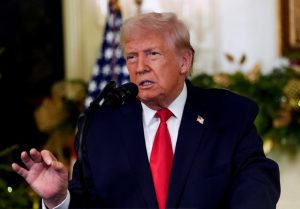
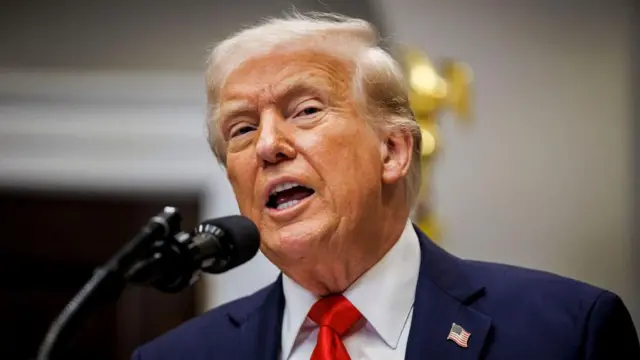
A growing number of Americans could face the unprecedented possibility of losing their U.S. citizenship if President Donald Trump follows through on a controversial policy he has repeatedly raised: denaturalization.
For months, Trump has openly discussed the idea of stripping citizenship from certain naturalized Americans, framing the issue as a matter of national security and crime prevention. While such statements were initially dismissed by critics as political rhetoric, recent reports suggest that his administration is now taking concrete steps to explore how denaturalization could be expanded and enforced.
Naturalization is the legal process through which foreign-born individuals voluntarily become U.S. citizens. According to USA.gov, applicants must generally be at least 18 years old, demonstrate the ability to read, write, and speak basic English, and meet a “good moral character” standard. The process has existed in the United States for centuries and has long been viewed as a cornerstone of immigrant integration into American civic life.
Despite its historical roots, Trump has made clear that he believes the system has been abused.
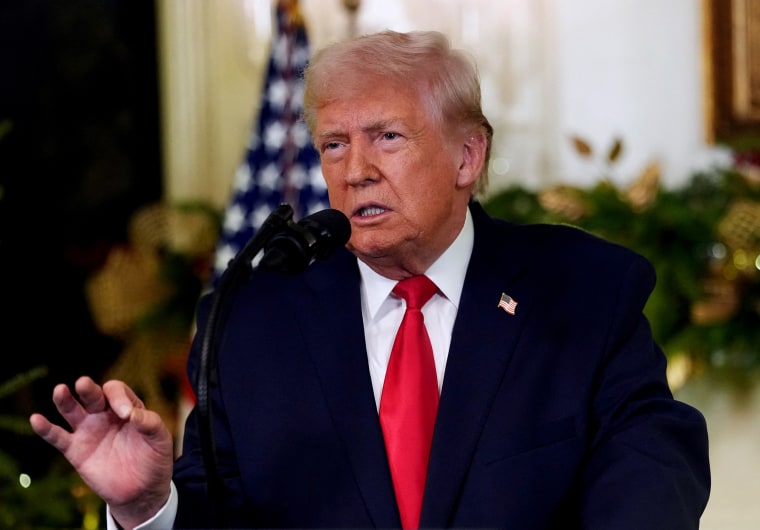
In early December, the president stated that he was “absolutely” open to denaturalizing certain Americans, particularly those he claims entered the country under previous administrations without proper vetting.
“We have criminals that came into our country, and they were naturalized maybe through [President Joe] Biden or somebody that didn’t know what they were doing,” Trump said at the time. “If I have the power to do it — I’m not sure that I do, but if I do — I would denaturalize, absolutely.”
Just over a month later, those remarks appear to be evolving into policy discussions. According to reporting by The New York Times, Trump’s administration is now actively examining the legal criteria under which U.S. citizenship could be revoked. The paper said the issue was discussed during a wide-ranging, two-hour interview with the president.
During that interview, Trump singled out specific groups he believes should be scrutinized more closely.
“I think that many of the people that came in from Somalia, they hate our country,” Trump said, suggesting that individuals from that community could be among those targeted for denaturalization. He did not provide evidence to support the claim, nor did he clarify how “hatred” of the country would be legally defined or proven.
Trump also indicated that the initiative would not be limited to Somali Americans, though he declined to name other groups that might fall under review.
“If they deserve to be stripped, I would, yes,” he said.
The remarks immediately sparked backlash from civil rights organizations, immigration advocates, and legal scholars, many of whom warned that such a policy could undermine constitutional protections and create fear among millions of naturalized citizens.
The American Civil Liberties Union (ACLU) issued a sharply worded statement condemning the administration’s approach, describing the effort as “systemic and chilling.”
“These efforts to strip citizenship from Americans are systemic and chilling,” the organization said. “They have made U.S. citizens fearful that mistakes made years ago on their past applications could be used to target them, take away their citizenship, and destroy their lives.”
The ACLU also warned that expanded denaturalization efforts could discourage lawful permanent residents from pursuing citizenship at all.
“The Trump administration’s denaturalization efforts have made lawful permanent residents scared to pursue citizenship and fully engage civically,” the statement continued. “What was once a celebratory moment recognizing an immigrant’s integration into American life now comes with an undercurrent of fear and suspicion.”
Under current U.S. law, denaturalization is an exceptionally rare and complex process. Citizenship can only be revoked by a federal judge, either through civil proceedings or following a criminal conviction for naturalization fraud. Prosecutors must prove that an individual intentionally lied or concealed material facts during the naturalization process — a high legal bar that limits how often such cases succeed.
As a result, denaturalizations have historically occurred infrequently. According to data from the Immigrant Legal Resource Center (ILRC), between 1990 and 2017, the federal government opened an average of just 11 denaturalization cases per year. Most involved serious crimes such as war crimes, terrorism-related offenses, or clear instances of fraud.
Legal experts caution that expanding denaturalization beyond those narrow circumstances could face significant constitutional challenges. Critics argue that targeting individuals based on national origin or vague accusations of disloyalty would violate due process and equal protection principles.
Nevertheless, Trump’s rhetoric has already had a tangible effect. Immigration attorneys report an increase in anxiety among naturalized citizens, many of whom worry that minor errors on decades-old paperwork could be weaponized against them. Others fear that political or ideological differences could be used as justification for revoking citizenship.
Supporters of Trump’s stance argue that citizenship should not be irrevocable if it was obtained under false pretenses. They contend that enforcing existing laws more aggressively would strengthen national security and restore public confidence in the immigration system.
Opponents counter that citizenship, once granted, is meant to be a permanent legal status — not a privilege subject to political winds.
As the administration continues to explore its options, the debate over denaturalization is likely to intensify, raising fundamental questions about who truly belongs in America and how secure citizenship really is for those who were not born into it.
For now, no formal policy changes have been announced. But Trump’s comments and reported internal discussions have already sent a clear signal: a practice once considered rare and extraordinary may soon become a central battleground in the nation’s immigration debate.

Emily Johnson is a critically acclaimed essayist and novelist known for her thought-provoking works centered on feminism, women’s rights, and modern relationships. Born and raised in Portland, Oregon, Emily grew up with a deep love of books, often spending her afternoons at her local library. She went on to study literature and gender studies at UCLA, where she became deeply involved in activism and began publishing essays in campus journals. Her debut essay collection, Voices Unbound, struck a chord with readers nationwide for its fearless exploration of gender dynamics, identity, and the challenges faced by women in contemporary society. Emily later transitioned into fiction, writing novels that balance compelling storytelling with social commentary. Her protagonists are often strong, multidimensional women navigating love, ambition, and the struggles of everyday life, making her a favorite among readers who crave authentic, relatable narratives. Critics praise her ability to merge personal intimacy with universal themes. Off the page, Emily is an advocate for women in publishing, leading workshops that encourage young female writers to embrace their voices. She lives in Seattle with her partner and two rescue cats, where she continues to write, teach, and inspire a new generation of storytellers.